Andro Treiber Z Review: OFF-Class Control in a Composite Blade
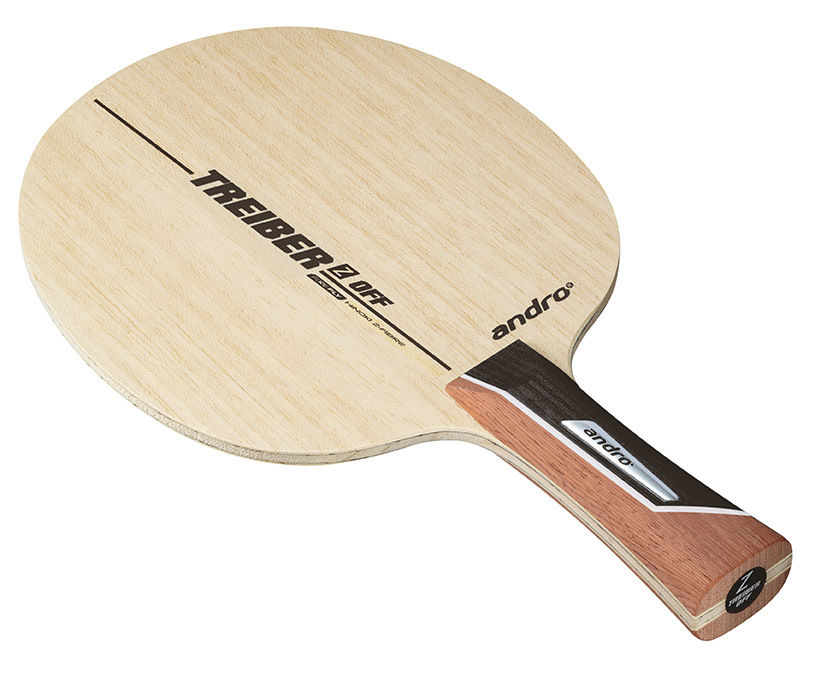
Pros
- Speed-to-control ratio that's rare for an OFF-class composite blade
- Large sweet spot returns off-center contacts stable and even, so blocking heavy topspin stays easy
- Mild, crispy feel with minimal vibration that holds up through long practice sessions
- Short game shines across the board: pushes stay low, serves load spin, blocks and flicks come out precise
- Counter-looping is a standout, raising the throw angle against incoming topspin for a dive-down arc with pace
- Stays comfortable in hand across multiple handle configurations
Cons
- Discontinued; only available on the second-hand market
- Low throw angle needs rubbers with medium-to-high throw to clear the net comfortably
- Too demanding for beginners or players without consistent stroke mechanics
- Slight top-heavy balance won't suit every playing style
The Andro Treiber Z sits at the top of Andro’s Treiber line as the brand’s flagship composite offensive blade. Two outer plies of kiso hinoki wrap an inner layer of Z-fiber composite, and experienced players describe the result as unlike anything else in the OFF category. It built a devoted following before Andro pulled it, and used copies still move fast. This review draws on verified user experiences from Revspin, TableTennis Reference, BladeRubber.net, and the TableTennisDaily community to show what the blade does well and where it gives ground.
Performance
The Treiber Z reveals its best qualities slowly. First contact feels fast but not wild, mild and crispy, with very little vibration reaching the handle. The sweet spot is large for a 7-ply composite, and off-center contacts come back stable and even, so blocking against heavy topspin is far easier here than on a stiffer, smaller-headed blade.
The short game is a strength. Pushes stay low and controlled, short serves load spin easily, and flicks off the bounce come out precise and punchy. Players moving up from all-wood blades find the Treiber Z far easier to manage than faster ZLC options at this price tier, because the hinoki outer softens the first contact, absorbing pace before releasing the ball with good speed.
Looping is the signature. Opening up against backspin throws a low, penetrating arc that troubles opponents, and counter-looping plays off the blade’s habit of raising the throw angle against an incoming topspin ball. You get a dive-down trajectory with plenty of net clearance and serious pace. Mid-distance is just as comfortable; the blade keeps its spin and speed even pulled back from the table.
Flat hitting and smashing lean on the composite core’s stiffness, which moves power efficiently without turning harsh. Passive blocks carry enough pace to pressure opponents even when you are only redirecting the ball. The low throw angle is the one constraint: pair the Treiber Z with rubbers offering at least medium throw to keep opening loops off the net. Community favorites here are Rasant Grip, Tenergy 05 FX, and Rasanter R47.
At roughly 87-90g, it sits on the heavier side of the composite market and can go slightly head-heavy with dense rubbers on both sides. Players with smaller hands or lighter setups should weigh that when picking rubbers.
What Reviewers Agree (and Disagree) On
Revspin, BladeRubber.net, TableTennis Reference, and TableTennisDaily all land on the same point: a speed-to-control ratio rare among composite blades in the OFF category. The large sweet spot, low vibration, and short game come up as strengths everywhere. The minor split is over how demanding it is. Most advanced players find it manageable and say it rewards clean technique, while a smaller group warns it punishes inconsistent stroke mechanics. A few reported occasional catapult inconsistency that the rest did not, most likely sample variation across production units.
Who Should Buy It
The Andro Treiber Z fits advanced players with consistent forehand and backhand loops who want a composite blade that keeps them in control without blunting the attack. It works for club and regional competitors who need a blade that holds up across every phase, from tight serve-and-receive to fast mid-distance rallies. Beginners and early intermediates should start on slower blades and come back to the Treiber Z once their technique can use its full range.
FAQ
What is the Z-fiber material in the Andro Treiber Z?
Andro never named the exact material. Community testing and teardowns point to a composite fiber layer, and some players describe it as closer to fiberglass than the gold-colored Zylon used in other blades. The inner fiber layer reads dark blue and gives a soft-but-crispy feel with low vibration.
Is the Andro Treiber Z still available to buy?
Andro has discontinued it. You can sometimes find one through second-hand sellers, auction sites, or specialty retailers sitting on old stock. Supply is thin, and used prices often run above the original retail.
What rubbers pair best with the Treiber Z?
Because the blade has a low throw angle, pairing it with rubbers that have at least medium throw is recommended. Community favorites include Rasant Grip, Rasanter R47, Tenergy 05 FX, and Yasaka Rakza 7 or Rakza Z. Medium-soft tensor rubbers help add dwell time and lift on opening loops.
How does the Treiber Z compare to the Andro Treiber CI OFF?
These are distinct blades. The Treiber Z uses kiso hinoki outer plies with an inner Z-fiber layer and is rated OFF. The Treiber CI OFF features a different construction philosophy and is a more recent model in the Treiber lineup. Players generally describe the Treiber Z as having superior touch and a larger sweet spot, while the CI OFF offers a more modern feel.
Is the Treiber Z suitable for close-to-table play?
Yes. Multiple reviewers highlight the blade’s short-game performance as a standout feature. Blocks, pushes, flicks, and receives all feel precise and controllable, which is unusual for a blade rated at OFF speed. The large sweet spot makes passive blocks particularly effective.
What weight and thickness should I expect?
Reported weights range from around 87g to 90g depending on the individual blade and handle type. Thickness is approximately 6.6mm to 6.8mm, making it one of the thicker 7-ply composite blades on the market. The blade tends to be slightly head-heavy, which should be considered when choosing rubbers.