Andro Treiber Z vs Butterfly Timo Boll ZLC: Which Should You Buy?
| Andro Treiber Z | Butterfly Timo Boll ZLC | |
|---|---|---|
| Our rating | 8.7/10 | 9.0/10 |
| feel | mild, crispy, low vibration, large sweet spot | direct and responsive with ZLC dwell |
| handle | FL, ST, AN, Chinese pen | FL/AN/ST |
| head_size | — | 157 x 150 mm |
| plies | 7-ply: kiso hinoki outer + ZLC (Z-fiber composite) inner layers + wood core | 7 plies: Koto / ZLC / Limba / Ayous / Limba / ZLC / Koto (5 wood + 2 ZL Carbon composite) |
| reaction | — | 117 |
| speed | OFF | OFF++ |
| thickness_mm | 6.6-6.8 | 5.5 |
| vibration | — | 108 |
| weight_g | 87-90 | 85 |
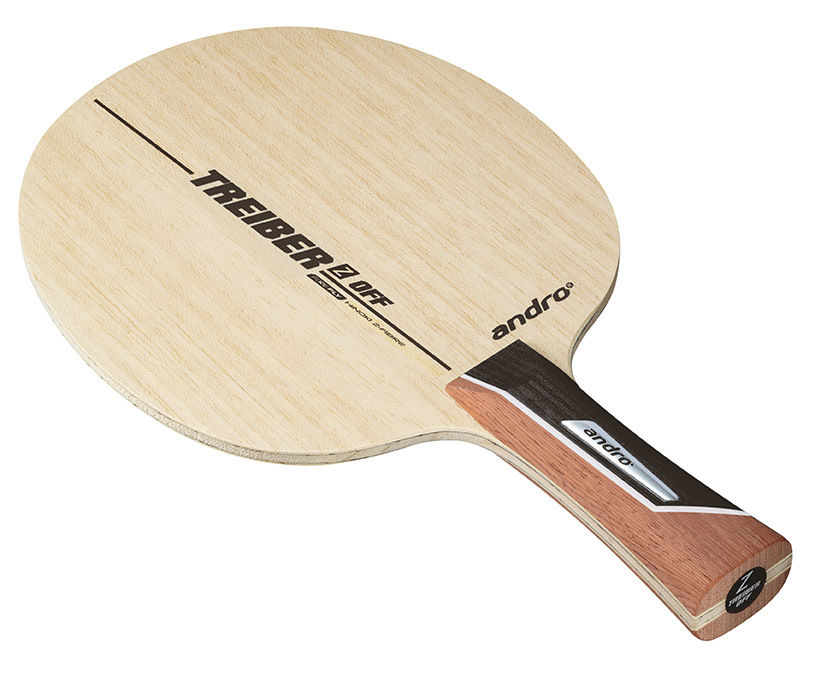
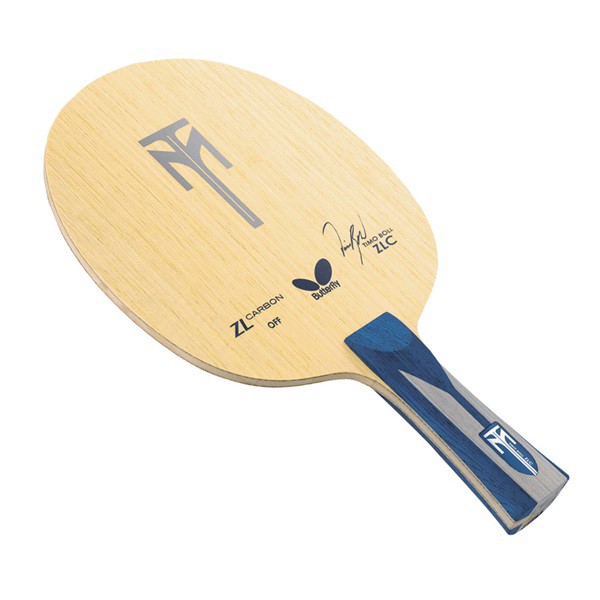
We may earn a commission from links on this page. Learn more.
Nearly Identical on Paper, Very Different in the Short Game
Speed and control here are close enough to call a tie: 9.4 vs 9.3 on speed (delta 0.1) and 9.2 vs 9.1 on control (delta 0.1). If a rival comparison page tells you one of these blades is clearly faster or more controllable, it’s overstating a rounding error — the aggregated data doesn’t support that. The one axis with a real gap is stiffness: Treiber Z at 5.9 versus Timo Boll ZLC’s 5.3, a 0.6-point delta, meaning Treiber Z feels the firmer of the two. Hardness is close (6.2 vs 6.1) and consistency tilts to Timo Boll ZLC by 0.3 points (9.3 vs 9.0).
That near-tie on speed is worth pausing on, because Butterfly’s own speed classification says something different: Treiber Z is rated OFF, while Timo Boll ZLC carries the higher OFF++ designation. So the manufacturer’s speed class disagrees with the aggregated user-rating axis, which puts both blades within a tenth of a point of each other. That mismatch is a useful reminder that official speed ratings and real-world aggregated feel don’t always line up — trust the axis data on how the blade actually plays, and treat OFF and OFF++ labels as a rough manufacturer guideline rather than a precise measurement.
Where the Real Difference Actually Lives: The Short Game
The more decision-relevant gap isn’t on the axis chart at all — it’s in the cons lists. Timo Boll ZLC’s own listed weakness is that it’s reactive to incoming spin, making push and short-game returns challenging, and it has an initial numb feel that demands an adaptation period. Treiber Z’s pros list says almost the exact opposite: short game shines across the board, with pushes staying low, serves loading spin, and blocks and flicks coming out precise. If your game depends on a strong short game — tight pushes, precise serve-and-receive, disciplined blocking — that contrast matters far more than the near-identical speed and control numbers.
What the Reviews Confirm
Megaspin’s listing and review pages for Timo Boll ZLC back up its reputation for exceptional speed powered by dual ZL Carbon composite layers, and note it pairs devastatingly with modern high-spin rubbers like Dignics 09C. Revspin’s data on the blade credits ZLC fiber with extending dwell time beyond typical carbon blades, supporting strong blocking precision and ball placement — consistent with its 6.1 vs 6.2 hardness. On the Treiber Z side, Revspin and TableTennisDaily Forum reviewers reinforce the low-vibration, large-sweet-spot description that underlies its strong short-game reputation and its counter-looping standout status.
Migration and Fit
If you own a Treiber Z and are drawn to Timo Boll ZLC for its OFF++ rating or its pairing with Dignics 09C, know that the aggregated speed and control axes say you’re not actually gaining much there — 0.1 points each way is not a real-world difference. What you would gain is 0.3 points of consistency and Timo Boll ZLC’s reputation for devastating combination play with modern high-spin rubbers; what you’d lose is 0.6 points of stiffness, a softer, less direct feel, and, per its own cons list, some short-game precision on pushes and receives.
Going the other direction, from Timo Boll ZLC to Treiber Z, is worth considering specifically if your short game has been a weak point — Treiber Z’s reviewers consistently single that out as a strength, while Timo Boll ZLC’s own listed cons flag it as a relative weakness. Both blades require advanced, developed technique; neither is a good first OFF blade.
Bottom Line
Speed and control are a wash between these two — don’t let anyone tell you otherwise based on the OFF versus OFF++ label alone. The real decision points are feel (Treiber Z is stiffer and firmer, Timo Boll ZLC is more direct with ZLC-extended dwell) and short game (a clear edge to Treiber Z, a clear acknowledged weakness for Timo Boll ZLC). Choose accordingly based on where your game actually lives on the table.
Frequently asked questions
Is Timo Boll ZLC actually faster than Treiber Z?
Barely, and not by a meaningful amount -- the aggregated speed axis has them at 9.3 vs 9.4, essentially tied, even though Timo Boll ZLC carries Butterfly's higher OFF++ speed classification.
Which blade has the better short game?
Treiber Z -- its reviewers specifically praise low pushes, precise blocks and flicks, while Timo Boll ZLC's own cons list admits it's reactive to incoming spin, making push and short-game returns challenging.
Which blade feels stiffer?
Treiber Z, by 0.6 points (5.9 vs 5.3) -- Timo Boll ZLC's ZLC-fiber construction gives it a more direct but less stiff feel.
What rubber does Timo Boll ZLC pair well with?
Reviewers highlight a strong combination with modern high-spin rubbers like Dignics 09C.