Andro Treiber Z vs Butterfly Innerforce ZLC: Which Should You Buy?
| Andro Treiber Z | Butterfly Innerforce ZLC | |
|---|---|---|
| Our rating | 8.7/10 | 8.5/10 |
| feel | mild, crispy, low vibration, large sweet spot | Soft-medium; woody feel with ZLC carbon layers near the core |
| handle | FL, ST, AN, Chinese pen | AN / FL / ST |
| plies | 7-ply: kiso hinoki outer + ZLC (Z-fiber composite) inner layers + wood core | 5 wood + 2 ZLC carbon (inner ZLC construction) |
| speed | OFF | OFF |
| thickness_mm | 6.6-6.8 | 5.7 |
| weight_g | 87-90 | 84 |
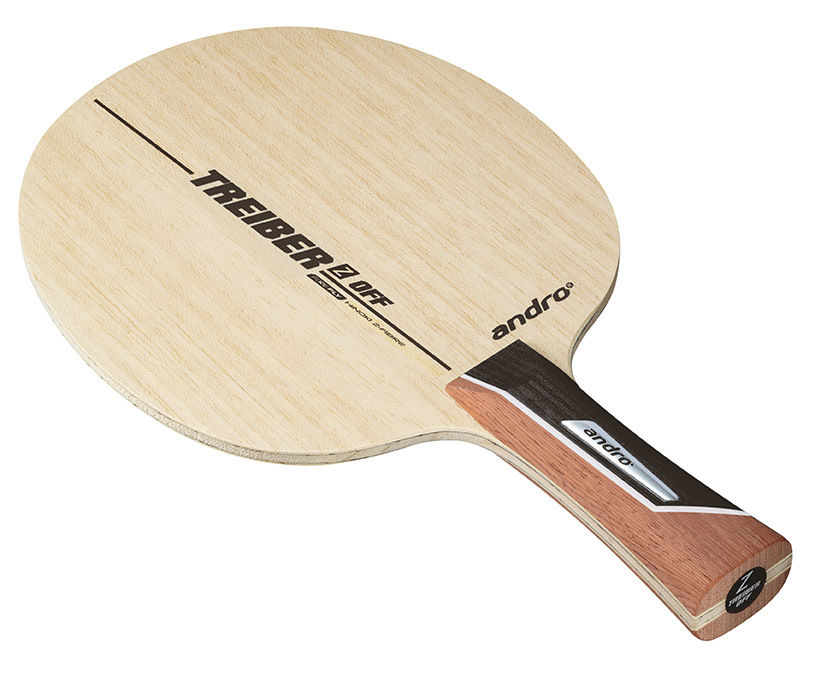
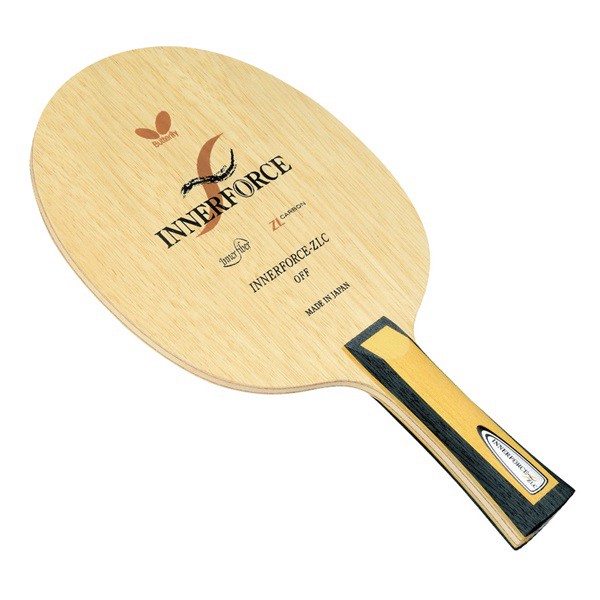
We may earn a commission from links on this page. Learn more.
Two Discontinued Blades, One Real Decision
This comparison has an unusual wrinkle that the axis numbers won’t show you: both blades are out of production. Treiber Z is secondhand-only, and Innerforce ZLC’s cons list says the same thing — difficult to buy new and prices can be elevated. If you’re choosing between these two, you’re choosing between two used-market hunts, not a discontinued blade versus a current one. That changes the calculus from which is more available to which is worth the hunt.
Where the Axis Data Actually Splits
Stiffness is the standout gap here: Treiber Z at 5.9 versus Innerforce ZLC’s 4.7, a 1.2-point delta — the largest single-axis gap in this entire comparison set. Hardness follows at 6.2 vs 5.6, a 0.6-point difference. Both point the same direction: Treiber Z is a notably firmer, stiffer-feeling blade, while Innerforce ZLC’s inner-carbon construction produces what its own reviewers call a distinctive woody feel rare in carbon blades — the ZLC layers sit near the core rather than on the surface, so the hitting sensation reads closer to all-wood than to a typical carbon composite.
Speed (9.4 vs 9.1, delta 0.3) and control (9.2 vs 8.9, delta 0.3) both favor Treiber Z, but by margins small enough that they’re secondary to the stiffness and hardness story. Consistency is essentially tied (9.0 vs 8.9, delta 0.1) — don’t let a comparison elsewhere convince you one blade is dramatically more reliable than the other; the aggregated data says they’re neck and neck on that axis.
What the Reviews Say About Speed Ceiling
One thing worth flagging honestly: Innerforce ZLC’s own cons list notes moderate speed for a ZLC blade, warning that players in fast baseline exchanges may be outpowered. That’s a real limitation Reddit’s r/tabletennis threads and TableTennisSpot’s review of the Innerforce series echo — this is a control-and-feel-first ZLC blade, not a raw-speed one, despite carrying premium ZLC branding. Treiber Z, by contrast, is explicitly built around a speed-to-control ratio its reviewers call rare for an OFF-class composite blade. If your game leans on out-hitting opponents at speed, that difference matters more than the 0.3-point axis gap suggests.
Migration and Fit
If you already own an Innerforce ZLC and like its woody, high-dwell character, moving to Treiber Z means trading that distinctive soft-carbon feel for something firmer and faster — worthwhile only if you’ve found yourself wanting more raw pace in baseline exchanges. Going the other way, from Treiber Z to Innerforce ZLC, makes sense if you’re specifically chasing more feel and touch and are willing to give up some stiffness and hardness for it — reviewers describe Innerforce ZLC pairing especially well with Tenergy and Rakza-family rubbers.
Both blades require solid, developed technique — neither is a beginner pick. Treiber Z’s low throw angle needs rubbers with their own medium-to-high throw to clear the net; Innerforce ZLC’s cons list flags that it requires solid technique to unlock its full potential, the same demanding-blade profile from a different construction angle.
Bottom Line
If you can only realistically hunt down one of these secondhand, let your priority decide it: Treiber Z for the firmer, faster, more speed-forward game (backed by a 1.2-point stiffness edge and a 0.6-point hardness edge), or Innerforce ZLC for the woody, inner-carbon feel that multiple independent reviewers single out as rare among carbon blades, accepting that it trades away some top-end pace for that touch. Given how close the speed, control and consistency numbers actually are, the honest answer is that feel preference — not performance — should drive this particular decision.
One more practical note for secondhand shopping: condition matters more than usual with blades this old off the production line. A used Innerforce ZLC or Treiber Z that has taken heavy edge damage or years of moisture exposure can shift its stiffness and hardness noticeably away from the aggregated scores quoted here, since those numbers reflect blades in typical, well-cared-for condition as reported by their review base. Check handle tightness, ply delamination at the edges, and overall flex before trusting that a secondhand unit will play like the data above. If you’re buying blind online rather than testing in person, favor the seller with clearer photos and a documented history over the lower price, since a warped or delaminated blade will erase whatever edge either model holds on paper.
Frequently asked questions
Are both blades discontinued?
Yes -- Treiber Z and Innerforce ZLC are both out of production and only available secondhand, so this comparison is really about which used blade to hunt for, not which is easier to buy new.
Which blade feels stiffer?
Treiber Z, by a clear margin -- its stiffness score is 5.9 versus Innerforce ZLC's 4.7, a 1.2-point gap that's the largest of any axis in this comparison.
Is Innerforce ZLC fast enough for aggressive baseline play?
Its own reviewers flag moderate speed for a ZLC blade, noting that players in fast baseline exchanges may be outpowered -- it's built more for feel and control than raw pace.
Which rubbers pair best with Innerforce ZLC?
Reviewers report it works especially well with Tenergy and Rakza-family rubbers, thanks to its low vibration and high dwell time.