Andro Treiber Z vs Nittaku Acoustic Carbon: Which Should You Buy?
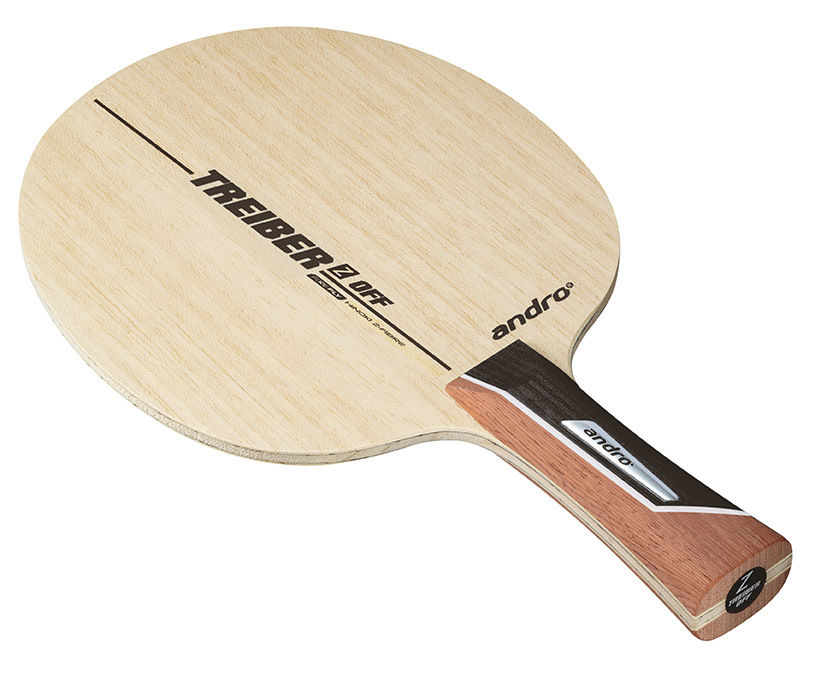
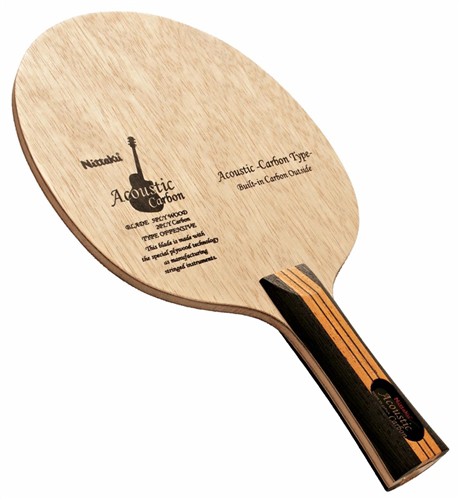
| Andro Treiber Z | Nittaku Acoustic Carbon | |
|---|---|---|
| Our rating | 8.7/10 | 8.8/10 |
| feel | mild, crispy, low vibration, large sweet spot | Medium-hard outer carbon with surprising wood-like dwell and ball retention; crisp sound on contact |
| handle | FL, ST, AN, Chinese pen | FL, ST (also Large Handle and Chinese Penhold variants available) |
| plies | 7-ply: kiso hinoki outer + ZLC (Z-fiber composite) inner layers + wood core | 7 plies — 5 wood + 2 FE carbon (Limba - FE Carbon - Limba - Tung - Limba - FE Carbon - Limba) |
| speed | OFF | OFF |
| thickness_mm | 6.6-6.8 | 5.5mm |
| weight_g | 87-90 | approx 90g |
We may earn a commission from links on this page. Learn more.
Small Deltas, One Real Difference
Every axis in this comparison lands within half a point except one. Speed: 9.4 versus 9.2, a 0.2-point edge for Treiber Z. Control: 9.2 versus 9.0, another 0.2-point edge. Hardness: 6.2 versus 6.4, essentially tied. Those three deltas are small enough that you should not expect to feel them blind — if you swapped blades in a practice session without knowing which was which, you likely could not identify the speed or control gap from feel alone.
Stiffness is where the real difference sits: Treiber Z rates 5.9, Acoustic Carbon 6.4, a 0.5-point gap in Acoustic Carbon’s favor — meaning it plays stiffer, more carbon-forward. Consistency runs the other way and by a larger margin: Treiber Z at 9.0 against Acoustic Carbon’s 8.6, a 0.4-point edge for Treiber Z. That pairing — Acoustic Carbon stiffer but less consistent — lines up with what owners report: Nittaku Acoustic Carbon has a steep learning curve, and its bounce can feel unruly until technique catches up, despite Nittaku’s FE Carbon layers keeping a surprisingly wood-like dwell underneath.
What the Reviews Say
Treiber Z’s strengths, per Revspin, TableTennis Reference, BladeRubber.net and the TableTennisDaily forum, center on a speed-to-control ratio that is rare for an OFF composite, a large sweet spot, and a short game — pushes, serves, blocks, flicks — that holds up under pressure. Its cons are equally specific: discontinued and secondhand-only, a low throw angle that needs higher-throw rubbers, and a demand for consistent stroke mechanics that rules out beginners.
Acoustic Carbon’s reviews, aggregated from Revspin, TableTennisDaily and TableTennis Reference, single out something Treiber Z reviews do not mention: it soaks up sticky and tacky rubbers like NEO Hurricane 3 without trampolining, and it is trusted by professional players including Ayane Morita. It is also heavier — most units land at or around 90g — and priced below comparable Butterfly carbon blades, a real value angle that Treiber Z, being secondhand-only, cannot compete on directly since resale prices for a discontinued blade are unpredictable.
Migrating Between Them
If you already play Treiber Z and it suits your game, the case for moving to Acoustic Carbon is thin on numbers alone — you would trade a small amount of consistency (0.4 points) for a small amount of extra stiffness that not every player wants, and you would be adapting to a genuinely different rubber pairing philosophy: Acoustic Carbon specifically rewards sticky, tacky rubbers on the forehand, so a switch means re-evaluating your rubber setup, not just your blade.
Coming from Acoustic Carbon toward Treiber Z makes more sense if you have found the learning curve too steep or want a blade that plays more predictably out of the box — the 0.4-point consistency edge and Treiber Z’s pro of returning off-center contacts “stable and even” both point toward an easier blade to trust under match pressure, at the cost of needing to source it secondhand.
Fit and Setup
Both are OFF-class blades for intermediate-to-advanced offensive players who loop close to mid-table; neither is a beginner’s first blade. Treiber Z asks for medium-to-high-throw rubbers to offset its low natural throw angle. Acoustic Carbon, at roughly 5.5mm and around 90g against Treiber Z’s 6.6-6.8mm and 87-90g, plays thinner but heavier — worth checking against your handle and total racket weight target before you commit a rubber budget to either one, especially since Acoustic Carbon specifically prefers sticky or tacky forehand rubbers to reach its rated performance.
Handle options are close between the two: Treiber Z comes in FL, ST, AN and Chinese penhold, while Acoustic Carbon adds a Large Handle variant alongside FL, ST and its own Chinese penhold option, which is worth checking if you play a non-standard grip. Price is also part of the honest picture — reviewers repeatedly note Acoustic Carbon undercuts comparable Butterfly carbon blades, while Treiber Z’s secondhand-only status means its real-world price can swing well above or below that depending on who is selling and how worn the blade already is, a risk a new-production blade simply does not carry.
Frequently asked questions
Is Nittaku Acoustic Carbon stiffer than Andro Treiber Z?
Yes, by 0.5 points on the radar scale (6.4 vs 5.9) — it is the one axis where the gap is large enough to notice on contact.
Which blade is more consistent shot to shot?
Treiber Z, by 0.4 points (9.0 vs 8.6). Acoustic Carbon owners describe a steeper learning curve before the bounce feels predictable.
Does Acoustic Carbon work with any rubber?
Reviews specifically praise it with sticky or tacky rubbers like NEO Hurricane 3, which it absorbs without trampolining — it is not a blade you should assume performs the same with any tensor sponge.
Is the speed difference between these two blades noticeable?
Barely — 0.2 points (9.4 vs 9.2), well within normal batch-to-batch variation for wood-and-carbon composite blades.