Andro Treiber Z vs Butterfly Ovtcharov Innerforce ALC: Which Should You Buy?
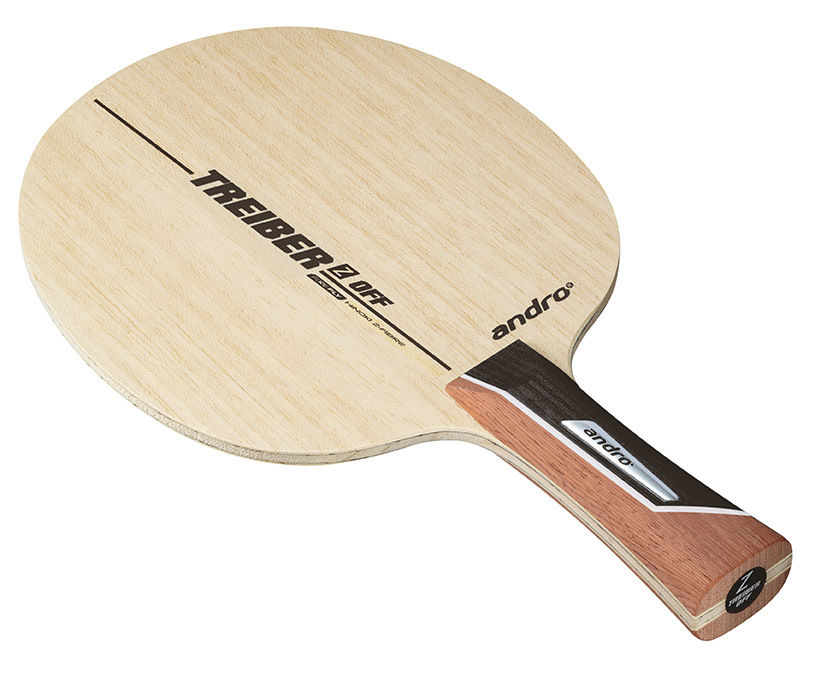
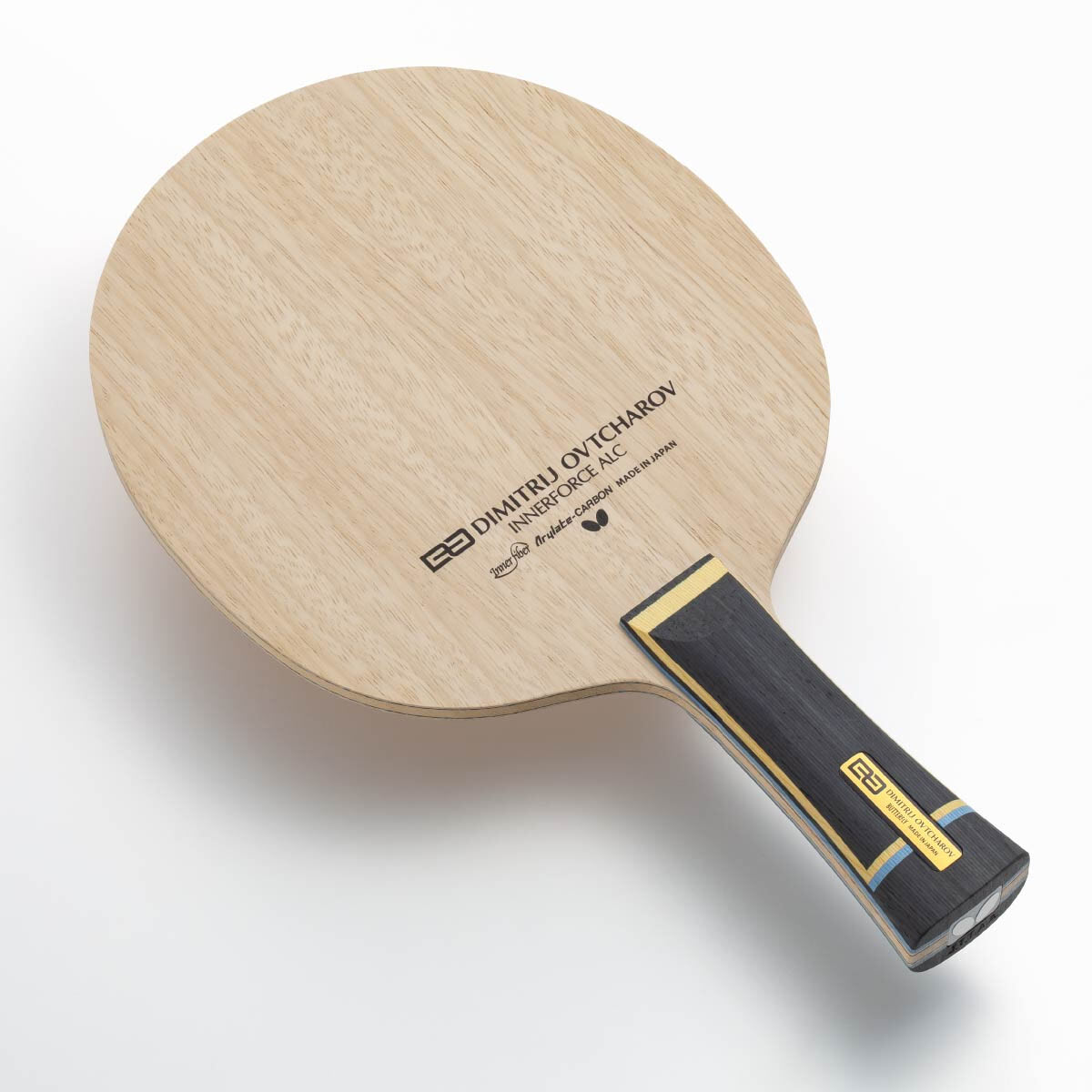
| Andro Treiber Z | Butterfly Ovtcharov Innerforce ALC | |
|---|---|---|
| Our rating | 8.7/10 | 8.8/10 |
| feel | mild, crispy, low vibration, large sweet spot | crisp and firm with controlled dwell |
| handle | FL, ST, AN, Chinese pen | FL / ST / AN |
| head_size_mm | — | 158 x 152 |
| plies | 7-ply: kiso hinoki outer + ZLC (Z-fiber composite) inner layers + wood core | 5 wood plies with 2 inner ALC (Arylate Carbon) layers, 7-ply total construction |
| reaction | — | 117 |
| speed | OFF | OFF+ |
| thickness_mm | 6.6-6.8 | 6.2 |
| vibration | — | 105 |
| weight_g | 87-90 | 91 |
We may earn a commission from links on this page. Learn more.
The Closest Matchup in This Data Set
Every other blade in this comparison set has at least one axis gap worth building a decision around. This pair doesn’t. Speed differs by 0.2 points (9.4 vs 9.2), control by 0.1 (9.2 vs 9.3, favoring Ovtcharov Innerforce ALC), stiffness is a dead tie at 5.9 for both, hardness differs by 0.2 (6.2 vs 6.4, favoring Ovtcharov Innerforce ALC), and consistency differs by 0.1 (9.0 vs 8.9). None of that clears the threshold where you should trust it as a real, feelable difference. If you came here expecting the axis data to pick a winner, it won’t — and that itself is useful information, because it means whichever comparison page told you one of these blades dominates on paper was overstating a rounding error.
So What Actually Decides This One?
Since performance is a wash, the decision comes down to three things the axis chart doesn’t capture: weight, availability, and rated speed class.
Weight is the biggest practical gap. Treiber Z sits at 87-90 grams; Ovtcharov Innerforce ALC runs heavier at 91-96 grams, per its own listed spec range. That’s enough mass difference to change swing feel and arm fatigue over a long session, independent of anything the speed or control axis tells you. Reviewers note the heavier build demands physical conditioning — this is a blade you feel in your arm before you feel it in your shots.
Second, official speed class differs even though the aggregated axis score doesn’t: Treiber Z is rated OFF, Ovtcharov Innerforce ALC is rated OFF+, a half-step higher on Butterfly’s own classification, aligned with its larger 158 by 152 millimeter head and 6.2mm thickness versus Treiber Z’s 6.6-6.8mm range. A thicker blade isn’t automatically faster — construction and ply layout matter more than raw thickness.
Third, availability: Treiber Z is discontinued and secondhand-only, while Ovtcharov Innerforce ALC remains a current Butterfly product, meaning you can buy it new with warranty and consistent batch quality, rather than gambling on a used blade’s condition and prior ownership.
What the Detailed Lab Data Adds
TTGearLab’s lab test report on Ovtcharov Innerforce ALC gives more specific numbers than most blades get: an elasticity score of 2.02, a vibration score of 1.21 — described as noticeably softer than the Viscaria — a reaction rating of 117, and vibration dampened to 105. TableTennis Reference’s community rating sits at 9.55 out of 10. Those lab numbers support the claim that inner-ALC achieves outer-ALC speed: this is a blade engineered to feel softer at contact while still generating outer-ALC-level pace, which is a genuinely different engineering approach than Treiber Z’s ZLC-composite, crisp-feel construction, even though the aggregated axis scores land in nearly the same place.
Migration and Fit
If you already own a Treiber Z, there’s no performance case for switching — the numbers are functionally tied, and you’d be adding weight and losing availability, since at least Treiber Z has an established resale market as a secondhand blade. If you’re shopping new rather than used, Ovtcharov Innerforce ALC’s current-production status and OFF+ rating make it the more practical choice for advanced European-style power attackers, especially those transitioning from a Viscaria who want more dwell and spin feedback per its own recommended-for guidance.
Bottom Line
Don’t let a comparison page convince you one of these blades has a decisive edge — the axis deltas here are the smallest in the entire data set, all under a quarter-point. Choose based on weight tolerance (Treiber Z is lighter), current availability (Ovtcharov Innerforce ALC is in production), and whether you want the extra dwell and flat-hit stability that reviewers specifically credit to Ovtcharov Innerforce ALC’s inner-ALC engineering. Requiring advanced technique either way, this is a pairing where sourcing and comfort should outrank any spec-sheet argument.
Frequently asked questions
Which blade is objectively better, Treiber Z or Ovtcharov Innerforce ALC?
Neither -- every axis gap between them is 0.2 points or smaller, the smallest spread in this entire comparison set, so performance shouldn't be your deciding factor.
Which blade is heavier?
Ovtcharov Innerforce ALC, at 91-96 grams versus Treiber Z's 87-90 grams -- a real difference in swing feel and arm fatigue over long sessions.
Can I still buy either blade new?
Only Ovtcharov Innerforce ALC -- it remains in current production, while Treiber Z is discontinued and secondhand-only.
What does Ovtcharov Innerforce ALC's OFF+ rating mean versus Treiber Z's OFF?
It's Butterfly's own classification putting Ovtcharov Innerforce ALC a half-step faster on paper, though the aggregated axis speed scores (9.2 vs 9.4) actually favor Treiber Z slightly -- the two measures don't perfectly agree.