Andro Treiber Z vs Tibhar Stratus Power Wood: Which Should You Buy?
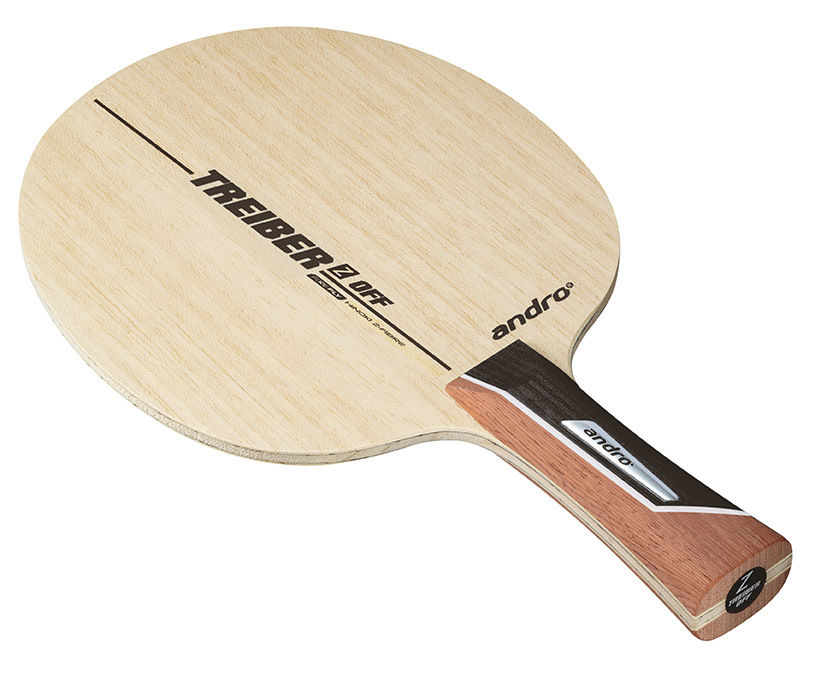
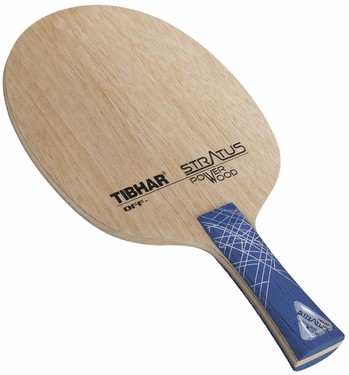
| Andro Treiber Z | Tibhar Stratus Power Wood | |
|---|---|---|
| Our rating | 8.7/10 | 9.0/10 |
| feel | mild, crispy, low vibration, large sweet spot | Elastic with long dwell time, lively yet controlled, larger-than-average head and big sweet spot |
| handle | FL, ST, AN, Chinese pen | FL / ST / AN |
| plies | 7-ply: kiso hinoki outer + ZLC (Z-fiber composite) inner layers + wood core | 5-ply all wood (Limba-Limba-Ayous-Limba-Limba) |
| speed | OFF | OFF- |
| thickness_mm | 6.6-6.8 | 6.2 |
| weight_g | 87-90 | 90 |
We may earn a commission from links on this page. Learn more.
The Headline Number: Stiffness
Of every axis compared here, one gap dwarfs the rest: stiffness. Treiber Z rates 5.9, Stratus Power Wood rates 4.9 — a full 1.0-point spread, the largest delta in this entire comparison set. Hardness follows the same direction at a 0.8-point gap (6.2 vs 5.4). Together those two numbers describe two blades built on completely different principles: Treiber Z is a 7-ply composite with a kiso hinoki outer and ZLC (Z-fiber) inner layers, built for a firm, crisp, low-vibration contact; Stratus Power Wood is a 5-ply all-wood blade (Limba-Limba-Ayous-Limba-Limba) built for long dwell time and an elastic, catapult-like feel. If you have hit with both, this is the difference you already felt — it just now has a number attached.
Control and consistency, by contrast, are essentially tied: control runs 9.2 to 9.3 (a 0.1-point edge for Stratus Power Wood, meaningless), and consistency sits at 9.0 versus 9.1 (again 0.1 point, meaningless). Speed favors Treiber Z by 0.5 points, 9.4 to 8.9 — real, but modest next to the stiffness gap.
What the Reviews Actually Say
Treiber Z’s reputation across Revspin, TableTennis Reference, BladeRubber.net and TableTennisDaily centers on counter-looping, a large forgiving sweet spot, and a short game that “shines across the board.” Its cons are blunt: discontinued and secondhand-only, a low throw angle, and a blade too demanding for beginners or inconsistent strokes.
Stratus Power Wood, per Reddit r/tabletennis, the Tabletennis11 blog, and Megaspin, is widely called the best value 5-ply all-wood blade on the market — reviewers praise beginner-friendly control paired with enough speed for real offense, a larger, more forgiving head, and a “lively, elastic feel with crisp feedback.” Its cons are modest by comparison: a touch head-heavy for some players, plays faster than its OFF- rating suggests (so not ideal for control-first defenders), and backhand blocks reward precise timing.
Should You Switch?
This is less a “which is better” comparison and more a “which category do you need” one. If you are an advanced player who already owns Treiber Z and wants a composite blade’s speed ceiling, moving to Stratus Power Wood means trading away 0.5 points of speed and a full point of stiffness for a softer, longer-dwelling all-wood feel that most reviewers pitch at beginner-to-intermediate loopers, not advanced attackers. That is a downgrade in raw ceiling, not a lateral move, unless what you actually want is the softer feel and lower price point of an all-wood blade.
Going the other way — from Stratus Power Wood up to Treiber Z — only makes sense once your loop technique is consistent enough to handle a low-throw, high-stiffness blade; Treiber Z’s own listed cons explicitly warn it is “too demanding for beginners or players without consistent stroke mechanics,” which describes exactly the player profile Stratus Power Wood is built for.
Fit and Setup
Stratus Power Wood is priced and positioned as an entry point for two-winged loopers building their attacking game — its “phenomenal price-performance” reputation is deserved and it does not require hunting secondhand listings the way Treiber Z does. Treiber Z’s low throw angle needs medium-to-high-throw rubbers to clear the net safely; Stratus Power Wood’s long dwell time already produces a high, long arc on its own, so it is more forgiving of a wider range of rubber choices. At 6.2mm and 90g versus Treiber Z’s 6.6-6.8mm and 87-90g, the two are close enough in raw dimensions that the deciding factor really is stiffness and skill level, not spec sheet numbers.
The OFF versus OFF- classification is not just a label here — it maps directly onto the radar gaps above. Treiber Z’s full OFF rating and higher stiffness suit a player who already generates their own pace and spin and wants a blade that gets out of the way; Stratus Power Wood’s OFF- rating and softer, more elastic build mean the blade itself is doing more of the work, which is exactly why Reddit and Tabletennis11 reviewers keep steering beginner-to-intermediate loopers toward it and advanced attackers toward stiffer composite options instead.
Frequently asked questions
What's the single biggest difference between these two blades?
Stiffness — a 1.0-point gap on the radar scale (5.9 vs 4.9), the largest delta anywhere in this comparison, reflecting Treiber Z's carbon-composite build against Stratus Power Wood's soft all-wood layup.
Is Tibhar Stratus Power Wood good enough for advanced players?
Reviews position it as beginner-to-intermediate, with plenty of speed for offense but a control-first character; Treiber Z's higher speed and stiffness suit more advanced attackers.
Which blade is easier on the wallet?
Stratus Power Wood by a wide margin — it is sold new at a widely-praised price point, while Treiber Z is discontinued and only found secondhand at unpredictable prices.
Do these two blades need different rubbers?
Yes — Treiber Z's low throw angle wants medium-to-high-throw rubbers, while Stratus Power Wood's long dwell already generates a high arc on its own, so it tolerates a wider range of rubber choices.