Andro Treiber Z vs Butterfly Innerforce Layer ALC: Which Should You Buy?
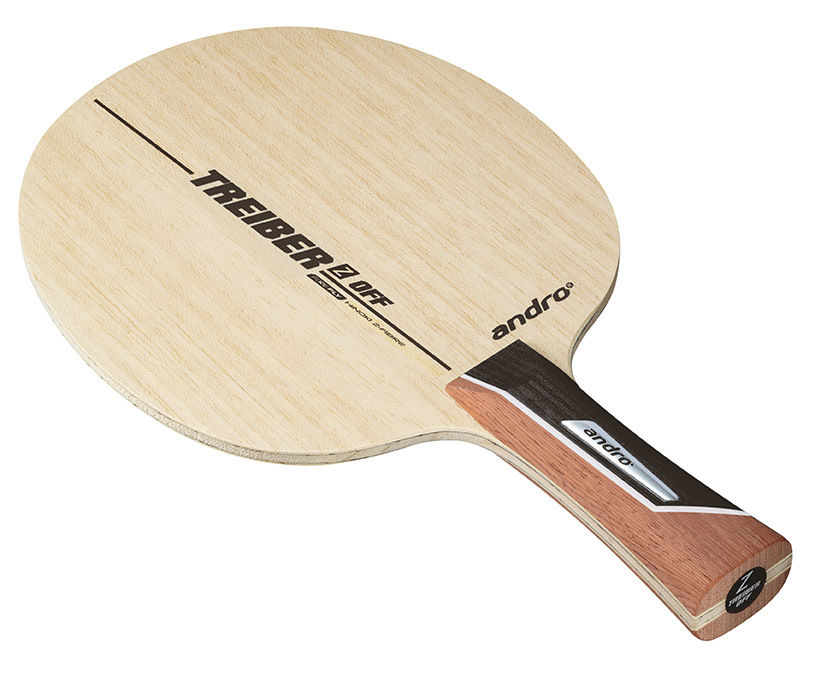
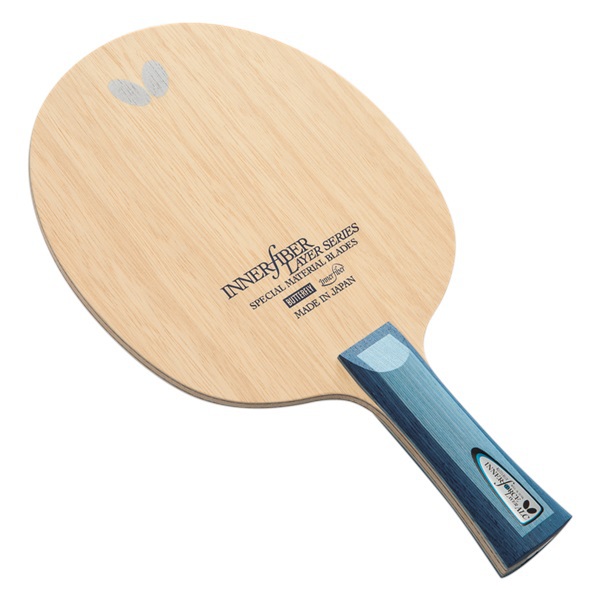
| Andro Treiber Z | Butterfly Innerforce Layer ALC | |
|---|---|---|
| Our rating | 8.7/10 | 8.8/10 |
| feel | mild, crispy, low vibration, large sweet spot | medium, high feel/dwell |
| handle | FL, ST, AN, Chinese pen | FL/ST/AN |
| plies | 7-ply: kiso hinoki outer + ZLC (Z-fiber composite) inner layers + wood core | 5W+2 Inner Arylate-Carbon |
| speed | OFF | OFF |
| thickness_mm | 6.6-6.8 | 5.9 |
| weight_g | 87-90 | 86 |
We may earn a commission from links on this page. Learn more.
The Real Story: Inner-Carbon vs Outer-Carbon Feel
This matchup isn’t really about speed — it’s about construction philosophy, and the axis data proves it. Hardness shows the widest gap of any pair in this data set: Treiber Z at 6.2 versus Innerforce Layer ALC’s 5.2, a full 1.0-point delta. Stiffness follows the same pattern at 5.9 vs 5.0, a 0.9-point gap. Both numbers point to the same underlying cause: Treiber Z uses ZLC carbon composite layers close to the hitting surface, while Innerforce Layer ALC buries its arylate-carbon layers deep inside a wood sandwich — the inner-ALC design Butterfly is known for. That inner placement is exactly why Innerforce Layer ALC’s own reviewers describe an all-wood feel and dwell up close, with the carbon only kicking in on harder swings.
Speed (9.4 vs 9.1, delta 0.3) is close enough that most players won’t feel a real difference in raw pace. Control runs the other way — Innerforce Layer ALC actually edges ahead, 9.5 vs 9.2, a 0.3-point gap in its favor. Consistency shows the largest edge to Innerforce Layer ALC at 0.5 points (9.5 vs 9.0). Put together: Treiber Z is the firmer, stiffer blade with a slight speed edge; Innerforce Layer ALC is the softer, higher-dwell blade with a slight edge in control and a meaningfully higher consistency score from its user base.
What Reviewers Say About the Trade-Off
Revspin and TableTennisDaily reviewers of Innerforce Layer ALC repeatedly say it offers more feel and control than the Viscaria or Timo Boll ALC — direct praise against Butterfly’s own outer-carbon flagships, not just against Treiber Z. Megaspin reviews echo the large, stable sweet spot across short, mid and far game. The tradeoff those same reviewers flag: Innerforce Layer ALC is slightly slower than outer-carbon blades like the Viscaria, and its first feel is bouncy, taking time to adjust to before the touch becomes predictable.
On the Treiber Z side, the mild, crispy, low-vibration feel that Revspin and BladeRubber.net reviewers describe is the direct opposite sensation — less bounce, more directness, and a large sweet spot that keeps blocking stable even against heavy topspin.
Migration: Should You Switch?
If you currently play with Treiber Z because you like its crisp, low-vibration directness, moving to Innerforce Layer ALC will feel like a genuinely different blade, not an upgrade — you’ll trade 0.9 to 1.0 points of stiffness and hardness for a softer, bouncier hitting sensation that takes an adjustment period. The control and consistency gains (0.3 and 0.5 points respectively) are real but modest, and they come at the cost of the exact feel you presumably chose Treiber Z for in the first place.
Going the other direction makes more sense for a specific type of player: someone who wants an all-wood-adjacent feel with occasional carbon acceleration, rather than a consistently stiff, fast-off-the-bounce blade. Innerforce Layer ALC pairs best with medium-hard inverted rubbers according to its reviewers, and rewards players who want dwell and touch on defensive and rallying shots, saving the carbon kick for when they commit to a full swing.
Fit and Playing Style
Treiber Z demands a consistent, developed stroke and punishes passive play — its low throw angle needs rubbers with their own medium-to-high throw just to clear the net safely. Innerforce Layer ALC is more allround-to-offensive in character: reviewers describe it as forgiving enough for developing players who still want offensive ceiling, provided they’re willing to spend a few sessions adjusting to the initial bounce.
Bottom Line
Choose Treiber Z if firmness, directness and top-end speed matter more to you than a soft, high-dwell touch. Choose Innerforce Layer ALC if you want Butterfly’s inner-carbon feel — closer to all-wood than most OFF blades — with a genuine, reviewer-confirmed control and consistency edge, and you’re prepared for a short adaptation period before the blade’s character clicks. This is a feel decision more than a performance decision, and the axis data is honest about that.
Frequently asked questions
Does Innerforce Layer ALC feel like Treiber Z?
No -- it's a fundamentally softer, higher-dwell blade due to its inner-ALC construction; hardness and stiffness scores differ by roughly a full point versus Treiber Z's firmer, crisper feel.
Which blade has better control?
Innerforce Layer ALC, by a modest 0.3-point margin (9.5 vs 9.2) -- reviewers on Revspin and TableTennisDaily consistently rate it above even Butterfly's own Viscaria and Timo Boll ALC for control.
Is Innerforce Layer ALC good for beginners?
Not quite -- it's still a premium OFF blade that rewards a developed stroke, though its bouncy, forgiving first feel makes it more approachable than Treiber Z's demanding low-throw-angle profile.
Why does Innerforce Layer ALC feel bouncy at first?
Its inner-ALC layers sit deep in a wood sandwich rather than on the surface, producing a springy first impression that reviewers say takes time to adapt to before touch becomes predictable.