Andro Treiber Z vs Butterfly Fan Zhendong ALC: Which Should You Buy?
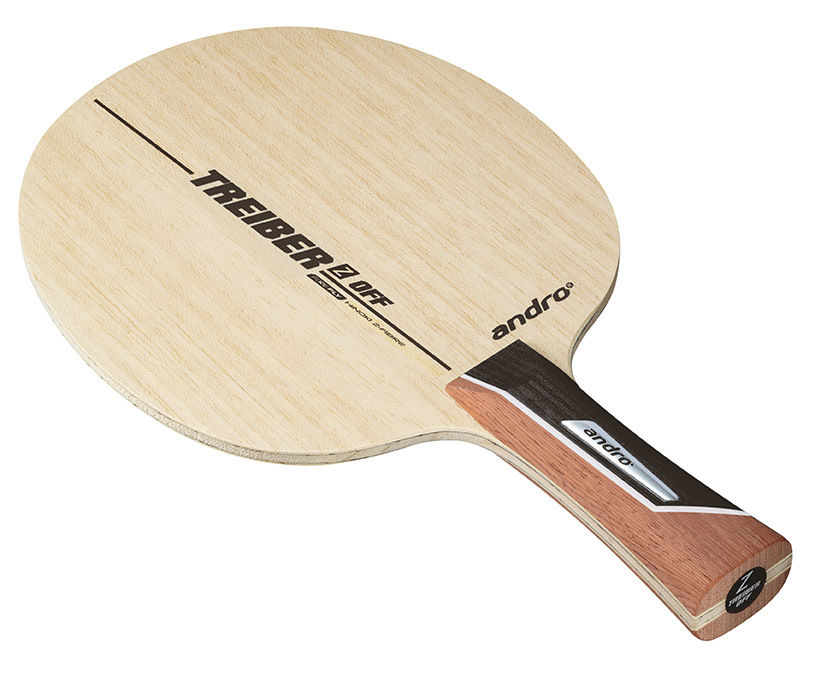
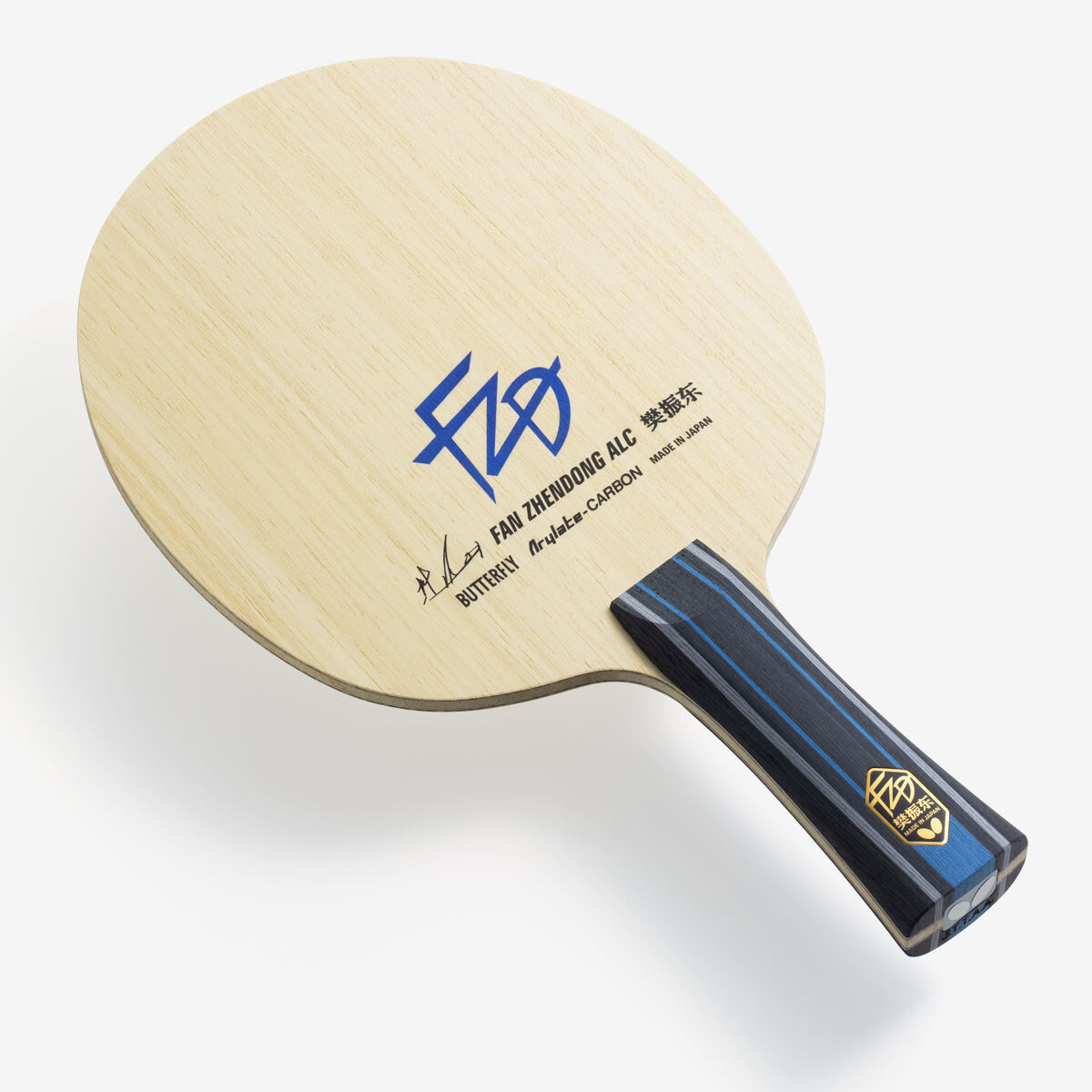
| Andro Treiber Z | Butterfly Fan Zhendong ALC | |
|---|---|---|
| Our rating | 8.7/10 | 8.8/10 |
| feel | mild, crispy, low vibration, large sweet spot | Crisp and direct with noticeable dwell on contact; slightly softer arc than Viscaria Super ALC |
| handle | FL, ST, AN, Chinese pen | Flared (FL), Straight (ST), Anatomic (AN) — notably thicker grip than Viscaria |
| plies | 7-ply: kiso hinoki outer + ZLC (Z-fiber composite) inner layers + wood core | 5 wood plus 2 arylate-carbon (ALC) — Koto / ALC / Limba / Kiri / Limba / ALC / Koto |
| speed | OFF | OFF |
| thickness_mm | 6.6-6.8 | approx 5.7mm |
| weight_g | 87-90 | 87-92g typical |
We may earn a commission from links on this page. Learn more.
Where the Data Actually Diverges
Treiber Z and Fan Zhendong ALC score almost the same overall (8.7 vs 8.8), which on its own tells you nothing useful. The axis breakdown is where the real differences live. Speed shows the widest practical gap: Treiber Z at 9.4 versus Fan Zhendong ALC’s 8.8, a 0.6-point delta. That is enough to notice at the table — Treiber Z pushes the ball out faster off the same swing, which is why it counter-loops with more dive-down pace against incoming topspin. Stiffness runs the same direction and by a similar margin (5.9 vs 5.2, delta 0.7), meaning Treiber Z also feels firmer and more direct off contact.
Control, by contrast, is close enough to ignore: 9.2 versus 9.0 is a 0.2-point gap, well inside the noise band for aggregated user ratings. Hardness (6.2 vs 6.1) and consistency (9.0 vs 9.0, a dead tie) are even smaller. If a comparison page tells you Fan Zhendong ALC is meaningfully more controllable or more consistent than Treiber Z, don’t believe it — the numbers say otherwise. The real split is speed and stiffness, not control.
What the Reviews Actually Say
Revspin’s aggregated data on Treiber Z backs up the counter-looping strength, and reviewers on TableTennisDaily’s forum and BladeRubber.net describe the same low-vibration, large-sweet-spot feel that makes it forgiving on off-center blocks despite its speed. On the Fan Zhendong ALC side, Megaspin and TableTennisDaily reviewers consistently flag the outstanding dwell time — the ball sits on the rubber a beat longer before release, which is what lets players load heavy topspin even at full power without the ball flying long. That dwell-driven forgiveness at 100 percent effort is a genuinely different trait from Treiber Z’s speed-first counter-looping, and it’s not something the axis numbers alone capture.
The Handle Difference Nobody Mentions
One spec that matters more than most buyers expect: Fan Zhendong ALC ships with a noticeably thicker handle than the Viscaria it’s derived from, and multiple reviewers call it out specifically for players with larger hands who found the Viscaria grip too thin. Treiber Z, meanwhile, is available in FL, ST, AN and even Chinese penhold configurations and reviewers report it stays comfortable across all of them. If handle feel matters as much as blade performance, that’s a real, decision-relevant difference the star ratings won’t show you.
Should You Switch?
If you already own a Treiber Z and it’s playing well for you, there’s little performance reason to move to Fan Zhendong ALC — the control and consistency numbers are essentially tied, and you’d be trading away 0.6 points of speed and 0.7 points of stiffness for a softer, more forgiving blade with a wider rubber compatibility window. That trade only makes sense if you specifically want more forgiveness at full-power loops, or if your hands are large enough that the Viscaria-style thin handle bothers you.
Going the other way is more compelling. Treiber Z is discontinued and only available secondhand, and its low throw angle demands rubbers with medium-to-high throw of their own just to clear the net — a real technical requirement that Fan Zhendong ALC, still in production and compatible with everything from tacky Chinese rubber to high-tension European sheets, doesn’t impose. For a player shopping new rather than hunting the secondhand market, Fan Zhendong ALC is the more practical buy even though it gives up a bit of raw speed and stiffness.
Bottom Line
Neither blade is beginner-friendly — both demand a developed, consistent stroke, and both punish passive blocking styles. Pick Treiber Z if you can find one secondhand and want the highest ceiling on speed and counter-looping pace. Pick Fan Zhendong ALC if you want a currently-produced, wide-rubber-compatible blade with a bit more forgiveness at full power and a handle built for bigger hands. Either way, don’t choose based on control or consistency alone — those two axes are close enough to be a coin flip, and the real decision sits in speed, stiffness, handle comfort and availability instead.
Frequently asked questions
Is Fan Zhendong ALC faster than Andro Treiber Z?
No -- Treiber Z rates higher on speed (9.4 vs 8.8 on the aggregated axis scale), a 0.6-point gap that's noticeable in counter-looping pace.
Which blade has better control?
They're essentially tied -- 9.2 vs 9.0, a 0.2-point gap that's within normal rating variance, so don't choose based on control alone.
Can I still buy Andro Treiber Z new?
No, it's discontinued and only found on the secondhand market, while Fan Zhendong ALC remains in current production.
Which blade suits players with large hands better?
Fan Zhendong ALC -- its handle is notably thicker than the Viscaria it's based on, specifically addressing players who found that handle too thin.