Butterfly Timo Boll ALC Review: The Balanced Arylate-Carbon All-Rounder
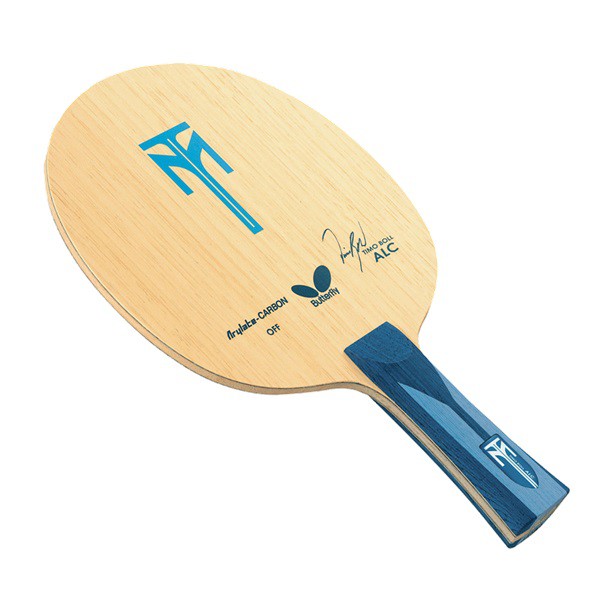
Pros
- Exceptional balance of spin, speed and control — Butterfly found a near-ideal ratio for an ALC blade
- Class-leading spin on both wings, helped by a large sweet spot and long dwell at contact
- Solid, consistent feel without the hollow vibration of many blades — the whole face plays like one big sweet spot
- Superb from mid-distance to away from the table, and a famously good match with Tenergy 05
- Proven across styles — relied on by elite blockers and all-out attackers alike
Cons
- Premium price
- Gives little vibration feedback, so it's less suited to intermediate players still developing technique
- Genuinely fast and OFF-rated — it rewards an active, technically sound stroke rather than forgiving a passive one
The Butterfly Timo Boll ALC is one of the most influential outer arylate-carbon blades ever made, the signature stick of three-time European champion Timo Boll. Most players who shop the ALC field hold it up against the Viscaria and the rest. This review pulls from three independent English-language sources, the Revspin community database, r/tabletennis discussion, and the TableTennisDaily equipment reviews, to explain why it has stayed a benchmark and who it actually suits.
Performance
Balance is what defines the Timo Boll ALC. Built as a 5-ply wood plus 2-ply arylate-carbon blade (a koto outer ply, around 5.8mm and 86–88g, rated OFF), it blends speed, heavy spin, and control in a ratio reviewers keep calling near-ideal for a carbon blade. Spin leads the way: a large sweet spot and long dwell let it pour heavy topspin off both wings, and it is famously at home with Tenergy 05. It does its best work from mid-distance to away from the table, where the arylate-carbon and harder wood outer plies deliver high-end speed while keeping enough flex to throw a high arc. Owners describe the whole face as ‘one large, beautiful, very consistent sweet spot’ and praise a solid, un-hollow feel that many non-carbon blades lack. The catch is feedback. Because it transmits little vibration, it is fast and not the easiest to control, which is why several reviewers steer intermediate players still building technique toward a more communicative all-wood blade first. The range across styles tells the story: it stays stable enough for elite blockers like Fegerl and turns explosive for attackers like Boll.
What Reviewers Agree (and Disagree) On
All three sources agree the blade is fast, exceptionally balanced, spin-rich, and stable, with a large sweet spot, one of the best ALC blades on the market. The arguments are about value and feel. Some players question whether it really beats much cheaper blades by enough to notice, and one head-to-head found a Viscaria Super ALC felt slower and more controlled than the Boll ALC despite official numbers pointing the other way, with rubber freshness clouding the comparison. The split on feedback is the sharpest: the low-vibration, solid feel that experienced players love is exactly what sends some reviewers to point developing players elsewhere.
Who Should Buy It
Buy the Timo Boll ALC if you are an attacking shakehand player with a developed, active stroke who wants a balanced, high-spin arylate-carbon main blade with a large sweet spot and a high speed ceiling, and the premium price does not put you off. It forgives you on consistency, not on feedback, so it pays off for players who already trust their contact. Hold off if you are an intermediate player still building technique who reads strokes through a blade’s vibration, or if you are price-sensitive. A communicative all-wood blade, or a cheaper ALC, will serve you better while you develop.
FAQ
Timo Boll ALC or Viscaria?
They are close cousins in the ALC family. The Boll ALC is prized for its balance and large sweet spot; the Viscaria often reads a touch crisper. The differences are subtle and swing hard on rubber choice and freshness. Both are top-tier attacking ALC blades.
Is it good for beginners?
Not ideally. It is fast and gives little vibration feedback, so developing players who learn through the feel of their strokes do better on a more communicative all-wood blade first, then step up to the Boll ALC.
What rubber pairs best with it?
Tenergy 05 on both sides is the famous match, but it takes most premium tensors and hybrids in stride. The large sweet spot and dwell keep it forgiving whatever you mount on it.
Is it worth the premium price?
For an attacking player with a developed stroke, most reviewers say yes: the balance, spin, and stability are elite. A minority feel the jump over cheaper blades is smaller than the price suggests, so try before you buy if you can.