Butterfly Viscaria Review: The Arylate-Carbon Benchmark for Shakehand Loopers
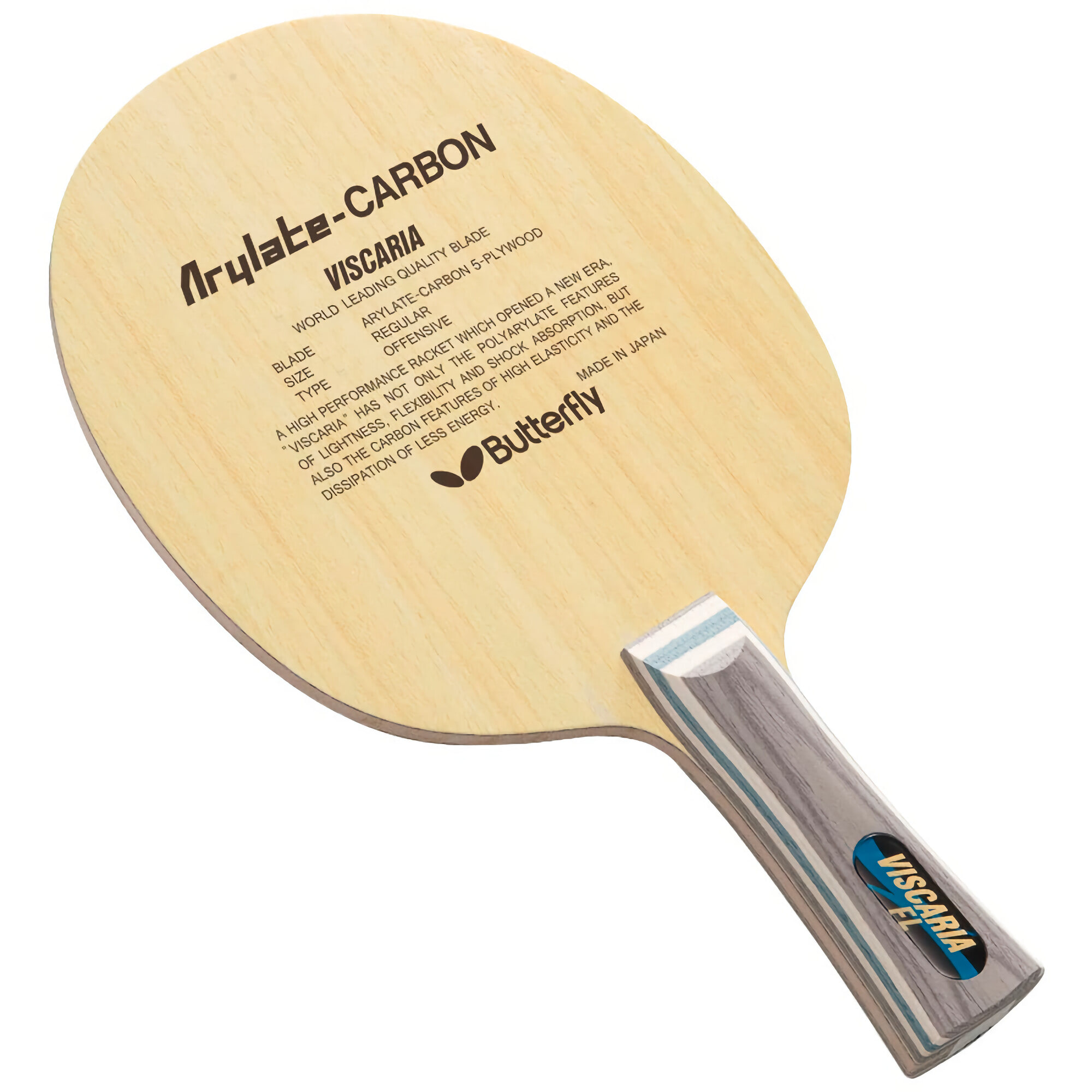
Pros
- Deep power and a quick, crisp release from the 5-ply wood + 2-ply arylate-carbon build (OFF), with a koto outer ply
- Forgiving and consistent for a carbon blade — a large sweet spot and a smooth block-to-loop transition
- Handles the full game: owners report looping, blocking, flat hitting, pushing and the short game all play well
- Proven elite pedigree — the ALC structure carried Fan Zhendong to a treble early in his career
Cons
- Expensive — a premium tier internationally and well over a thousand RMB at home
- Demands an active stroke: not a beginner blade, and passive or borrowed-pace players won't unlock its deep power
- Not unanimous — a minority of users find it only medium-fast and harder to generate arc with, and batch/edition weight varies
Few blades carry a brand’s identity the way Viscaria carries Butterfly’s. The 5-ply wood plus 2-ply arylate-carbon (ALC) construction has anchored offensive shakehand play for years and was proven at the very top of the sport. This review pulls together three independent sources, a Chinese WeChat deep-dive on the Viscaria and Super ALC spec comparison, a WeChat piece on the gold-stamp handle-weighting detail, and a large body of verified buyer reviews from a major retailer, to explain what the original Viscaria still does best and who should buy it.
Performance
Viscaria is the textbook medium-hard, slightly crisp arylate-carbon blade: deep power, a fast concentrated release, and a focused dwell that turns a committed stroke into a heavy, fast loop. Published figures put it at a springiness rating of 11.8 and a vibration rating of 10.3, 5.8mm thick, around 86–87g in the shakehand build, though individual sticks vary and some FL examples come in around 91g. What owners single out is not raw speed but forgiveness and range. A large sweet spot, a smooth hand-off from blocking to active looping, and the koto-plus-ALC ‘crispness’ that long-term users keep returning to. They report looping, blocking, flat hits, pushes, and the short game all playing well, which is why it reads as a do-everything attacking blade and not a one-trick speed board. The newer Super ALC variant nudges springiness to 12.1 and weight to 89g for more single-ball power, which leaves the original as the slightly lighter, more controllable option. Gold-stamp editions add a small hard-plastic block inside the handle: it raises hitting power and shifts the balance toward the grip, so the blade hits harder without feeling proportionally heavier.
What Reviewers Agree (and Disagree) On
The consensus across sources is a fast, powerful, forgiving ALC blade with a rock-solid pedigree and a large sweet spot, and many buyers call it a long-term keeper after running through a dozen alternatives. The disagreements are about emphasis and ceiling. A minority of buyer reviews call it only ‘medium speed’ and harder to arc with, and say it pairs best with tacky Chinese or hybrid rubbers; most others find it fast and effortless. Every angle returns to the same caveat: this is not a beginner blade. It rewards an active stroke and gives back little to passive, borrowed-pace play.
Who Should Buy It
Buy Viscaria if you are an attacking shakehand player with a complete, active looping stroke and you want a high-ceiling main blade that stays controllable and forgiving. It pays off for players who drive the ball, treats good technique generously, and its large sweet spot makes it less punishing than a stiff pure-carbon board. Skip it, or budget for a softer all-wood blade first, if you are a beginner or a pure blocker and counter-hitter who lives on the opponent’s pace, because the deep power only shows up when you supply your own. A common pairing puts a tacky Chinese rubber such as Hurricane on the forehand with a tensor like Tenergy 05 or a hybrid on the backhand.
FAQ
Is Viscaria good for beginners?
Not as a first blade. Buyers and reviewers agree it is an OFF attacking blade that demands a real stroke; beginners are better off on a softer all-wood allround blade before stepping up to ALC.
Viscaria or the newer Super ALC?
The original is slightly lighter (around 86g vs 89g) and a touch more controllable; the Super ALC raises springiness and single-ball power. Take the original for control-leaning attack, the Super for maximum pace.
Is it actually fast, or only medium speed?
Opinions split. Most owners find it fast and effortless, but a minority call it medium-paced and harder to arc with, often the same players who run tacky Chinese or hybrid rubbers on it. Your stroke and rubber choice drive the answer here.
What rubbers pair well with it?
A classic setup runs a tacky Chinese rubber on the forehand for spin with a tensor or hybrid such as Tenergy 05 or Dignics 09C on the backhand for speed and ease.