Butterfly Lin Gaoyuan ALC vs Butterfly Timo Boll ALC: Which Should You Buy?
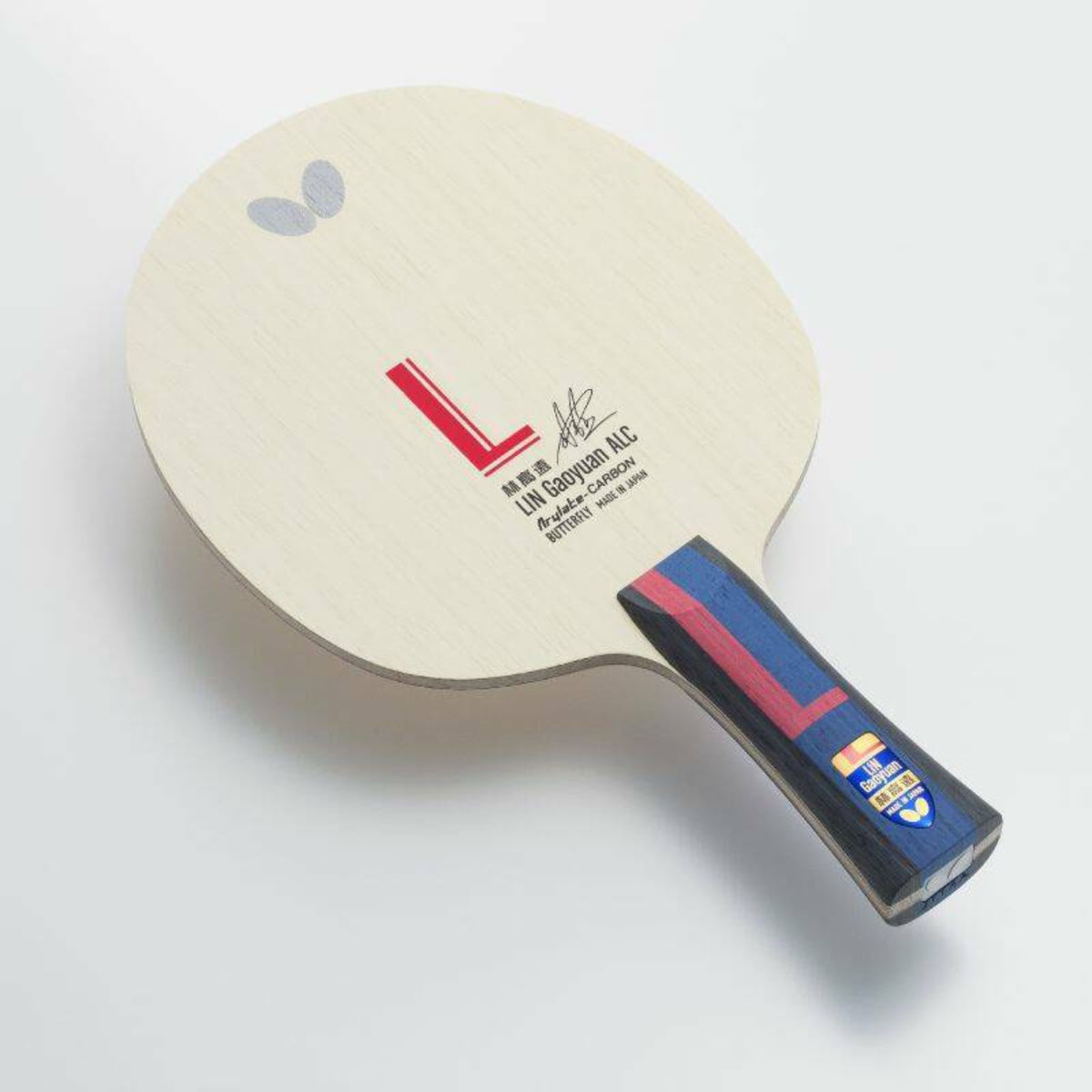
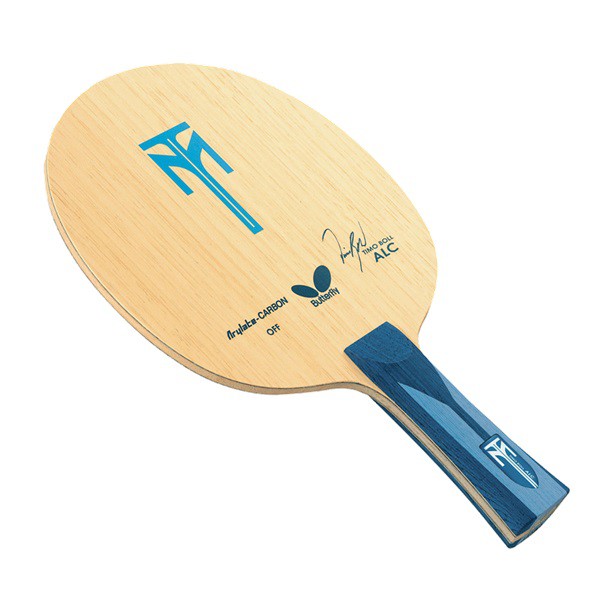
| Butterfly Lin Gaoyuan ALC | Butterfly Timo Boll ALC | |
|---|---|---|
| Our rating | 8.7/10 | 9.0/10 |
| feel | Soft — flexible ALC gives a more wood-like feel than other carbon blades; high dwell time | medium |
| handle | Shakehand (FL, AN, ST options); shorter anatomic handle than Viscaria | FL/ST/AN |
| plies | 5 wood + 2 arylate-carbon (ALC) — 7-ply construction with koto outer layers and inner arylate-carbon fiber | 5W+2 Arylate-Carbon |
| speed | OFF (Butterfly rates Reaction 118, mid-fast; equivalent to OFF/OFF+ class) | OFF |
| thickness_mm | 5.7mm | 5.8 |
| weight_g | 84-87g typical (Butterfly spec approx 87g) | 86 |
We may earn a commission from links on this page. Learn more.
Speed and Control Are a Wash — Consistency Is Not
Start with what doesn’t separate these two elite ALC blades: speed (Lin Gaoyuan ALC 9.2, Timo Boll ALC 9.0, a 0.2-point gap) and control (8.6 versus 8.7, a 0.1-point gap) are both close enough to call ties. If you’re choosing based on raw pace or precision, the data says don’t bother — these are two of the fastest, most controllable blades in this comparison set, and they’re separated by margins inside normal rating noise.
Consistency is a different story entirely, and it’s the single largest gap anywhere in this comparison set: Lin Gaoyuan ALC rates 5.6, Timo Boll ALC rates 9.3 — a 3.7-point chasm. That is not a subtle difference. A blade rated 5.6 on consistency is going to feel noticeably less forgiving and more technique-dependent than one rated 9.3, and the cons list for the Lin Gaoyuan ALC explains exactly why: “flex can throw fast incoming topspin off-trajectory on passive blocks,” and it’s explicitly described as the “wrong fit for beginners or players who lean on blade speed instead of stroke technique.” Meanwhile, the Timo Boll ALC’s own reviewers describe a “solid, consistent feel without the hollow vibration of many blades” where “the whole face plays like one big sweet spot.” These aren’t contradictory data points pulled from different contexts — they’re two blades built with genuinely different philosophies about how much they should do for you versus how much they demand from your technique.
Stiffness adds a second real gap: Timo Boll ALC rates 5.8, Lin Gaoyuan ALC rates 4.5, a 1.3-point difference. The Lin Gaoyuan ALC is the softer, more flexible blade of the two — reviewers describe it as sitting “closer to wood than most carbon blades” — while the Timo Boll ALC plays with more standard carbon-blade firmness. Hardness barely moves (6.0 versus 6.2, a 0.2-point gap) — don’t weight that one.
Availability Changes the Calculus
Here’s a factor the radar numbers can’t capture but that may matter more than any of them: the Lin Gaoyuan ALC is discontinued. Its own cons list states plainly that “discontinued production makes a new copy hard to find and expensive.” The Timo Boll ALC remains a current, purchasable Butterfly product. If you’re deciding between these two today rather than comparing specs on paper, factor in that one requires a hunt through secondary markets and the other doesn’t — that alone might settle it before you even get to performance.
Overall ratings reflect this whole picture: Timo Boll ALC rates 9.0 against Lin Gaoyuan ALC’s 8.7 — not a huge gap, but consistent with a blade that’s more consistent, more available, and built for a broader range of technique levels.
Who Actually Wants the Lin Gaoyuan ALC
Despite the consistency gap, the Lin Gaoyuan ALC isn’t a worse blade in every sense — it’s a more specialized one. Its bestFor language targets “advanced attackers who want OFF-speed arylate-carbon power and a flatter arc without losing the feedback of a pure wood blade,” explicitly framed as “a small jump for players coming off a good 5-ply wood blade.” If your technique is already solid and you want the softer, more wood-like flex with a slightly higher raw speed ceiling (9.2 versus 9.0, real if modest), and you’re willing to source a discontinued blade, it remains a legitimate choice — reviewers do note its large head gives “a wide sweet spot that cuts down unforced errors” even as its overall consistency score stays lower.
The Timo Boll ALC’s own bestFor is more universally safe: “attacking shakehand players with a developed stroke who want a balanced, high-spin arylate-carbon main blade with a large sweet spot.” For most players comparing these two blades today, the combination of near-identical top-end speed, tied control, dramatically better consistency, and actual availability makes the Timo Boll ALC the lower-risk pick. The handle also runs standard-length on the Timo Boll ALC, avoiding the “notably shorter than comparable Butterfly blades” complaint attached to the Lin Gaoyuan ALC.
Frequently asked questions
Which is more consistent, the Lin Gaoyuan ALC or the Timo Boll ALC?
The Timo Boll ALC, by a large margin — 9.3 versus 5.6 on Revspin's aggregated consistency rating, the biggest gap in this whole comparison set.
Is the Lin Gaoyuan ALC still in production?
No, it's discontinued, which its own reviewers note makes a new copy hard to find and expensive. The Timo Boll ALC remains a current product.
Which blade is faster?
They're close — Lin Gaoyuan ALC rates 9.2 versus Timo Boll ALC's 9.0, a 0.2-point gap that's within normal rating noise. Don't decide based on speed.
Why does the Lin Gaoyuan ALC have lower consistency if its control rating is similar?
Its flex is described as able to throw fast incoming topspin off-trajectory on passive blocks, and it's explicitly not recommended for players who lean on blade speed over stroke technique — it rewards precise strokes and punishes passive ones more than the Timo Boll ALC does.