Stiga Clipper Wood Review: The Classic 7-Ply All-Wood Blade That Still Defines Offensive Control
Pros
- Big sweetspot and excellent, confidence-building control
- Rock-solid blocking that absorbs incoming energy
- Outstanding short-game touch on pushes and drop shots
- Highly regarded straight handle and pleasant overall balance
- Classic 7-ply all-wood feel with good spin from the soft core
- Pairs superbly with faster European or Japanese rubbers
Cons
- Real-world speed sits in OFF, not the OFF+ its reputation suggests
- Asks the player to generate power, slow in the passive short game
- Runs heavy and can cause fatigue over long sessions
- Known Stiga splintering tendency means many owners seal it
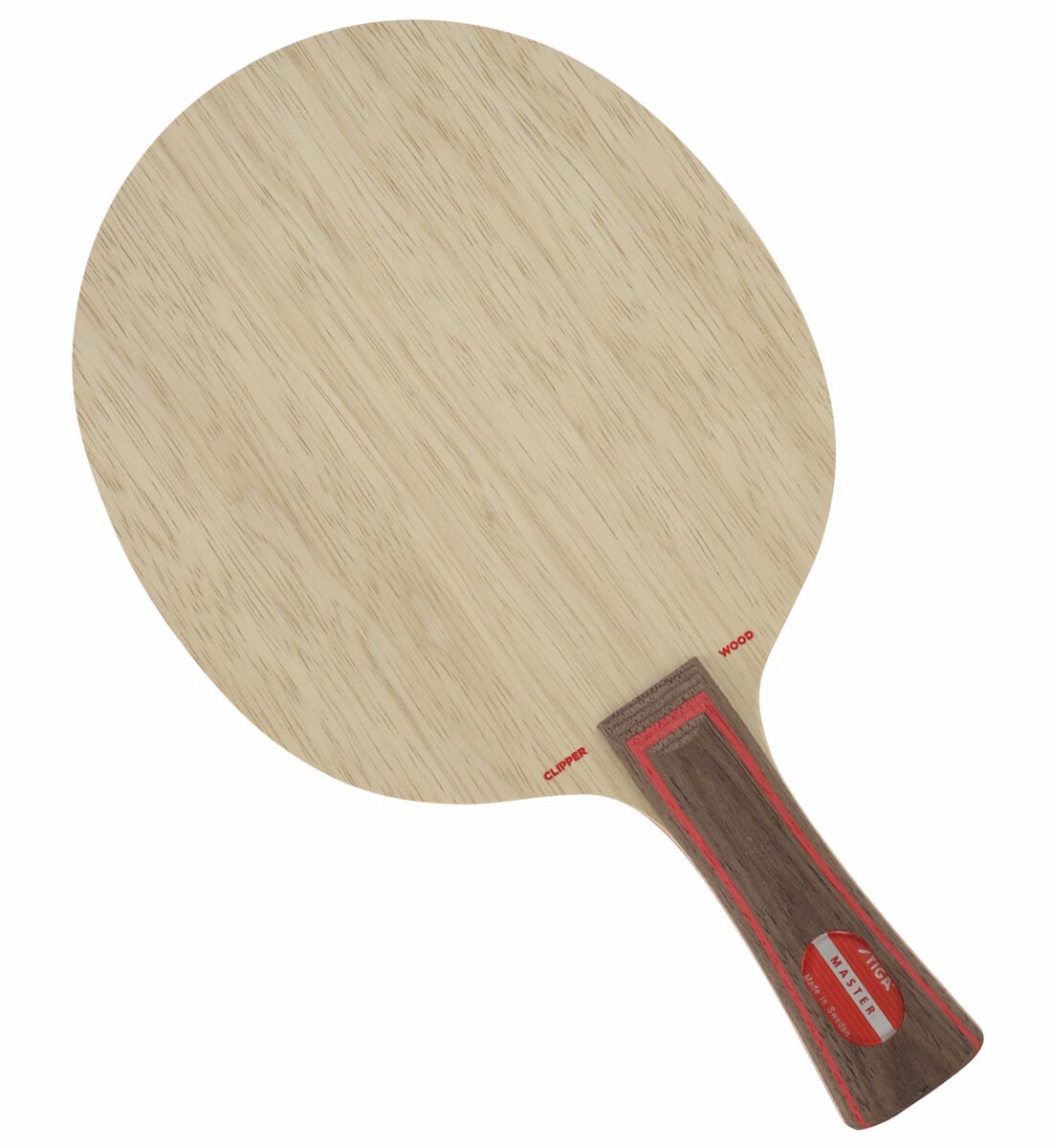
Few blades carry as much history as the Stiga Clipper. Released decades ago and sold in the hundreds of thousands, it became the yardstick a whole generation measures other 7-ply blades against. The Clipper Wood is the pure all-wood version of that lineage: seven plies with limba outer veneers over an ayous core, no carbon, no synthetics, built for the close-to-mid-table offensive all-rounder. Across Revspin, Reddit, and detailed independent tests, it keeps turning up as a trusted long-term daily driver. The job here is to weigh what those real-world sources actually say about how it plays, where it shines, and where the reputation outruns the blade in the 40+ ball era.
Performance
Nearly every reviewer lands on the same thing: this is a control-first offensive blade, not a speed monster. Forum veterans call it a joy to hold, strongest on blocks and counter-attacks, with only slight flex when looping. The soft wood gives good spin and the stiffness gives good control, which makes it a natural for loopers and blockers who stand close.
The surprise comes from independent testers who expected a fast, stiff blade from the forum hype and met only a medium-stiff feel and a low-to-mid OFF speed. So forehand loops and power drives miss the penetrating, long, flat trajectory of other 7-ply limba and ayous blades, and you have to put in your own strength to get the power out. The payback is consistency and feel.
Blocking gets called rock-solid over and over, the OFF speed and the blade thickness soaking up incoming energy for flat, controlled returns. The short game is a real highlight — the solid feeling lets you play pushes and drop shots short and tight with high control. The big sweetspot comes up again and again, forgiving mishits in a way stiffer carbon blades will not.
The costs are real. The passive short game runs slow, and the blade is heavy: several owners report hand and forearm fatigue over long sessions, and a few suggest hunting down a 92-gram-or-heavier piece only if you want maximum power for finishing dead balls. Rubber choice is the lever. With moderate tacky Chinese rubbers like Hurricane 3 it can lack pace far from the table; with faster European or Japanese sheets it balances looping, blocking, short game, and flat hitting beautifully.
What Reviewers Agree (and Disagree) On
The consensus is remarkably consistent across sources: the Clipper Wood is a solid, controllable, big-sweetspot 7-ply all-wood blade that rewards close-to-mid-table loop-and-block play and is heavy but well balanced. Everyone agrees it is a control-oriented blade that needs the player to supply the power. The main disagreement is over speed classification. Stiga and older reputation place it at OFF or even OFF+, and some users still rate the kill loops as powerful, but a notable group of modern reviewers using the 40+ ball insist its real-world speed is firmly OFF, even low-to-mid OFF, and that it is slow in the short game. There is also a split on who it suits: some say low-level players cannot go wrong with it, while testers more often pin it as ideal for intermediate to advanced players wanting a more solid feeling than a 5-ply all-wood blade. Build quality draws mixed notes too, with praise for the handle and balance set against complaints about rough handles, sharp wings needing sanding, and Stiga’s well-known splintering tendency.
Who Should Buy It
Buy the Clipper Wood if you are a close-to-mid-table offensive all-rounder, looper or blocker who values control, a big forgiving sweetspot and a solid all-wood feel over raw top-end speed. It is an excellent choice for improving intermediates ready to step up from a softer 5-ply blade, and it remains a credible option for advanced players who build their game around consistency, blocking and short-game touch. To get the most from it, pair it with faster European or Japanese rubbers rather than slow tacky Chinese rubbers, and consider sealing the surface to guard against splintering. Look elsewhere if you want explosive OFF+ speed straight out of the box, a lightweight setup, or a blade that generates power for you far from the table; in those cases an inner-carbon or a faster 7-ply blade will serve you better.
FAQ
Is the Stiga Clipper Wood really an OFF+ blade?
Despite its fast reputation, many real-world reviewers using the modern 40+ ball describe its actual speed as OFF, even low-to-mid OFF, rather than OFF+. It is fast enough for close-to-mid-table attacking but asks you to supply the power, and it can feel slow in the passive short game. Pairing it with faster rubbers raises the ceiling considerably.
What kind of player is the Clipper Wood best for?
It suits close-to-mid-table all-round attackers, loopers and blockers who prioritize control, a big sweetspot and a solid all-wood feel. Reviewers most often recommend it for improving intermediates and advanced players who want something more solid than a 5-ply all-wood blade, though some say lower-level players can also do well with it.
What rubbers pair best with the Clipper Wood?
Reviewers report it can lack pace far from the table with slower tacky Chinese rubbers, but comes alive with faster European or Japanese rubbers, delivering a balanced setup for looping, blocking, short game and flat hitting. It is also commonly used with tacky rubbers like the Rakza Z family for a spin-heavy, controlled feel.
Is the Clipper Wood heavy, and does it need sealing?
Yes, it runs heavy though not head-heavy, and some owners report hand fatigue over long sessions, so seeking a lighter specimen can help unless you want maximum power. As an all-wood Stiga blade it has a known splintering tendency, so many players seal or lacquer the surface before mounting rubbers.
How does the blocking and short game feel?
Blocking is one of the blade’s strongest points and is repeatedly called rock-solid, with the thickness and OFF speed absorbing incoming energy for flat, controlled returns. The short game is also a highlight, with the solid feeling allowing pushes and drop shots to be played short and tight with high levels of control.