Nittaku Violin Review: A Control-First Japanese All-Wood Blade
Pros
- Exceptional control and pinpoint placement praised across every source
- Premium Made in Japan craftsmanship and consistent quality
- Warm, soft feel with long dwell time for spin and short-game touch
- Excellent for looping and close-to-mid distance all-round play
- Flexible 5-ply all-wood construction that comes alive with Tensor rubbers
- Great technique-building blade for developing offensive players
Cons
- Slower than its OFF- billing suggests, weak at long-distance pace
- Premium price questioned versus cheaper blades like the Primorac
- Relatively stiff when new and benefits from a break-in period
- Needs harder or tackier rubbers to reach its full potential
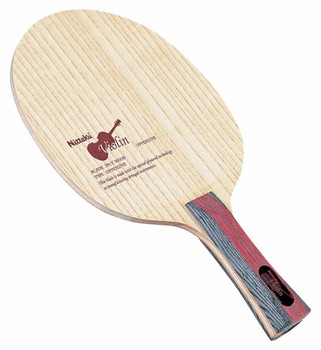
The Nittaku Violin is one of the most recognizable premium all-wood blades around, and its name rests on craftsmanship as much as play. Nittaku sells it as a finely tuned instrument for the offensive player, using a binding method borrowed from makers of fine stringed instruments so the wood keeps its natural elasticity. What you get is a classic 5-ply pure-wood blade with a Kiri core and White Ash outer plies, around 86 grams at about 5.3mm thick. Across RevSpin, Reddit, Megaspin and TTSensei the story repeats: a control-oriented, warm-feeling blade rated between ALL+ and OFF-, loved by players who place the ball with spin and touch rather than overpower it. This review gathers those community and retailer voices to map where the Violin shines, where it lets you down, and who should actually buy it.
Performance
On the table the Violin plays the way a premium all-wood blade should: forgiving, communicative, built around control over speed. Every source lands on control as the headline. TTSensei rates control about 8.5 out of 10 against a speed near 7.5, files the blade as mid-slow to OFF-, and credits the string-instrument binding with keeping the wood veneers elastic enough to give a soft feel and excellent ball control. Megaspin buyers say the same in plainer terms. One calls the control and placement un-matchable and rates the blade honestly better than far pricier super blades, while others point to very high dwell as the thing that makes looping, chopping and serving feel easy and repeatable on a low but very accurate arc. On RevSpin, ControlledSpin slots it in the All+/Off- category and praises feel and control for looping and close-to-the-table play, noting the composition feels harder yet very flexible next to a standard Limba 5-ply, though he grants it is not as fast or as good at blocking as the Nittaku Acoustic.
Speed is the standing complaint. Bleys tested it against an old Primorac with the same Yasaka Rakza 7 rubber, found the Primorac bounced higher and faster, and argued the Violin earns an ALL+ or ALL label rather than OFF-, while still calling it very consistent with awesome control. superspin matched it against the Acoustic and Barwell at 88 grams and found the Violin slower by a couple of notches with a softer, less aggressive feel, yet still highly recommended it for all-round play with high spin. Reddit tells the same story. One flat hitter who just bought a Violin flatly called it slow and went looking for a more forgiving forehand rubber, while an all-round player leaving a too-fast carbon inner blade short-listed the Violin for exactly its strengths: more spin, more dwell, help on the occasional chop. The practical lesson is that the Violin rewards good technique and the right rubber. Slimbo on RevSpin warns against assuming it is slow just because it is all wood, since max Tensor-style rubbers make it come alive, and Megaspin reviewers likewise push harder or tackier rubbers to offset the modest base speed. Several owners note it is stiff when new and opens up after a break-in. The Violin trades top-end pace for feel, dwell and placement, and within that all-wood, control-first lane it performs at a very high level.
What Reviewers Agree (and Disagree) On
All four sources agree emphatically: the Violin is a top-notch all-wood blade with outstanding control, long dwell and premium Made in Japan craftsmanship. RevSpin, Megaspin and TTSensei all place it as ideal for looping, short-game touch and precise placement, and as a blade for players who value feel over power. The disagreement is over speed and value. Many users feel it plays slower than its OFF- billing, with Bleys and AGustav on RevSpin going as far as overpriced, hyped or even mediocre, and Bleys arguing for an ALL+ or ALL class rather than OFF-. Slimbo and superspin accept the slower pace and answer that the right modern rubbers bring it alive, keeping it highly recommended for all-round, high-spin play. Reddit splits the same way, arguing over whether the Violin is worth its premium against a cheaper Butterfly Primorac. The blade itself is not in question, only whether its speed and price earn the hype.
Who Should Buy It
Buy the Violin if you are an all-round or developing offensive player who wins with spin, placement and consistency rather than raw power. It is a strong choice for intermediates building a first custom setup, especially anyone stepping off a too-fast carbon blade who wants more dwell, more spin and a more forgiving feel, the move several Reddit players described. It pairs naturally with flexible rubbers like Rakza 7, and reviewers lean toward harder or tackier sheets, or modern Tensors, to offset the modest base speed and unlock its full character. It is a fine technique-building blade too, since the control and feedback reward clean strokes. Look elsewhere if you are a power-first hitter who needs maximum speed from mid-distance, or if you are highly price-sensitive, since several reviewers question its premium against cheaper all-wood blades like the Primorac. And with counterfeit listings reported, buy only from trusted sellers.
FAQ
Is the Nittaku Violin an OFF- or an ALL+ blade?
It sits right on the line. Nittaku and some retailers list it as OFF-, but many RevSpin and Megaspin reviewers feel it plays more like ALL+ because it runs slower than typical OFF- blades. In practice, expect ALL+ to OFF- speed with control-blade feel and dwell.
What is the Nittaku Violin made of?
It is a 5-ply all-wood blade with a Kiri core and White Ash outer plies, bound with a string-instrument-inspired method that keeps the wood’s natural elasticity. Typical weight runs around 86 grams at about 5.3mm thick.
What rubbers pair well with the Nittaku Violin?
Reviewers favor flexible rubbers like Rakza 7 and push harder or tackier sheets, or modern Tensors, to offset the modest base speed. Slimbo on RevSpin notes the blade comes alive with max Tensor-style rubbers.
Is the Nittaku Violin good for beginners?
It fits developing intermediates and all-round players better than absolute beginners. The control and dwell make it a strong technique-building blade, and plenty of Reddit users grab it as their first custom blade, though the premium price is a consideration.
Why do some reviewers call the Nittaku Violin slow or overpriced?
Tested head to head with the Butterfly Primorac and Nittaku Acoustic at matched weights, several users found the Violin slower and felt the price ran high for the speed delivered. Fans answer that the control, feel and craftsmanship justify the cost for placement-oriented players.