Stiga Allround Classic Carbon Review: Control-First Carbon for All-Round Players
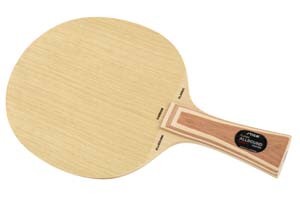
Pros
- Retains the soft, wood-like touch of the original Allround Classic
- Exceptional control and feedback — great for technique development
- Outstanding blocking and short game at the table
- Wider sweet spot than the all-wood version
- Excellent looping with medium-hard rubbers
- Easy to adapt to, even for players coming off faster setups
Cons
- Not fast enough for off-table attacking or hard drives through the ball
- Players with aggressive, mid-distance game styles will outgrow it quickly
- Weight can vary noticeably between individual copies (73-91g range reported)
The Stiga Allround Classic has been a fixture since its 1967 debut, over one million units sold, with a following built on players who put feel and control ahead of everything else. The Allround Classic Carbon updates it for the modern game: the same five-ply wood construction, now reinforced with two very thin carbon layers bonded onto the middle ply. That nudges the speed rating from the original ALL up to ALL+, widens the sweet spot a touch, and adds a crisp response on well-struck balls, all without throwing away the warm, feedback-rich character that made the original famous. This review draws on community feedback from Revspin, Reddit, TableTennisDaily, and independent review sites to pin down who the blade actually suits.
Performance
The Allround Classic Carbon plays the way its positioning promises: a controlled, touch-oriented carbon blade. The two thin carbon layers add a small but real step up in pace over the plain wood version, which users describe as an extra ‘tick’ of speed rather than a jump. The blade sits firmly in the ALL+ class and stays well short of OFF- for most players. The exception is a heavy copy. Some users report weights above 88g that play closer to OFF-.
At the table the blade is in its element. Blocking lands top marks across reviews, and the short game — flicks, pushes, close-to-table topspin exchanges — is where it does its best work. Loop with medium-hard rubbers like Yasaka Mark V HPS or DHS Hurricane 3 Neo and the arcs come out clean and repeatable, which experienced players call rewarding and reliable. The carbon adds a crispness you can feel on well-timed shots, and it does it without erasing the deep, woody feedback that beginners and intermediate players lean on to calibrate their contact.
The sweet spot is wider than the all-wood original, so off-center strikes hurt less and a slight mistiming costs you little. Ball feedback stays clear. Reviewers keep noting that the blade tells you exactly when you have made good contact and when you have not, a real help for anyone still building strokes.
The limit shows up the moment you step back from the table. Mid-distance looping and hard drives want more speed than this blade gives, and users find the harder the rubber, the more obvious the ceiling. Counter-drivers and mid-distance players will feel held back before long. Passive blocking is also the wrong fit here: the blade rewards active redirection, not players who just soak up pace.
What Reviewers Agree (and Disagree) On
Every source lands in the same spot: for control-oriented play near the table, the Allround Classic Carbon is a strong blade. Beginners, improvers, and intermediate all-round players rate it highly for feel, feedback, and manageable speed. Where they split is on how far it takes you. Some experienced players defend it as a real club-level competitive tool with the right rubber; others treat it as a stepping stone toward a faster setup. Real-world weight varies between copies too, with heavier units playing faster and more off-class than lighter ones, so the blade can feel inconsistent from batch to batch.
Who Should Buy It
The Allround Classic Carbon fits players stepping off their first pre-made paddle who want honest feedback and full control while they build proper strokes. It also suits intermediate club players committed to an all-round, near-table style who are not chasing competitive speed. Coaches reach for it as a teaching tool because the feedback is clear and the forgiveness never hides a technique error. Attacking or off-table players, and confident intermediates who want to loop hard from the mid-zone, should pick a faster off-minus or off-class carbon blade instead.
FAQ
What is the speed class of the Stiga Allround Classic Carbon?
Stiga rates it ALL+, between the all-round and off-minus categories. Most copies feel firmly in that ALL+ range, though specimens above 88g have been reported to play closer to OFF-.
How does the Carbon version compare to the original Allround Classic?
The Carbon model is a little faster, with a slightly larger sweet spot and a crisp, defined response on well-timed strokes. The wood-like feel and the control character carry over almost intact, so the upgrade reads as subtle rather than dramatic.
What rubbers work best with this blade?
Most reviewers point to medium-hard rubbers such as Yasaka Mark V, Mark V HPS, DHS Hurricane 3 Neo, or Butterfly Sriver. The blade’s controlled nature works best with rubbers in the 36-42 degree range. Very springy tensors fight that control and are harder to keep in line on this setup.
Is this blade good for beginners?
Yes. It is one of the most-recommended first custom blades for beginners ready to move past a pre-made paddle. The clear feedback helps build proper technique, and the forgiving sweet spot keeps errors in check while you learn.
How much does the Stiga Allround Classic Carbon typically weigh?
Community reports run from roughly 73g to 91g, averaging around 81-85g. If weight matters to you, weigh the blade before committing, since heavier copies play faster.
Is this blade suitable for competitive play?
At club and recreational level, yes, especially for all-round players who stay near the table. Higher up, most players will want a faster blade to put enough pace on their attacking strokes. The Allround Classic Carbon rewards good technique but supplies no power of its own.