Nittaku Hammond Z2 Review: A Hard-Sponge Powerhouse from Japan
Pros
- Exceptional looping and counterlooping power with high spin output
- Above-average durability compared to typical ESN tensors
- Medium arc and manageable throw angle relative to rubber hardness
- Made in Japan for a distinctive non-ESN character and feel
- Active blocks and smashes are extremely dangerous
- Excellent serve spin generation
- Strong community consensus with one of the highest Revspin ratings in its category
Cons
- Demands active, well-timed strokes; very unforgiving of passive contact
- Not as naturally explosive as Tenergy 05 nor as maximally grippy as Dignics 05
- Better suited to OFF-minus or flexible blades than stiff carbon setups
- Polarizing early impressions for players transitioning from softer rubbers
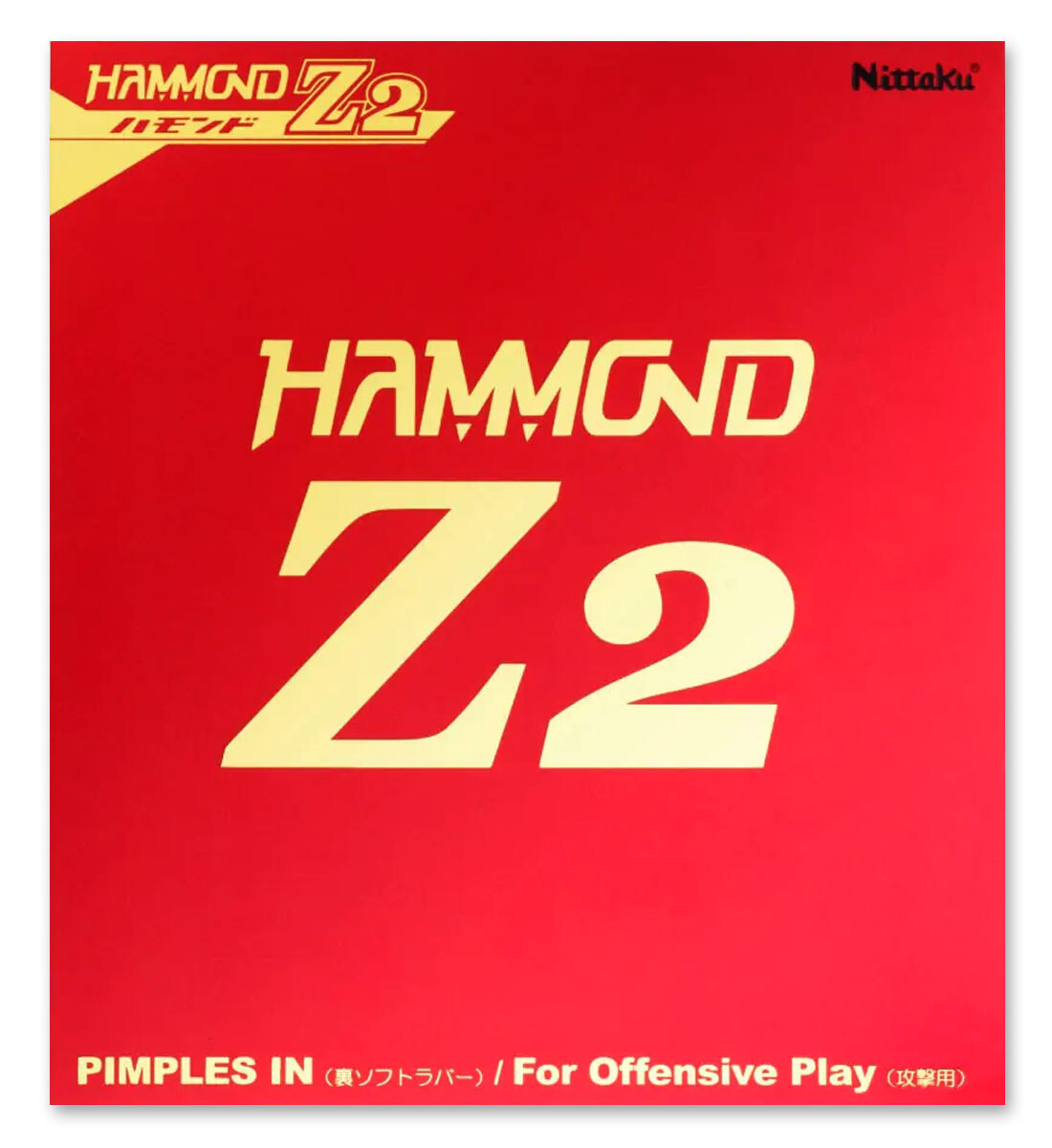
The Nittaku Hammond Z2 came out in 2022 as the brand’s flagship offensive rubber, and it is made in Japan rather than at the German ESN factory behind most European-branded sheets. That matters. The Hammond Z2 has a character all its own, set apart from the wave of ESN tensors that dominate modern attacking play. Nittaku calls it a powerful, spinny rubber for top players, and the community has mostly nodded along. A slightly tacky, noticeably grippy topsheet sits over a hard red sponge around 52 degrees ESN, with an uncut weight near 70 grams. This one is built for the serious attacker who wants everything out of every stroke.
Performance
Looping is where the Hammond Z2 lives. Topspin drives feel clicky and stable, and the ball leaves the rubber fast and with authority. Open against backspin and the topsheet grip plus sponge hardness throw out very high spin on a medium arc, which keeps the ball from sailing long while still putting the opponent under pressure. Racket Insight, which tested it at length, found that even at around 70 percent power you get adequate speed and spin, and the rubber keeps scaling as you hit harder instead of topping out early. That separates it from sheets like the Hurricane 3 NEO, which need near-maximum swing speed before they wake up.
Counterlooping is a high point. Gripping through the ball feels confident and the returns carry serious pace. Several reviewers place it between the Tenergy 05 and Dignics 05: not as instantly explosive off a soft touch as the Tenergy, not as maximally grippy or controllable on power loops as the Dignics, but a match for both at a lower price. Blocking stands out as well. Active blocks come off dangerous, with natural pace and good placement, and even passive blocks move fast enough to trouble opponents. Serve spin runs above average, the topsheet biting well off a compact motion. The short game is manageable for a rubber this hard, mostly because the Hammond lacks the hair-trigger reactivity of softer tensors. Receive works with proper acceleration and wrist, but a hesitant or passive flick gets punished. Revspin scored consistency at 9.5 out of 10 and durability at 8.1, both well above average, and several long-time reviewers say it stays playable far longer than most ESN tensors. Its odd topsheet texture makes the ball behave unpredictably for the opponent, which feeds its reputation as a rubber that is hard to read from the other side.
What Reviewers Agree (and Disagree) On
The community lands hard in favor of the Hammond Z2 as a high-performance offensive rubber. On Revspin it holds a 9.5 aggregate overall rating from 79 reviewers, which is extraordinary. Racket Insight gave it 4.8 out of 5. Reddit threads run broadly positive, with one caveat raised again and again: first impressions polarize. Pick it up and play it like a softer tensor and it lets you down; adjust to its demands and drive through with accelerating strokes and the ratings climb. The open question is whether it is forehand-only or can hold a backhand. Most professional reviews steer it to the forehand, but plenty of community users report satisfying backhand play, especially on modern penhold setups and with strong backhand technique. Blade pairing draws debate too. Stiffer carbon blades make it feel less comfortable, and reviewers keep pointing toward OFF-minus or flexible composite blades to get the most from it.
Who Should Buy It
The Hammond Z2 is for upper-intermediate to advanced players who attack forehand-first and want a hard, spinny rubber that lasts. It pays off if you have consistent swing mechanics and can use a rubber that scales with stroke quality. Anyone hunting a real alternative to the Butterfly Tenergy or Dignics series at a more accessible price should put it on the list. Beginners and intermediates who want the rubber to do the work should skip it. It punishes passive play and rewards active acceleration. Strong backhand attackers who can handle the hardness on that wing have reason to try it too.
FAQ
How hard is the Nittaku Hammond Z2 sponge?
The sponge runs about 52 degrees on the ESN scale, a hard rubber that feels close to the Butterfly Dignics series. It is harder than most ESN tensors and the softer-market forehand rubbers.
Is the Hammond Z2 suitable for backhand use?
Most professional reviewers steer it to the forehand on account of the hardness and power. Community players with strong backhand technique tell a different story, some calling it the best backhand rubber they have used. If you are comfortable with hard rubbers on that side, it is worth a shot.
How does the Hammond Z2 compare to the Tenergy 05?
The Hammond Z2 runs harder, roughly 52 degrees against 48 for the Tenergy 05, with a higher base speed that does not need a full swing to come on. The Tenergy 05 is the more explosively catapult-like sheet and easier to spin with a loose wrist, while the Hammond pays back harder, more deliberate contact. Durability reports favor the Hammond.
What blade pairs best with the Hammond Z2?
Go with OFF and OFF-minus blades in all-wood or soft composite. Very stiff carbon makes the rubber feel harsh and flattens the arc. Flexible blades such as the Donic Waldner OFF and similar all-wood offensive frames pull the best speed, spin and feeling out of it.
Is the Hammond Z2 a durable rubber?
Yes. Revspin community data puts durability at 8.1 out of 10, above average for high-performance offensive rubbers. Several reviewers say it outlasts typical ESN tensors by a meaningful margin, which makes it the better long-term buy despite the upfront cost.