Butterfly Dignics 80 vs Nittaku Hammond Z2: Which Should You Buy?
| Butterfly Dignics 80 | Nittaku Hammond Z2 | |
|---|---|---|
| Our rating | 9.0/10 | 8.8/10 |
| best_side | FH and BH (both sides) | forehand |
| control | medium | 7.5 |
| speed | very high | 9.0 |
| spin | very high | 9.5 |
| sponge_hardness | approximately 40 degrees | 52 |
| type | Inverted (tensor, Spring Sponge X) | inverted |
| weight_uncut_g | approximately 70 | 70 |

We may earn a commission from links on this page. Learn more.
Quick verdict
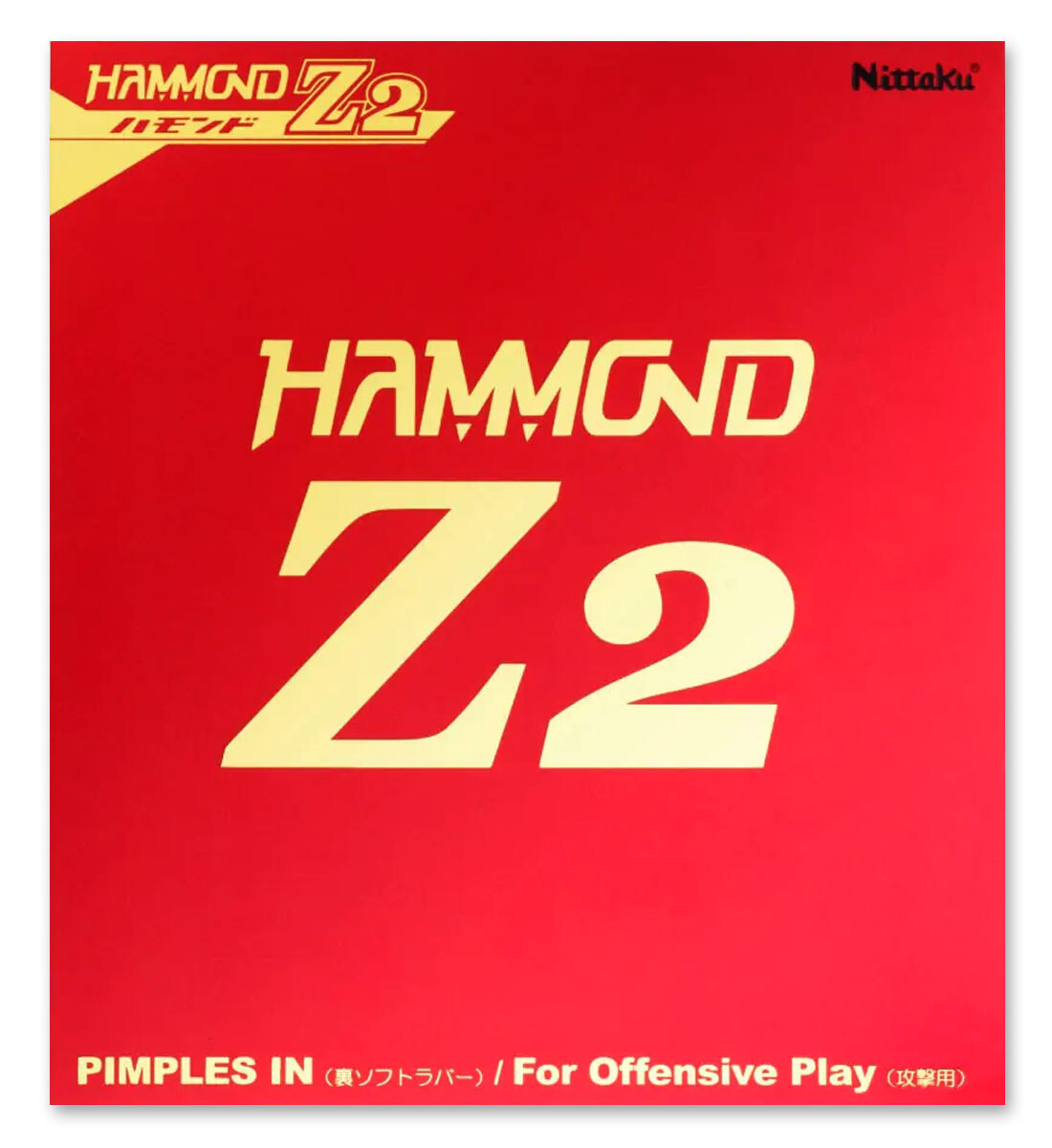
Of every pairing in this batch, this is the closest on raw axis numbers — and the least close on practical fit. Nittaku Hammond Z2 (rating 8.8) actually edges Dignics 80 (rating 9.0) on spin (9.3 versus 9.1) and control (9.1 versus 8.9), both by a slim 0.2 points, while Dignics 80 leads on speed by just 0.1. If you only looked at the axis chart, you would call this a coin flip. The decision actually turns on something the radar cannot show: Hammond Z2 is specced as a forehand rubber on a harder, 52-degree sponge, while Dignics 80 is a genuinely balanced two-wing rubber on a much softer 40-degree base — and Hammond Z2 explicitly does not want the stiff-carbon blade that Dignics 80 pairs naturally with.
The axis gaps that exist are all small
Every axis delta here sits under 1.0 point: spin -0.2, control -0.2, tackiness -0.4, durability +0.6, throw -1.0 (Hammond Z2 higher), speed +0.1. Hammond Z2’s 1.0-point throw advantage (6.5 versus 5.5) gives it a marginally more forgiving arc, and its durability trails Dignics 80 by 0.6 (8.1 versus 8.7) — real but modest, especially since Hammond Z2’s own pros claim “above-average durability compared to typical ESN tensors.” None of these gaps, on their own, should decide a purchase.
The real differentiator: wing and blade fit
Dignics 80 is explicitly a forehand-and-backhand rubber — “most balanced rubber in the Dignics line, strong on both forehand and backhand” — and pairs naturally with inner-carbon blades such as the Timo Boll ALC. Hammond Z2’s own spec listing marks it as a forehand rubber, and its bestFor description calls out players wanting “a hard, spinny forehand rubber,” aimed at aggressive loopers and counterlooping specialists. Its cons go further: it is “better suited to OFF-minus or flexible blades than stiff carbon setups” — the opposite pairing recommendation from Dignics 80. That is not a minor footnote. If you are already running a stiff inner-carbon blade to get the most out of Dignics 80, switching your forehand rubber to Hammond Z2 without also reconsidering your blade could work against the rubber’s own design intent.
What Hammond Z2 brings that the ratings alone do not
Its reviewers describe it as “made in Japan for a distinctive non-ESN character and feel” — a genuinely different rubber family from the German ESN-style tensors that dominate this segment (including, implicitly, Dignics 80’s own construction lineage). Reviewers also flag it as having “one of the highest Revspin ratings in its category,” alongside dangerous active blocks and smashes and excellent serve spin. The tradeoff, per its own cons, is that it “demands active, well-timed strokes” and is “very unforgiving of passive contact” — this is not a rubber that bails you out on a late or soft touch.
Switching from one to the other
If you play Dignics 80 on both wings and are satisfied, there is little performance reason to add Hammond Z2 to your forehand — the axis gaps are too small, and you would be taking on a blade-pairing question you did not have before. Hammond Z2 makes more sense as a deliberate forehand-only choice for players who specifically want a harder, more distinctive Japanese-made rubber for aggressive looping and counterlooping, ideally on a softer or more flexible blade than a stiff inner-carbon setup.
Who each is actually for
Dignics 80 suits intermediate-to-advanced offensive players who want one rubber for both wings on a fast, stiff blade. Hammond Z2 suits upper-intermediate-to-advanced offensive players specifically looking for a hard, spinny forehand rubber with a non-ESN feel, active stroke reliance, and a blade that is not maximally stiff. If your blade is already stiff carbon, that pairing note alone may settle this comparison before the ratings even come into play.
Frequently asked questions
Which rubber actually rates higher on spin and control?
Nittaku Hammond Z2, by a slim 0.2 points on each axis (9.3 spin and 9.1 control versus 9.1 and 8.9 for Dignics 80). The gap is small enough that it should not be the deciding factor on its own.
Do I need a different blade to use Hammond Z2?
Possibly. Its own listed cons say it is better suited to OFF-minus or flexible blades than stiff carbon setups — the opposite of Dignics 80, which pairs naturally with stiff inner-carbon blades like the Timo Boll ALC.
Is Hammond Z2 a two-wing rubber like Dignics 80?
Not by its own spec listing — it is marked as a forehand rubber, and its bestFor description specifically targets a spinny forehand role, unlike Dignics 80 which is built and marketed as balanced for both wings.
Which is more forgiving for less-than-perfect technique?
Neither is particularly forgiving. Hammond Z2's own cons state it demands active, well-timed strokes and is very unforgiving of passive contact, while Dignics 80 similarly demands clean technique and fast arm speed to unlock its potential.