Donic Waldner Allplay Review: The Classic All-Wood Allround Blade for Beginners
Pros
- Exceptional control and consistency close to the table
- Soft limba outer ply provides forgiving, high-dwell feel
- Works with a wide range of rubber types including pimples and tacky rubbers
- Excellent value for money at its price point
- Great for developing BH topspin, banana flip, and all basic strokes
- Rock-solid blocking feel with direct ball feedback
Cons
- Limited speed makes mid- and long-distance play difficult
- FH loops lack power unless paired with a fast non-tacky rubber
- Slightly narrow sweet spot and smaller playing surface increase edge-ball risk
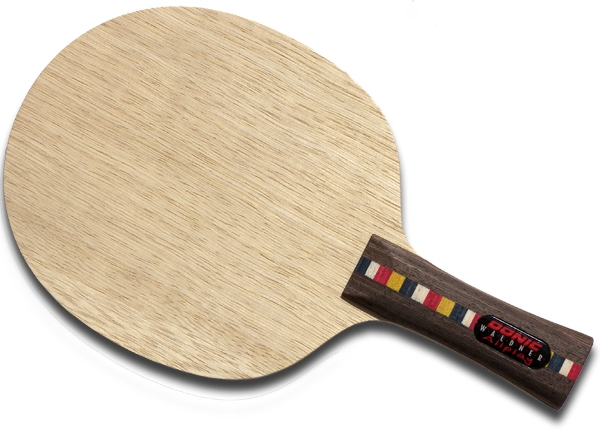
Named after Swedish legend Jan-Ove Waldner, the Donic Waldner Allplay has sold by the truckload for decades and stayed a fixture on beginner shortlists the whole time. It is a 5-ply all-wood blade in the classic Limba-Ayous-Ayous-Ayous-Limba layup: soft outer feel, long dwell, control that forgives. At roughly 85-87 g and 5.4-5.6 mm thick, it balances well and sits comfortably in the hand. The ALL speed rating is a choice, not a shortcoming. Donic built it to teach consistency rather than hand out free power, which is why coaches keep pointing beginners, juniors, and returning players at it.
Performance
This blade lives close to the table. The soft all-wood layup gives a tactile, long-dwell contact that lets you feel spin and placement on every stroke type while you are still building them. Forehand drives and blocks land solid, with direct feedback the instant the ball hits. Topspin loops near the table repeat easily — moderate speed keeps them from sailing long, and the dwell gives enough lift to clear the net. The backhand draws the most praise. Revspin and Megaspin reviewers single it out, crediting the long contact time for how well it rewards BH topspin, the banana flip, and BH loop development. Short pips and long pips both mount fine, so allround and defensive rubber setups are on the table.
TableTennis11’s blog ran it head-to-head against three other all-wood blades and landed on the rubber pairing as the deciding factor. A fast European or Japanese sheet such as the Nittaku Fastarc G-1 wakes the Allplay up: in that setup it loops consistently on alternating diagonal and down-the-line topspin, finds enough speed to bother mid-distance opponents, and still places pushes accurately. Bolt on a tacky sheet like DHS Hurricane 3 and the game shrinks back to the table, with loops that lack punch, though consistency and spin placement stay high. Forehand blocks hold up no matter what you mount. The blade swallows incoming pace predictably, which builds confidence on the counter.
Speed is the ceiling. Back off the table and the Allplay cannot put enough pace on a loop to trouble higher-level players, and smashes land underpowered. The sweet spot runs narrower than average, so you catch the edge a little more often than on a bigger head. For the price and the category, that is a fair bargain.
What Reviewers Agree (and Disagree) On
Across Revspin, Megaspin, TableTennis11, and TableTennisDaily, the core verdict barely moves: excellent control, a soft and natural all-wood feel, strong value. Reviewers keep calling it the ideal first blade and a safe pick for anyone playing allround close to the table. Rubber pairing is where they split. Tacky-rubber users find it too slow for anything past the near-table game; those running faster European or Japanese sheets get capable, even loop-friendly play out to mid-distance. The TableTennis11 tester flagged the sweet spot as narrower than expected, a limit the Revspin and Megaspin crowd rarely mentions — probably because beginners and intermediates spray contacts across the whole face and never feel the edge. Everyone agrees an attack-first player will outgrow it, but as a technique builder it keeps its reputation.
Who Should Buy It
Reach for the Allplay if you are a beginner picking up your first real blade, a junior grooving stroke mechanics, or an intermediate sharpening allround fundamentals on something forgiving and tactile. Returning players who miss the classic all-wood feel but do not want a fast setup land here too. Short pips or long pips on the backhand mount with no fuss. If you are chasing powerful mid-distance loops, or already sitting at the intermediate-to-advanced level, step up to a faster all-wood or composite frame instead. For the best-value blade to learn the fundamentals on, the Allplay is the benchmark.
FAQ
Is the Donic Waldner Allplay suitable for beginners?
Yes, it is one of the most recommended beginner blades on the market. Its ALL-speed rating, soft limba outer ply, and long dwell time make it very forgiving and easy to learn proper technique with all stroke types.
Does the Waldner Allplay have any carbon layers?
No. It is a pure all-wood blade with a 5-ply Limba-Ayous-Ayous-Ayous-Limba construction. There are no carbon, fiber, or composite materials in this blade.
What rubbers pair well with the Waldner Allplay?
Plenty of options work. Faster European or Japanese rubbers such as Nittaku Fastarc G-1 unlock its topspin and open up mid-distance play. Donic Acuda S2, Barracuda, and Xiom Vega Europe are popular allround pairings. Short pips, medium pips, and long pips all sit well for allround or defensive setups.
Can intermediate or advanced players use the Waldner Allplay?
Yes, though it is primarily recommended for beginners and intermediate players. Advanced players focused on powerful offensive loops will likely find it too slow, but some skilled players appreciate it paired with a fast rubber for its outstanding consistency and feel.
How heavy is the Donic Waldner Allplay?
The blade weighs approximately 85-87 g unassembled. With rubbers attached, a typical setup comes in around 172-187 g depending on rubber selection and thickness.
What is the ply construction and thickness of the Waldner Allplay?
It is a 5-ply all-wood blade using Limba outer plies and Ayous (abachi) inner plies, with a total thickness of approximately 5.4-5.6 mm. This construction gives it a soft, high-dwell feel and places it firmly in the ALL speed category.