Donic Waldner Allplay vs Yasaka Sweden Classic: Which Should You Buy?
| Donic Waldner Allplay | Yasaka Sweden Classic | |
|---|---|---|
| Our rating | 8.2/10 | 8.2/10 |
| feel | Soft and forgiving with good dwell time, slight stiffness at sweet spot | Soft, flexible, high feedback |
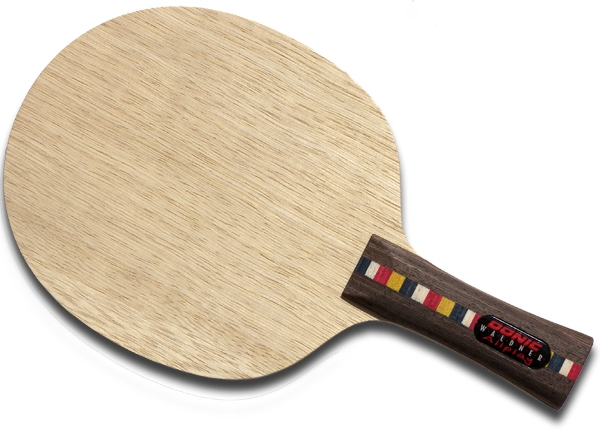
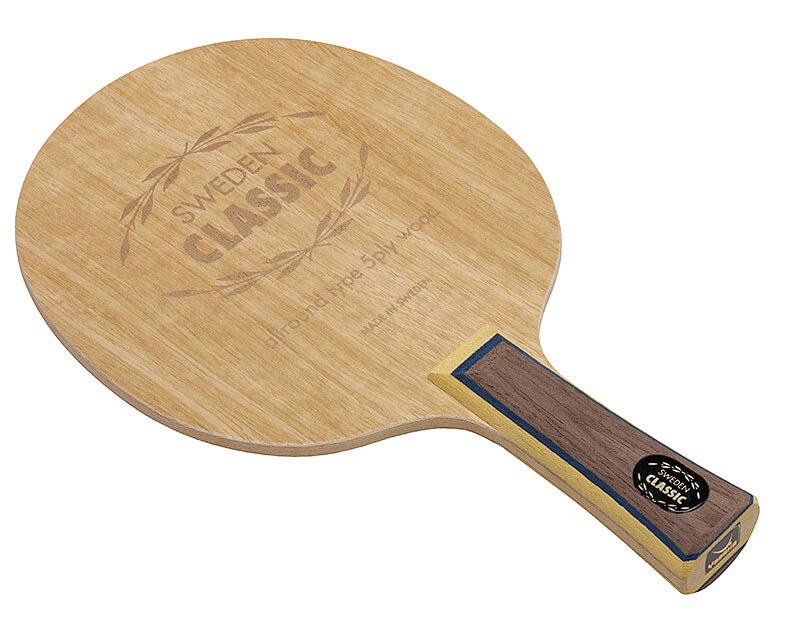
| handle | FL (flared), classic dark-brown wood | Anatomic / Flared / Straight |
| plies | 5-ply all wood (Limba-Ayous-Ayous-Ayous-Limba) | 5-ply all wood |
| speed | ALL | ALL |
| thickness_mm | 5.4-5.6 mm | 5.35 |
| weight_g | approx 85-87 g | ~82 |
We may earn a commission from links on this page. Learn more.
Nearly Tied on Paper, Except for One Number
These two blades carry the identical overall rating (8.2) and strikingly similar bestFor language; both are pitched at beginners and control-first allround players building technique on a soft, all-wood platform. If you stopped at the headline rating, you’d assume a coin flip. You’d be missing the one axis that actually separates them: consistency, where Donic Waldner Allplay scores 9.2 against Yasaka Sweden Classic’s 6.1, a 3.1-point gap, the single largest axis delta anywhere in this batch of comparisons.
Consistency: Why This Number Should Decide Your Purchase
A 3.1-point consistency gap on a 10-point scale is not a subtle difference in playing feel; it’s a difference in manufacturing reliability, meaning how much one individual blade you buy is likely to match another unit of the “same” blade. Waldner Allplay’s sources, including TableTennisDaily forum discussion and TableTennis11’s blog review, describe a blade that plays predictably from unit to unit. Sweden Classic’s lower consistency score suggests more unit-to-unit variance; you may get a blade that plays exactly as described, or one that feels noticeably different from the next player’s “identical” blade. For a blade you’re likely buying sight-unseen online, this is arguably more important than any single performance axis, because it affects whether the reviews you’re reading even apply to the specific unit that arrives at your door.
Speed, Hardness and Stiffness: Real but Secondary Differences
Waldner Allplay is faster by 0.6 (7.3 versus 6.7) and notably harder by 1.9 (5.4 versus 3.5) and stiffer by 1.0 (3.8 versus 2.8). Keep the absolute scale in mind, though: both blades sit at the soft, flexible end of the spectrum overall. Sweden Classic’s own spec sheet describes it as “soft, flexible, high feedback,” and Waldner Allplay’s is “soft and forgiving with good dwell time, slight stiffness at the sweet spot.” So while Waldner Allplay is the relatively stiffer, harder, faster blade of the two, neither is anywhere close to a stiff offensive blade; this is a comparison between soft and even softer, not soft versus hard.
That said, the harder feel does have practical consequences: harder wood transmits ball feedback less directly but returns a bit more pace on drives, which likely contributes to Waldner Allplay’s speed edge. Sweden Classic’s own pros lean into the opposite trade-off, calling out “high feedback” that “helps players feel and correct technical errors,” genuinely useful for someone still building stroke mechanics who wants maximum tactile information from every shot.
Control Is Effectively Tied — Both Are Genuine Control Blades
Control differs by only 0.2 (9.0 versus 9.2), well within noise. Both blades earn some of the highest control scores you’ll find on an all-wood blade, and both bestFor descriptions independently emphasize control and consistency over speed as the core selling point. Do not choose between these two based on control; pick based on consistency, feel preference, or the specific use cases below.
Rubber Pairing and Playing Style: Where the Two Diverge
Waldner Allplay’s own pros specifically highlight that it “works with a wide range of rubber types including pimples and tacky rubbers,” a real versatility advantage if you experiment with pips-out or tacky Chinese sheets rather than standard European inverted rubber. Sweden Classic’s bestFor guidance, meanwhile, explicitly calls out “chop-and-block defenders after a forgiving, feedback-rich pure-wood blade” as a target use case, a defensive-game application not mentioned for Waldner Allplay. If you already know you play a chop-block defensive style, or you plan to pair unusual rubber types, these specific callouts, not the axis numbers, are the more relevant signal.
Weight and Handle Options
Waldner Allplay ships heavier, around 85 to 87 grams versus Sweden Classic’s roughly 82 grams, a modest but perceptible difference in swing weight. Sweden Classic also offers more handle variety per its spec listing, Anatomic, Flared and Straight, against Waldner Allplay’s single flared handle in its classic dark-brown wood finish, worth checking if you have a strong handle-shape preference.
Should You Switch?
If you own Sweden Classic and are tempted by Waldner Allplay: the main reason to switch is the consistency gap, not any performance advantage; you’re buying more manufacturing reliability plus a touch more speed and feedback-dampening hardness, at the cost of some of that raw tactile feel Sweden Classic is known for.
If you own Waldner Allplay and are tempted by Sweden Classic: there’s little performance reason to switch. You’d mainly be trading toward a softer, more feedback-rich, slightly slower blade with more handle-shape options, while accepting a real risk of more unit-to-unit variance.
Bottom Line
Two blades with the same headline rating and nearly the same target player are actually separated by one number that rarely gets discussed: consistency. A 3.1-point gap in manufacturing reliability is the most decision-relevant fact in this entire comparison, more relevant than the modest speed, hardness and stiffness differences, and far more relevant than the essentially tied control scores.
Frequently asked questions
Are these two blades really that similar?
On paper, yes. Both carry the same 8.2 overall rating and near-identical control scores (9.0 versus 9.2), and both are pitched at beginners and control-first allround players.
What's the biggest real difference between them?
Consistency. Waldner Allplay rates 9.2 versus Sweden Classic's 6.1, a 3.1-point gap that reflects unit-to-unit manufacturing reliability rather than playing style, and it's the largest single-axis gap in this entire comparison set.
Which blade is better for a chop-block defensive style?
Yasaka Sweden Classic's own bestFor guidance specifically recommends it for chop-and-block defenders wanting a forgiving, feedback-rich pure-wood blade, a use case not called out for Waldner Allplay.
Can I use tacky or pips-out rubber on these blades?
Waldner Allplay's own pros specifically highlight compatibility with a wide range of rubber types including pimples and tacky rubbers; this specific versatility claim isn't made for Sweden Classic.
Which blade is faster?
Waldner Allplay, by 0.6 points (7.3 versus 6.7), though both remain firmly on the slower, control-first end of the blade spectrum rather than being fast offensive blades.