Stiga Cybershape Carbon vs Stiga Cybershape Wood: Which Should You Buy?
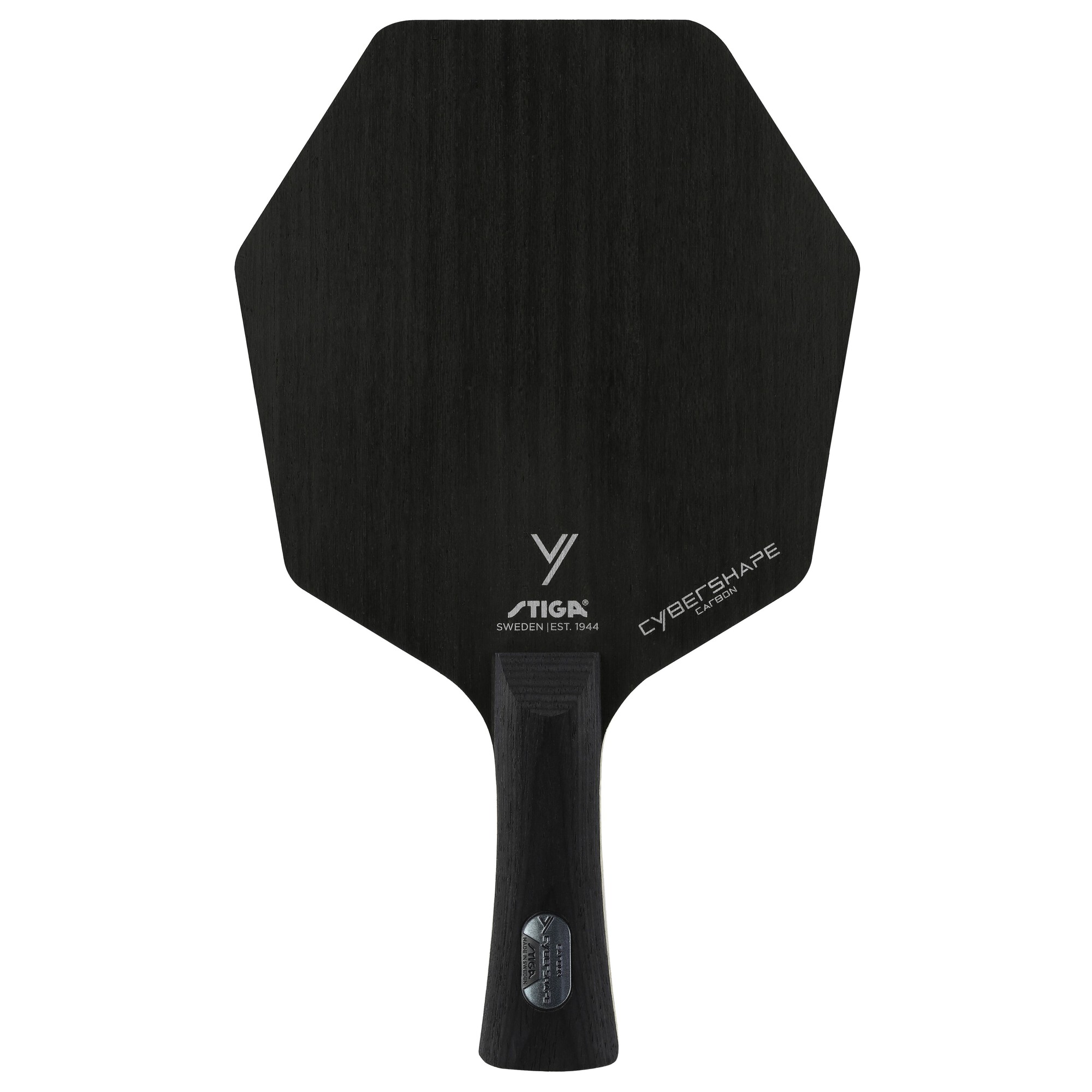
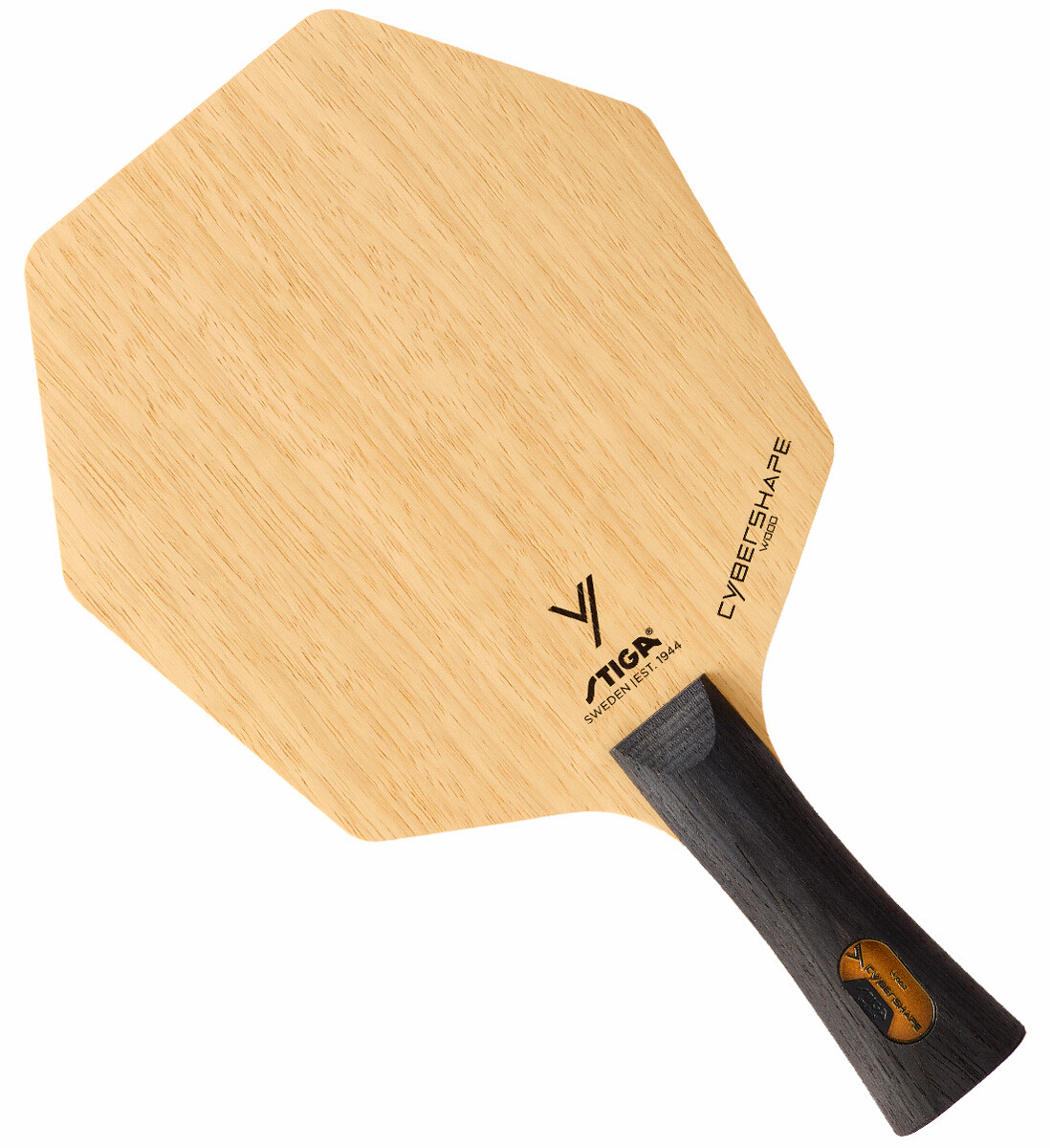
| Stiga Cybershape Carbon | Stiga Cybershape Wood | |
|---|---|---|
| Our rating | 8.4/10 | 8.4/10 |
| feel | Medium-stiff with woody feedback; head-heavy balance; larger sweet spot placed further up the blade | Medium-soft, dwell-heavy, linear feedback |
| handle | Flared (Classic) or Concave (Master) | Flare / Straight / Anatomic (Italian wood) |
| plies | 5+2 carbon (CCF Close Core Fibre — carbon layer sits directly on wood core) | 7-ply all wood |
| speed | OFF (Stiga speed rating 9.0 out of 10) | OFF- |
| thickness_mm | approx 5 mm | 5.8-5.9 mm |
| weight_g | 85 plus or minus 5 g | 80-85 g (base); up to 94 g with CWT weights |
We may earn a commission from links on this page. Learn more.
Identical shapes but opposite constructions. The Stiga Cybershape Carbon (8.4) uses inner-carbon (CCF) to deliver speed comparable to Butterfly Koto-ALC class blades while preserving woody feedback. Its exceptionally large sweetspot, head-heavy balance, and stiffness aid quick backhand and forehand acceleration. The angular hexagonal head aids serve angles but demands compact technique. Short dwell time challenges heavy looping styles. The premium price (around 220 EUR) sits at the top of its class.
The Cybershape Wood (8.4) is 7-ply all-wood offering dwell-heavy, linear feedback and excellent topspin variation support. Its hexagonal sweetspot (placed higher) forgivingly handles off-center contacts. Optional CWT weights allow balance tuning. However, base speed is modest, requiring fast rubber pairing to compete offensively at distance.
Both share hexagonal design and identical rating, but diverge sharply. Carbon suits aggressive fast-counter attackers and backhand-dominant players. Wood suits topspin-focused counter-topspinners and all-rounders valuing consistency over inherited speed. Carbon demands more technical adaptation due to angular feel; Wood is more intuitive for players learning spin.
FAQ
Which is faster?
Carbon. Off-the-chart faster at 9/10 speed rating. Wood is OFF-, needing rubber assistance. Carbon dominates at distance.
Why is the hexagonal shape important?
It alters serve angles and bat angle awareness. Both blades use this shape, but Carbon’s stiffness makes angle handling feel sharper.
Which dwell time is better?
Wood. Its dwell-heavy construction rewards heavy topspin loops and serve variation. Carbon’s short dwell suits counter-attacking, not heavy looping.
Which sweetspot is bigger?
Both have large sweetspots. Carbon’s is positioned higher on the blade and feels sharper due to stiffness. Wood’s is higher-placed and more forgiving.
Who should choose Carbon over Wood?
Fast counter-attackers, backhand-dominant players, and those prioritizing speed and acceleration over spin development.