Stiga Intensity NCT Carbon vs Stiga Offensive Classic: Which Should You Buy?
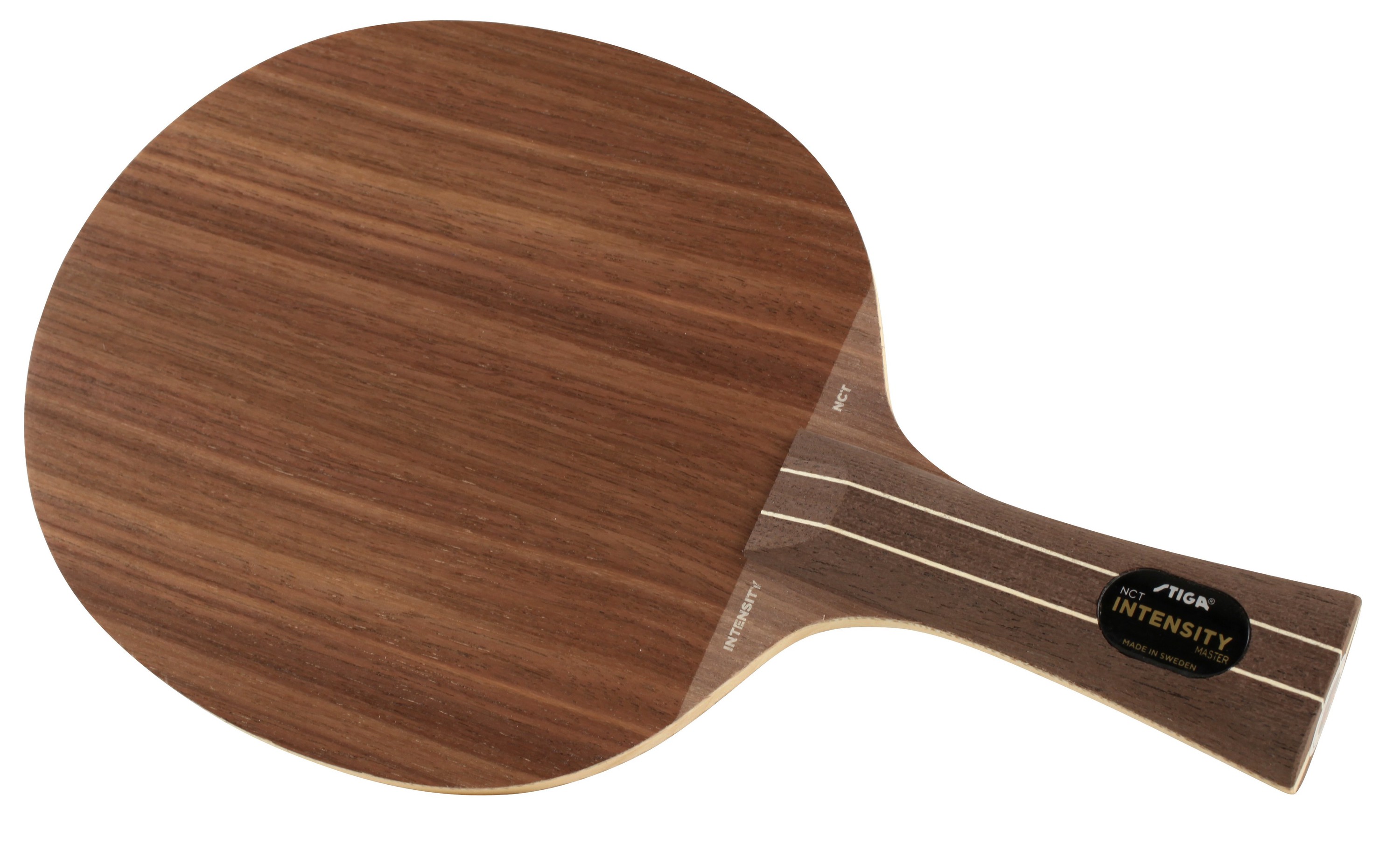
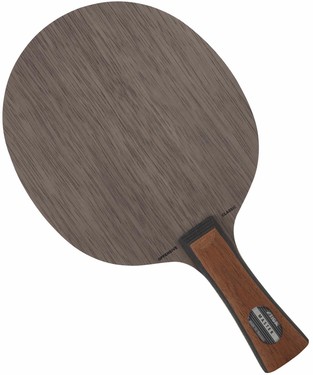
| Stiga Intensity NCT Carbon | Stiga Offensive Classic | |
|---|---|---|
| Our rating | 8.0/10 | 8.4/10 |
| feel | medium-soft, good dwell, large sweet spot | thin, flexible, soft-medium springy all-wood with strong vibration and feedback |
| handle | Flared, Anatomic, Straight, Chinese Penhold | FL/ST/AN (WRB hollow-handle version also sold) |
| plies | 5 wood + 2 carbon NCT | 5W (all wood) — outer veneers commonly described as koto or limba over spruce and ayous |
| speed | OFF- | OFF- (offensive minus; community-rated, occasionally felt as ALL+ to OFF) |
| thickness_mm | 5.9 | 5.4 |
| weight_g | 82 | 83 |
We may earn a commission from links on this page. Learn more.
The one comparison in this set where the wood blade actually rates higher overall
Revspin’s aggregated score gives the Intensity NCT Carbon an 8.0 and the Offensive Classic an 8.4 - the carbon blade rating lower here, which flips the pattern seen in the Dynasty Carbon and Carbonado 290 comparisons against this same Offensive Classic, where the carbon options both out-rated it. That’s worth taking seriously rather than assuming carbon beats wood as a rule: on this data, it doesn’t, at least not for the Intensity NCT.
That’s a genuine surprise given the axis numbers, because the Intensity NCT wins big on nearly every individual measurement - speed 9.3 vs 7.6 (1.7 points), stiffness 6.9 vs 3.8 (3.1 points, the largest single delta in this comparison), hardness 7.1 vs 5.4 (1.7 points), consistency 9.2 vs 7.9 (1.3 points), and control 9.0 vs 8.3 (0.7 points). Every axis favors the Intensity NCT, sometimes by a wide margin, yet the overall rating favors the Offensive Classic. The likely explanation, drawn from the Intensity NCT’s own listed cons, is that the axes measured here don’t capture everything reviewers weigh - specifically, “blocks and power smashes feel underpowered against stiffer alternatives” (meaning it sits in a stiffness middle ground, stiffer than the Offensive Classic but softer than something like the Carbonado 290) and sharp handle edges that “can dig into a shakehand player’s middle finger,” both quality-of-life issues an axis score won’t show.
The one axis that barely moves
Weight is nearly a wash: 5.3 vs 5.7, a 0.4-point gap that tracks an almost identical stock spec, 82 grams versus 83 grams. This is worth flagging because the Intensity NCT’s own marketing leans on its “light 80-82 gram build” as a selling point, but relative to the Offensive Classic specifically, there is no meaningful weight advantage. If you’re choosing between these two on the promise of a lighter blade, the numbers don’t support that as a differentiator here.
What each blade rewards
The Intensity NCT, reviewed across Revspin, Megaspin, Bladerubber.net, and Tabletennis-reference, is built for “intermediate to advanced offensive players who lean on topspin consistency and dwell over raw power” - specifically loop-dominant players making their first move from all-wood to carbon composite. Its large sweet spot “turns off-center contact into a usable ball,” and its long dwell “loads heavy topspin on forehand loops.” But its own cons are blunt: “built for offense, not defensive or all-round play,” and it “demands solid fundamentals, so beginners should skip it.”
The Offensive Classic remains the more forgiving, more broadly-recommended option for “improving and intermediate attackers” who haven’t yet built those fundamentals, and its two-decade reputation as a value classic across Revspin, Reddit, TableTennisDaily, and Megaspin gives it a longer track record than the newer carbon blade.
Should you switch?
If your fundamentals are solid and you’re specifically loop-dominant with good technique already, the Intensity NCT’s axis advantages are real and worth the switch - more speed, more stiffness for those who can control it, more consistency, and slightly more control. But if you’re still developing your stroke, the higher overall rating for the Offensive Classic isn’t a fluke: it reflects real reported issues with the Intensity NCT’s handle comfort and its power ceiling in blocking-heavy exchanges, on top of the technical demands its own reviewers flag for beginners.
Bottom line
This is the rare case in this batch where the axis deltas all point one way and the overall rating points the other. Trust the axis numbers for raw performance ceiling, and trust the overall rating - plus the “beginners should skip it” warning straight from the Intensity NCT’s own review data - for how forgiving the blade actually is to live with day to day.
Frequently asked questions
Why does the Offensive Classic rate higher overall if the Intensity NCT wins every axis?
The Intensity NCT does lead on speed, stiffness, hardness, consistency and control individually, but its own review notes flag handle comfort issues and reduced blocking power that pull down its overall score.
Is the Intensity NCT Carbon actually lighter than the Offensive Classic?
Barely. The weight axis gap is only 0.4 points, and the stock specs are nearly identical at 82g vs 83g.
Is the Intensity NCT Carbon good for beginners?
No - its own review notes say it demands solid fundamentals and that beginners should skip it.
What is the Intensity NCT's main weakness?
Blocks and power smashes feel underpowered against stiffer alternatives, and sharp handle-wing edges can dig into a shakehand player's middle finger.