Stiga Allround Classic Carbon vs Yasaka Sweden Classic: Which Should You Buy?
| Stiga Allround Classic Carbon | Yasaka Sweden Classic | |
|---|---|---|
| Our rating | 7.8/10 | 8.2/10 |
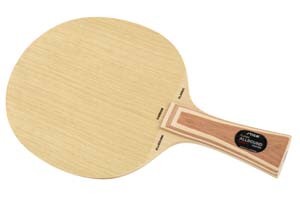
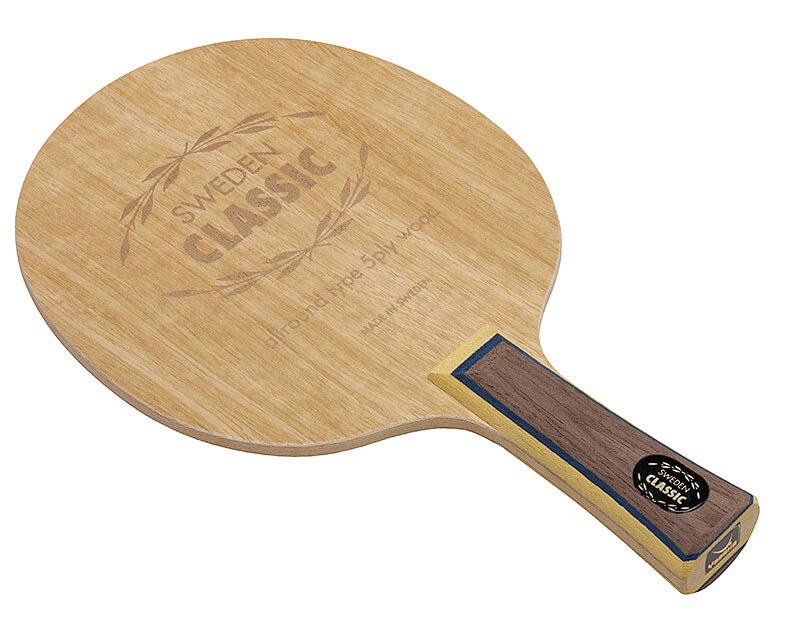
| feel | Medium stiffness, wood-like touch with carbon crispness, small vibration, large sweet spot | Soft, flexible, high feedback |
| handle | FL, ST, WRB | Anatomic / Flared / Straight |
| plies | 5 wood + 2 carbon | 5-ply all wood |
| speed | ALL+ | ALL |
| thickness_mm | 5.6 | 5.35 |
| weight_g | 81 | ~82 |
We may earn a commission from links on this page. Learn more.
Both blades prioritize control and feedback for learning technique near the table. The Allround Classic Carbon adds carbon for crispness and a larger sweet spot. The Yasaka Sweden Classic is a pure 5-ply all-wood blade with soft, flexible construction and high feedback, appealing to defensive players and beginners building fundamentals.
The Allround Classic Carbon is slightly more advanced with carbon support; the Sweden Classic is for pure-wood enthusiasts or beginners with simpler needs. The Sweden Classic is lightweight and well-built at accessible price. Both suit beginners, but the Allround Classic Carbon is better if you want a coaching tool, while the Sweden Classic is the choice if you prefer traditional all-wood feel and value simplicity.
FAQ
Which is better for beginners?
Both are suitable for beginners. The Allround Classic Carbon has larger sweet spot and carbon crispness; the Sweden Classic has softer all-wood feel.
How do speeds compare?
The Allround Classic Carbon is ALL+; the Sweden Classic is ALL, so speeds are very similar.
Which has more feedback?
The Sweden Classic has higher feedback and vibration from all-wood construction; the Allround Classic Carbon has smaller, crisper vibration.
Which is lighter?
The Sweden Classic at around 82g is nearly identical to the Allround Classic Carbon at 81g.
Will a slow rubber make the Sweden Classic sluggish?
Yes, rubber pairing matters with the Sweden Classic. Slow rubbers can make it feel sluggish, unlike the Carbon which compensates more.