Nittaku Septear vs Stiga Cybershape Carbon: Which Should You Buy?
| Nittaku Septear | Stiga Cybershape Carbon | |
|---|---|---|
| Our rating | 8.2/10 | 8.4/10 |
| feel | Soft with high dwell time | Medium-stiff with woody feedback; head-heavy balance; larger sweet spot placed further up the blade |
| handle | Straight or Concave (flared) | Flared (Classic) or Concave (Master) |
| plies | 7-ply all wood (Kiso Hinoki) | 5+2 carbon (CCF Close Core Fibre — carbon layer sits directly on wood core) |
| speed | ALL+ | OFF (Stiga speed rating 9.0 out of 10) |
| thickness_mm | 6.7 | approx 5 mm |
| weight_g | 85 | 85 plus or minus 5 g |
We may earn a commission from links on this page. Learn more.
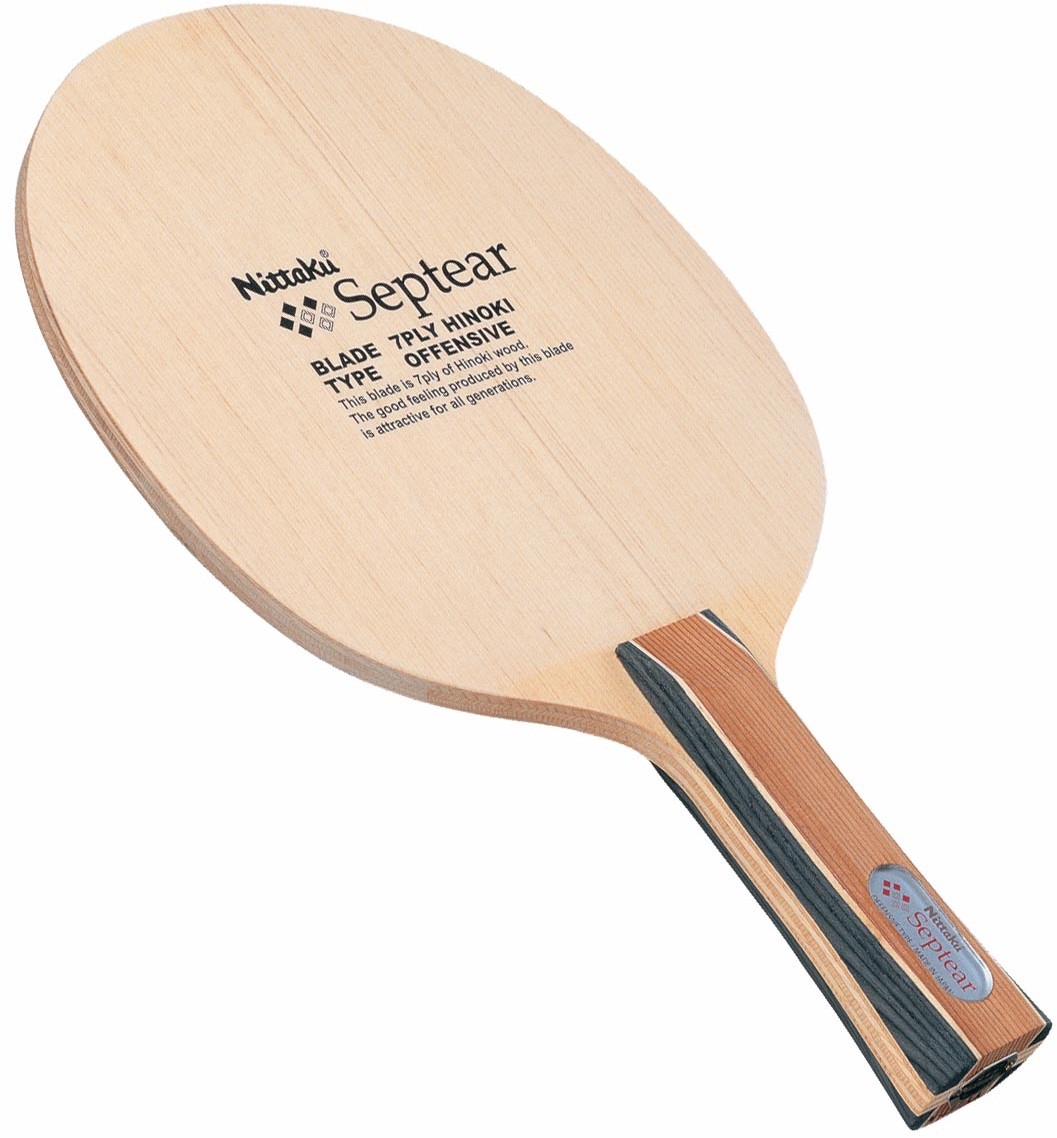
Nittaku Septear is a soft all-wood blade with exceptional control and high dwell time. Its Kiso Hinoki construction excels at short to mid-distance play with a forgiving sweet spot supporting developing players. Premium Japanese craftsmanship ensures quality, though soft surfaces dent over time and the thin handle may not suit larger hands.
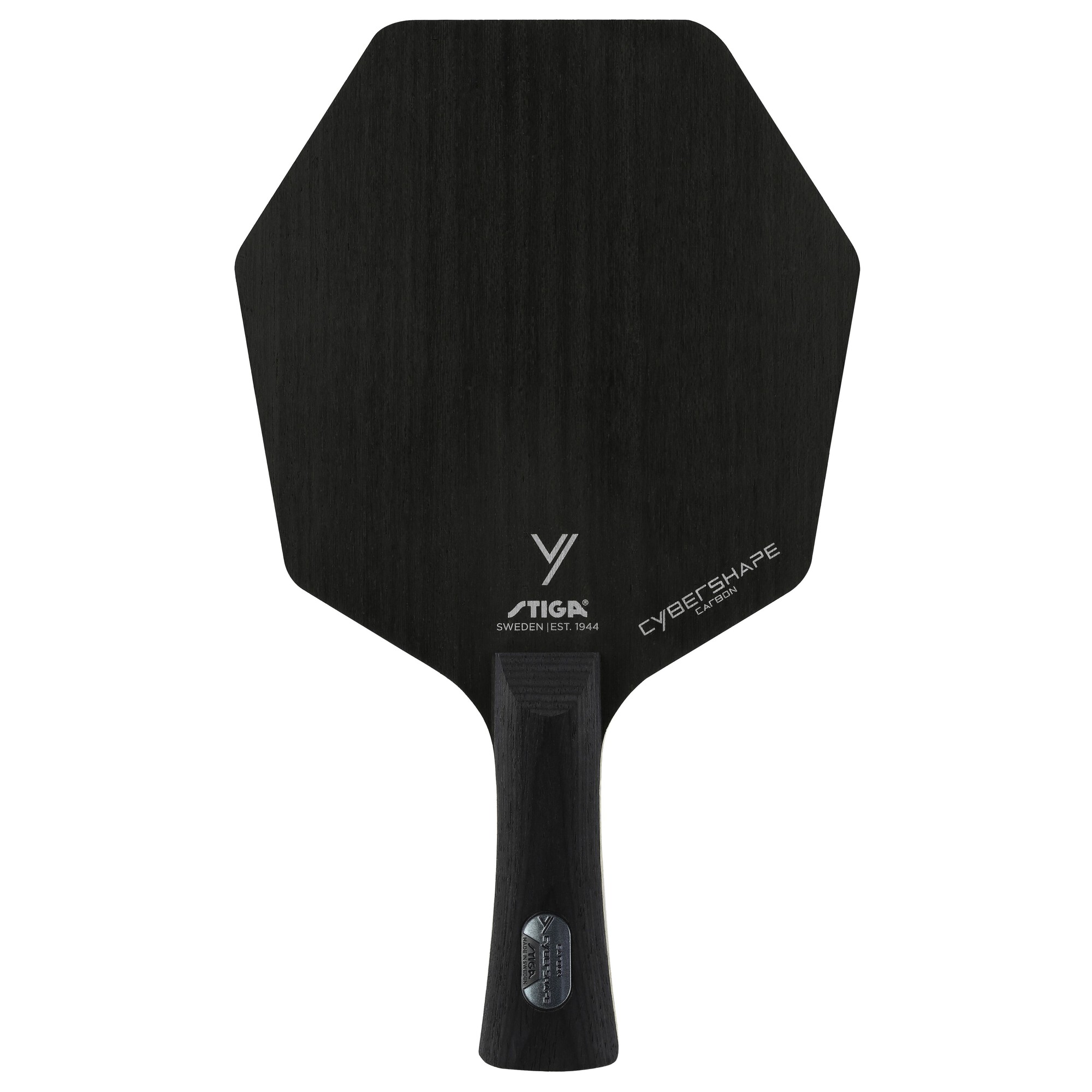
Stiga Cybershape Carbon features an exceptionally large sweet spot positioned higher on the blade, verified by KTH lab tests. Head-heavy balance naturally accelerates backhand and forehand drives, while CCF inner carbon preserves woody feel with added stiffness and speed comparable to Butterfly Koto-ALC class. Distinctive hexagonal shape aids serve angles and bat angle awareness. However, short dwell time challenges heavy topspin and looping styles, and the angular shape requires adaptation.
Septear suits soft control and learning. Cybershape Carbon is ideal for advanced offensive players wanting superior blocking and larger sweet spot in a uniquely shaped package.
FAQ
How large is Cybershape’s sweet spot?
Exceptionally large and positioned higher on the blade than traditional blades, verified by lab tests.
What is the hexagonal shape advantage?
It aids serve angles and bat angle awareness while creating a larger, offset sweet spot.
Which is better for looping?
Septear with its high dwell time. Cybershape Carbon’s short dwell challenges heavy topspin.
Why is CCF inner carbon different?
CCF (Close Core Fibre) sits directly on wood core, preserving wood-like vibration while adding carbon stiffness and speed.