Nittaku Acoustic vs Stiga Cybershape Wood: Which Should You Buy?
| Nittaku Acoustic | Stiga Cybershape Wood | |
|---|---|---|
| Our rating | 8.7/10 | 8.4/10 |
| feel | Crisp all-wood feel with a large sweet spot, long dwell and a signature acoustic sound | Medium-soft, dwell-heavy, linear feedback |
| handle | FL/ST | Flare / Straight / Anatomic (Italian wood) |
| plies | 5-ply all wood (Limba outer veneers over a tung and ayous core) | 7-ply all wood |
| speed | OFF- | OFF- |
| thickness_mm | 5.7 | 5.8-5.9 mm |
| weight_g | 88 | 80-85 g (base); up to 94 g with CWT weights |
We may earn a commission from links on this page. Learn more.
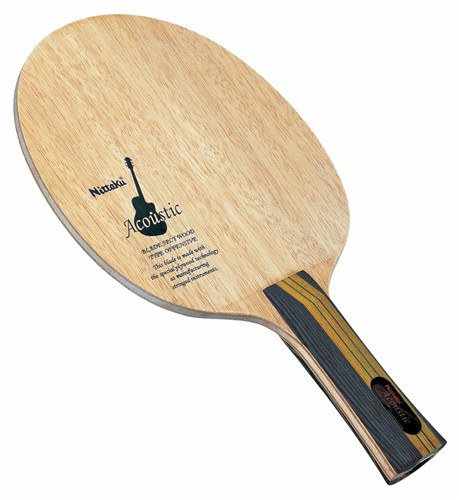
Nittaku Acoustic offers crisp feedback, class-leading control, and the distinctive acoustic sound that Japanese craftspeople are famous for. Its large sweet spot and long dwell support forgiving, consistent looping from near and mid-distance.
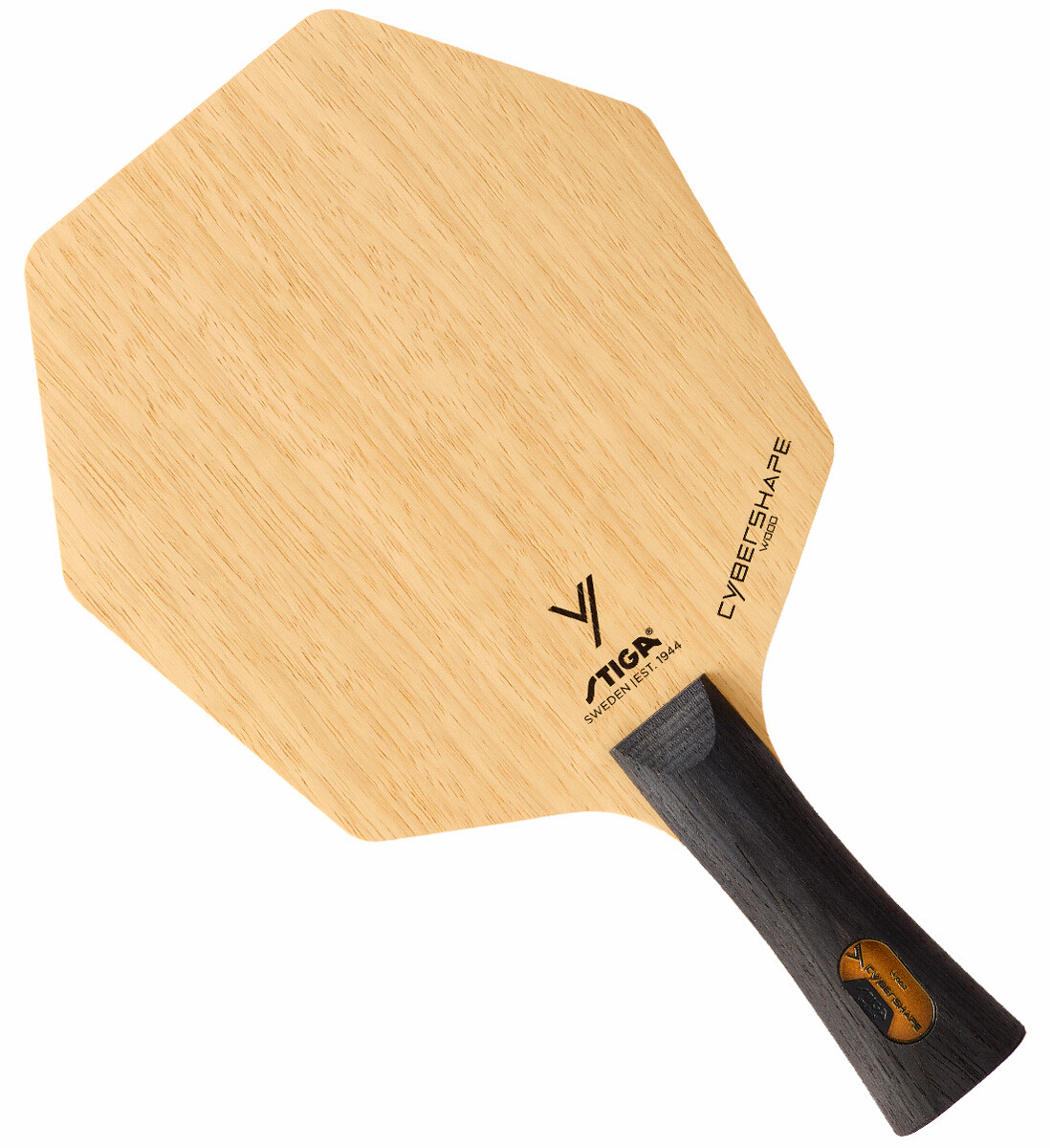
Stiga Cybershape Wood pairs an enlarged hexagonal sweet spot with linear, predictable feedback. Optional CWT magnetic weights allow balance fine-tuning. Both are all-wood OFF- blades for players valuing spin and control over raw speed. Cybershape’s superior off-center sweet spot helps casual hitters; Acoustic’s crispness suits technical mid-distance loopers.
FAQ
Which has the bigger sweet spot?
Stiga Cybershape Wood’s hexagonal sweet spot is explicitly enlarged. Nittaku Acoustic has a large sweet spot but in a traditional round shape.
Can I adjust Cybershape’s weight?
Yes. Cybershape offers optional CWT magnetic weights to fine-tune balance. Acoustic does not offer this customization.
Which is better for beginners?
Cybershape, thanks to its larger sweet spot and linear feedback. Acoustic rewards more refined, technical players.
What about the acoustic sound?
Acoustic has the signature crisp sound. Cybershape has a standard wood tone. If you value crisp feedback and sound, Acoustic wins.
Which is more expensive?
Both carry premium prices for 5-ply to 7-ply all-wood construction. Cybershape can get heavier with CWT weights, potentially increasing total cost.