Nittaku Acoustic Carbon vs Tibhar Samsonov Force Pro Black Edition: Which Should You Buy?
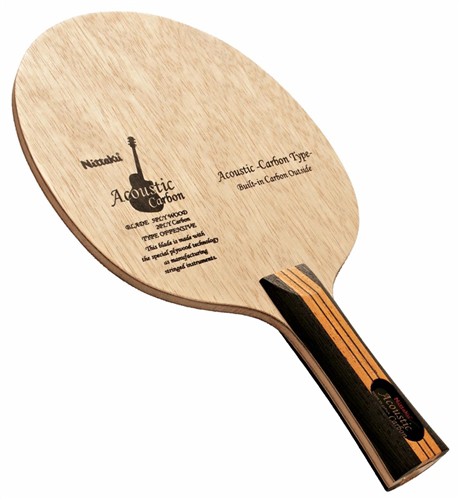
| Nittaku Acoustic Carbon | Tibhar Samsonov Force Pro Black Edition | |
|---|---|---|
| Our rating | 8.8/10 | 8.2/10 |
| feel | Medium-hard outer carbon with surprising wood-like dwell and ball retention; crisp sound on contact | mild hard, uniform vibration, linear rebound |
| handle | FL, ST (also Large Handle and Chinese Penhold variants available) | FL / ST |
| plies | 7 plies — 5 wood + 2 FE carbon (Limba - FE Carbon - Limba - Tung - Limba - FE Carbon - Limba) | 7-ply all wood (limba-ayous-ayous-ayous-ayous-ayous-limba) |
| speed | OFF | OFF- |
| thickness_mm | 5.5mm | 6.6-6.7mm |
| weight_g | approx 90g | 83-90g (avg ~87g) |
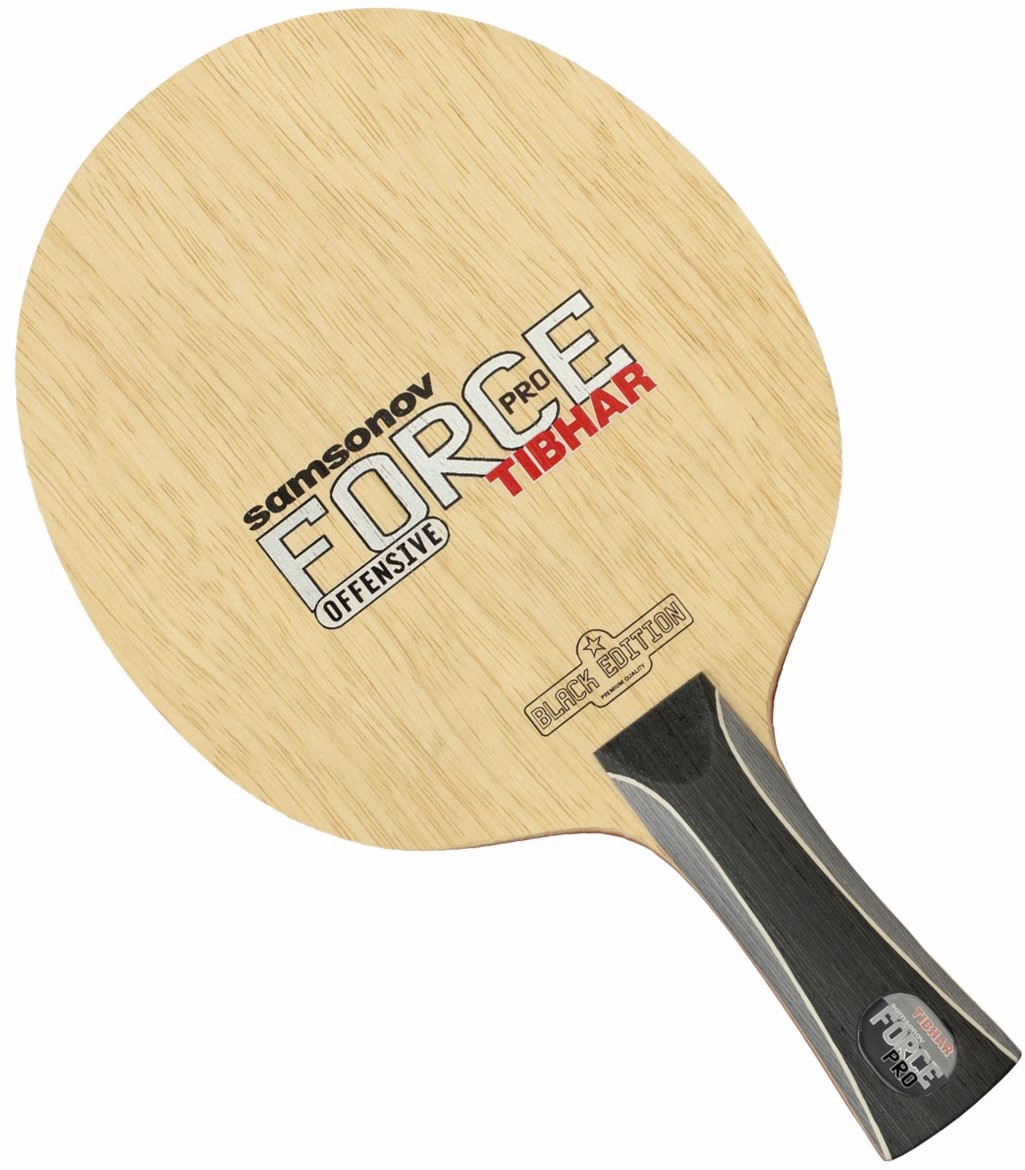
Tibhar Samsonov Force Pro Black Edition
Check price on AmazonRead the full Tibhar Samsonov Force Pro Black Edition review →
We may earn a commission from links on this page. Learn more.
Carbon versus all-wood in the intermediate-to-advanced offensive range. Acoustic Carbon provides high speed (OFF, comparable to TBALC) with exceptional short-game precision, blocking stability, and wood-like touch that appeals to players unwilling to sacrifice control. Heavy at around 90g, it suits loop-dominant mid-table play.
Force Pro is a quality all-wood alternative offering excellent price-to-performance. Its 7-ply construction (83-90g average) and linear, predictable rebound provide consistent timing and forgiveness on off-center contact. Speed ceiling is lower than carbon, but versatility across looping, hitting and blocking suits developing attackers.
Both accommodate sticky and tacky rubbers. Acoustic Carbon targets advanced players wanting carbon speed without relinquishing wood feel and control. Force Pro targets intermediate attackers seeking proven all-wood value and consistent performance as they transition from softer 5-ply blades.
FAQ
Which is faster?
Acoustic Carbon (OFF) significantly outpaces Force Pro (OFF-minus) in pace and consistency.
Which is more forgiving?
Both are forgiving. Force Pro’s linear rebound is slightly more predictable; Acoustic’s large sweet spot compensates for stiff feel.
Which costs less?
Force Pro is more affordable; Acoustic Carbon is premium but performance justifies the cost for advanced players.
Which suits beginners?
Neither. Both require intermediate fundamentals. Force Pro is slightly more accessible than Acoustic Carbon’s steep learning curve.
Which is better long-term?
Acoustic Carbon if you advance to high-level attacking; Force Pro if you develop within club-level intermediate play.