Donic Waldner Black Devil Carbon Balsa vs Stiga Cybershape Carbon: Which Should You Buy?
| Donic Waldner Black Devil Carbon Balsa | Stiga Cybershape Carbon | |
|---|---|---|
| Our rating | 7.8/10 | 8.4/10 |
| feel | stiff, minimal dwell | Medium-stiff with woody feedback; head-heavy balance; larger sweet spot placed further up the blade |
| handle | Anatomic / Flared / Straight | Flared (Classic) or Concave (Master) |
| plies | 7-ply: Koto outer + carbon + balsa core | 5+2 carbon (CCF Close Core Fibre — carbon layer sits directly on wood core) |
| speed | OFF+ | OFF (Stiga speed rating 9.0 out of 10) |
| thickness_mm | approx 6.0mm | approx 5 mm |
| weight_g | around 84g | 85 plus or minus 5 g |
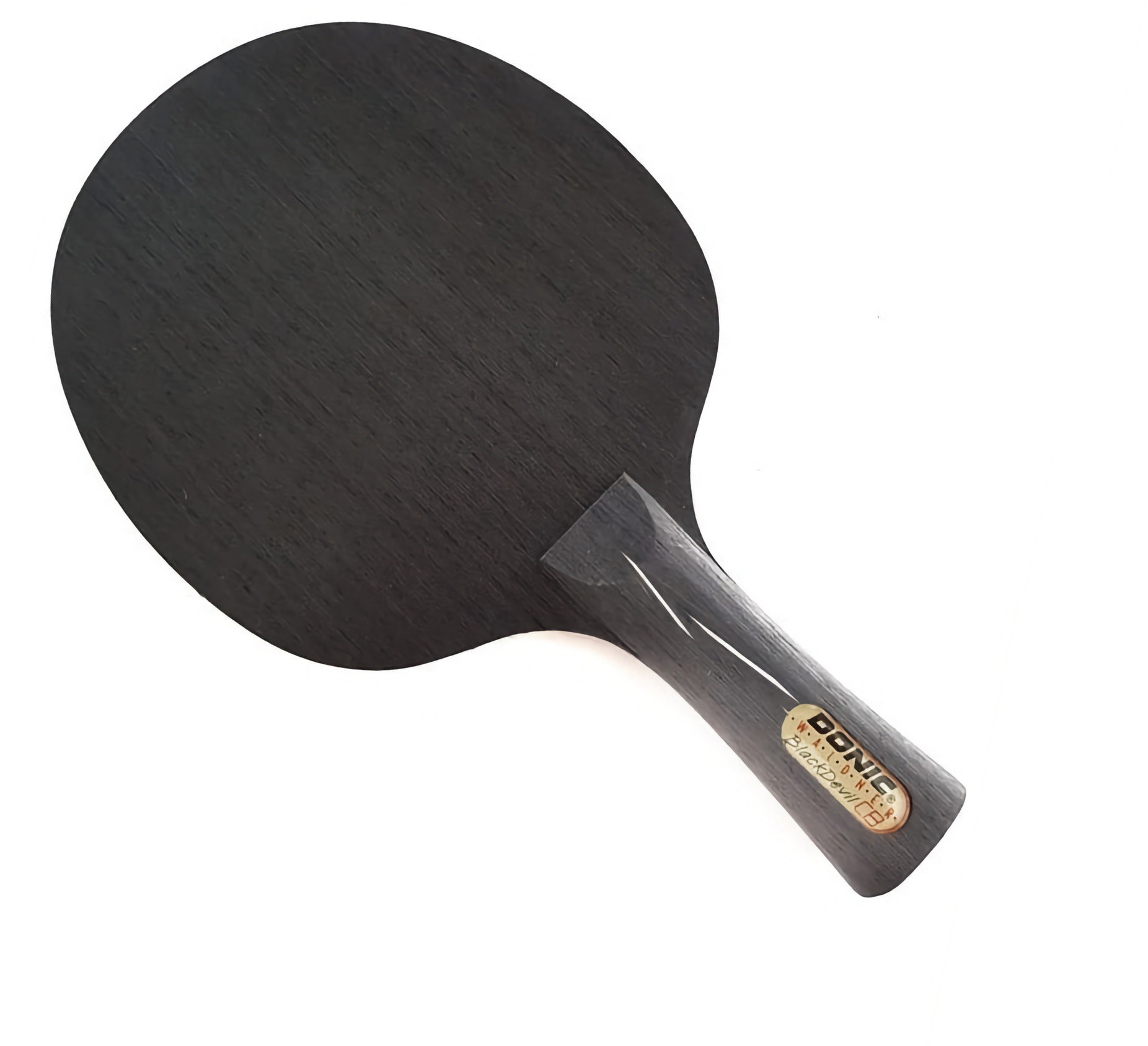
Donic Waldner Black Devil Carbon Balsa
Check price on AmazonRead the full Donic Waldner Black Devil Carbon Balsa review →
We may earn a commission from links on this page. Learn more.
The Donic Waldner Black Devil Carbon Balsa is a flat-hit weapon: 84g, OFF+ carbon, exceptional smash power, but near-zero dwell and a small head punish topspin and intermediate strikers.
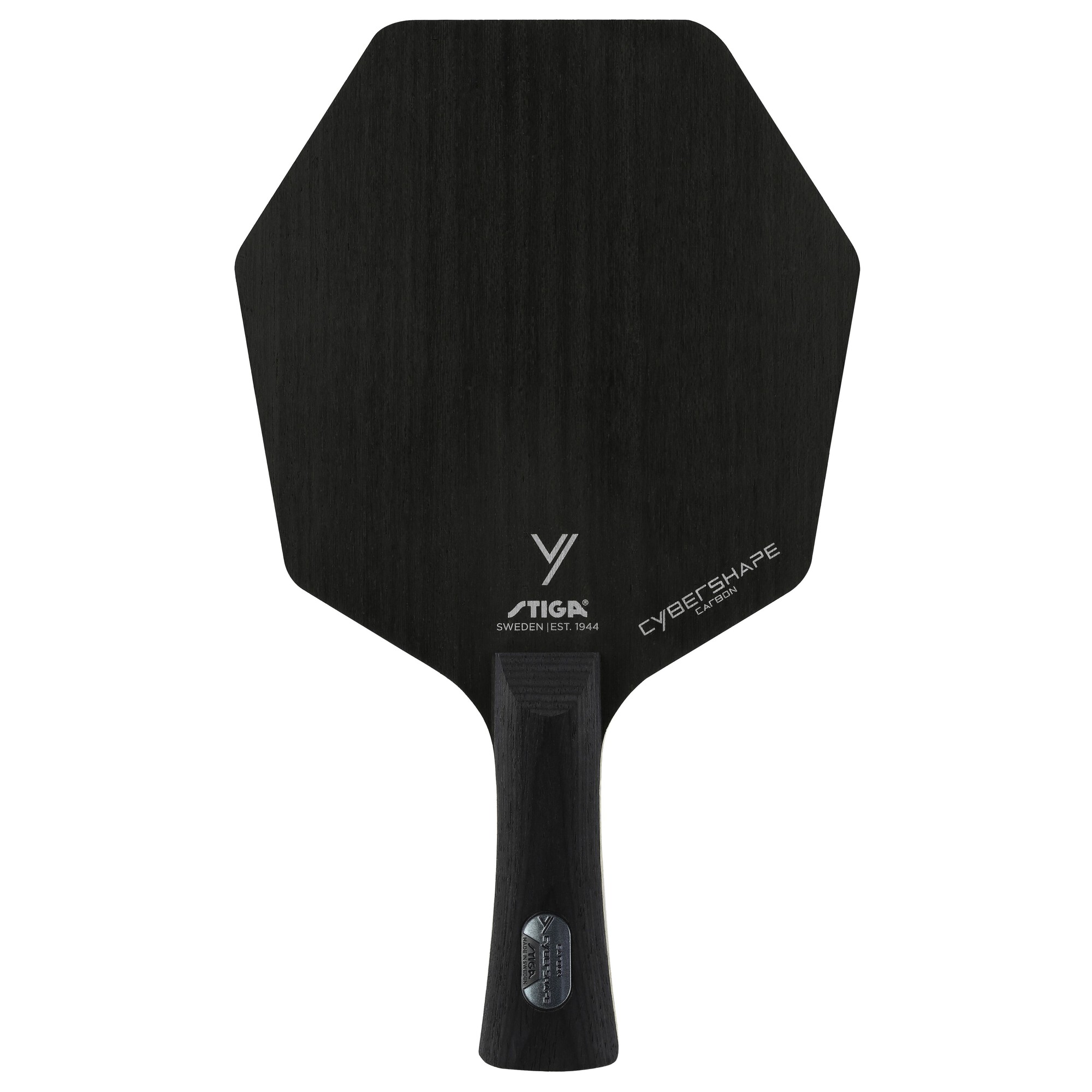
The Stiga Cybershape Carbon offers a different aggression: head-heavy balance, exceptionally large sweet spot verified by lab tests, speed rated 9/10 (comparable to Butterfly Koto-ALC class), and outstanding blocking comfort on both wings. The hexagonal shape aids serve angles, and inner-carbon (CCF) preserves woody feel while adding stiffness. A short dwell time challenges looping, and the unusual shape requires adaptation.
Both target advanced offensives players, but different styles. The Donic is a lightweight flat-hitter’s tool; the Cybershape is a head-heavy blocker and backhand-dominant player’s blade. The Cybershape has more total sweet spot and more aggressive blocking power; the Donic is nimbler and lighter. Choose the Donic if you love flat drives; choose the Cybershape if you block hard and favor backhand.
FAQ
What is CCF carbon?
CCF means Close Core Fibre—the carbon layer sits directly on the wood core without outer wood ply, preserving woody feedback while adding stiffness.
How does the hexagonal shape affect play?
The distinctive shape aids serve angles and bat angle awareness, making serve and placement easier. It takes a session or two to adapt if you are used to oval blades.
Which blocks better?
The Cybershape Carbon. Its head-heavy balance and large sweet spot make aggressive blocking very comfortable. The Donic blocks adequately but is not specialized.
Which is better for backhand?
The Cybershape Carbon. Its head-heavy balance and wider sweet spot accelerate backhand naturally. The Donic is more neutral.
Can both loop?
Yes, but neither excels. The Cybershape is slightly better due to its larger sweet spot and slightly more dwell. Both are hit-dominant blades.