Donic Persson Powerplay vs Stiga Emerald VPS V: Which Should You Buy?
| Donic Persson Powerplay | Stiga Emerald VPS V | |
|---|---|---|
| Our rating | 8.2/10 | 8.3/10 |
| feel | Hard outer koto plies with internal foil damping layers; crisp feel with excellent feedback | Stiff, hard outer surface with medium throw angle and large sweet spot |
| handle | FL | Flared (FL), also available in ST and Chinese pen |
| plies | 7-ply all wood | 5-ply all wood (Ebenholz/dark outer, VPS-treated middle veneers) |
| speed | OFF | OFF+ |
| thickness_mm | 5.9 | 6.2 |
| weight_g | 90 | 98 |
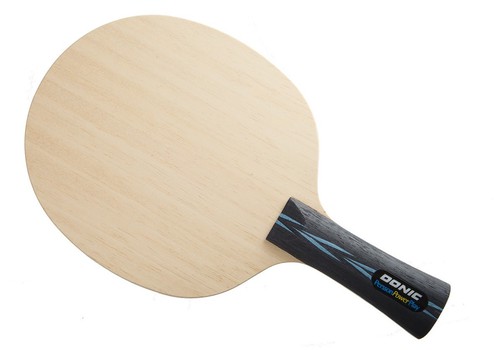
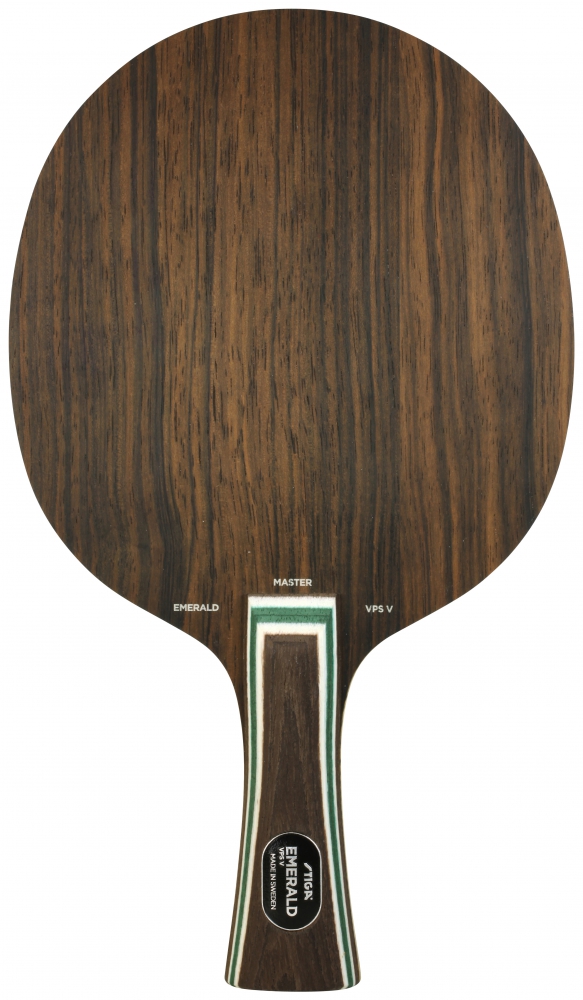
We may earn a commission from links on this page. Learn more.
Emerald VPS V and Persson Powerplay are both all-wood OFF-range blades but with opposing priorities. Emerald VPS V (8.3 rating) achieves OFF+ pace from pure all-wood using VPS-treated middle veneers and Green Ebenholz outer plies, delivering flat-trajectory drives and counter-looping prowess for mid-to-far-distance attacking. Persson Powerplay (8.2 rating) emphasizes close-to-mid all-round control with damped feedback and looping flexibility.
Emerald VPS V suits intermediate-to-competitive attackers wanting maximum all-wood speed for counter-looping at distance. Persson Powerplay is more versatile for looping, blocking, and penholder play.
FAQ
How does VPS treatment increase speed?
VPS (middle veneer treatment) improves consistency and dwell time on loops while stiffening the outer structure, enabling faster drives.
Why is Emerald VPS V so heavy?
At approx 98g, its green ebenholz outer and VPS construction add density. Long sessions can cause arm fatigue.
Does it suit beginners?
No—stiff construction punishes weak technique. Persson Powerplay is far more beginner-friendly.
Who should prefer Emerald VPS V?
Counter-loopers and mid-distance attackers who swing hard and want flat-trajectory all-wood speed without carbon.