Stiga Emerald VPS V Review: Fast All-Wood Blade for Attacking Loopers
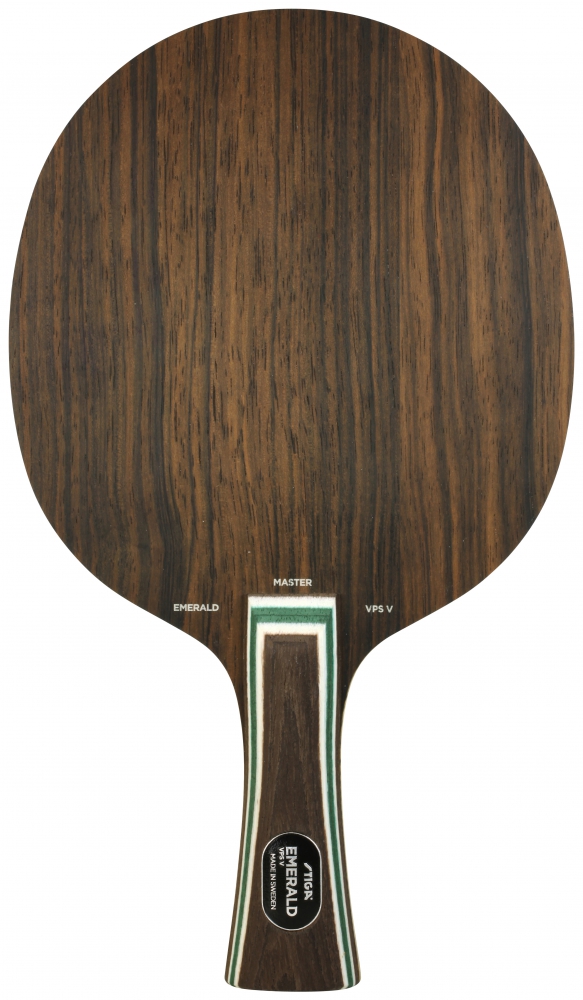
Pros
- OFF+ speed from a pure all-wood construction
- Large sweet spot makes off-center hits more forgiving
- VPS-treated middle veneers improve consistency and looping dwell time
- Green Ebenholz outer delivers stable, flat-trajectory drives
- Diamond Touch surface hardening adds durability without killing feel
- Natural wood feedback preferred over synthetic composite blades by many loopers
Cons
- Stiff construction punishes weak or inconsistent swing technique
- Control scores (around 7.2 out of 10) lower than similarly priced all-rounders
- Premium price comparable to composite blades
- Heavier weight near 98g can fatigue players in long sessions
The Stiga Emerald VPS V landed as a flagship all-wood offensive blade in Stiga’s VPS lineup, sitting above the Infinity VPS V on speed and built to test one idea: can pure wood still hang in the modern attacking game? The construction is five plies, anchored by green Ebenholz outer veneers over two temperature-treated middle veneers from Stiga’s Veneer Precision System (VPS). It aims at players who want wood’s natural feel and looping arc at a pace that keeps up with today’s powerful rubbers. What follows pulls together community testing, retail specs, and player feedback to show who’ll thrive with it and who should pass.
Performance
Speed is the headline, and the Emerald backs it up. Reviewers keep rating it OFF+, pushing the ceiling of what five-ply wood can do. Drives and flat hits come out low and sharp with real pace. The green Ebenholz outer veneer is hard and fast, with a distinct hard woody feeling on contact that wood-blade fans enjoy.
Against the Ebenholz 5, which shares its wood composition, the Emerald is a touch less stiff overall, and for looping that matters a lot. The slight drop in rigidity buys a fraction more dwell on topspin strokes, which opens up a better looping arc — especially on counter-loop exchanges at mid-distance and from behind the table. Reviewers who played both side by side send the Emerald to spin attackers and the Ebenholz 5 to flat smashers.
The large sweet spot is a real plus. Off-center contact stays reasonably controlled and stable, which testers chalk up to the VPS middle veneer treatment keeping density even across the face. Blocking benefits too — the hard surface and wide sweet spot let you redirect with confidence and almost no vibration.
Control is the soft spot. Community scores average around 7.2 out of 10, and reviewers are blunt about it: if you can’t swing through the ball cleanly, errors pile up fast. The stiff Ebenholz outer won’t paper over your mistakes the way a softer wood or carbon composite would. Speed lands roughly 10 percent below the Butterfly Viscaria on most benchmarks, with the trade being a more natural wood feel and better looping spin. This is a high-reward blade, but only for players with the technique to unlock it.
What Reviewers Agree (and Disagree) On
Across sources the read is consistent: a fast, hard all-wood blade for experienced attackers who loop from mid-distance. Everyone agrees on the large sweet spot and the stiff feel. The split is over difficulty. Experienced players find the stiffness manageable and praise the feedback, while less advanced players call the hard outer surface unforgiving and hard to loop with softer, European-style rubbers. Value draws a second debate. At a price near entry-level composite blades, some say the Emerald is overpriced for a wood-only frame; others point to the VPS consistency guarantee and Diamond Touch finish as earning the premium.
Who Should Buy It
This is a blade for intermediate-advanced to competitive players who attack from mid-distance with powerful topspin loops and counter-loops. If you want a natural wood feel over the crisp snap of carbon or arylate, the Emerald’s character suits you. It plays well with hard-sponge Chinese rubbers or high-tension European rubbers on both sides. Beginners and developing players should steer clear — the stiff Ebenholz outer makes consistent looping hard, and the price is tough to justify without the technique to unlock it. Defensive and all-round players are better off with a softer, slower blade.
FAQ
Is the Stiga Emerald VPS V an all-wood blade or does it contain carbon?
Pure all-wood, five plies: Ebenholz outer veneers on each side, spruce inner veneers, and an ayous core. No carbon, arylate, or synthetic fiber anywhere in it.
What speed class is the Emerald VPS V?
Stiga rates it OFF (offensive). In practice, community testers call it OFF+, putting it at the faster end of all-wood five-ply blades.
How does the Emerald VPS V compare to the Stiga Ebenholz 5?
They share the same wood composition, but the Emerald runs slightly less stiff thanks to the VPS treatment and thinner varnish. That gives the Emerald the edge on looping and dwell, while flat smashers who want a crisper, harder contact prefer the Ebenholz 5.
What rubbers pair well with the Emerald VPS V?
On the forehand, hard-sponge Chinese rubbers like DHS Hurricane or similar tacky sheets play well and amplify the looping arc. High-tension European or Japanese rubbers on the backhand also fit. Steer clear of very soft rubbers — they drag the combination below the blade’s intended speed class.
Is the Emerald VPS V suitable for a player rated around USATT 1500 to 1700?
It can work at that level if your topspin technique is solid, but if you’re still refining your looping mechanics the stiff outer veneer will fight you. Players in that range with a consistent attack game tend to rate it well.
Is the Stiga Emerald VPS V still in production?
Some retailers list it as discontinued or out of production, though specialty table tennis shops and online marketplaces still carry stock. Check availability before you buy.