DHS Hurricane Long 5 vs Nittaku Acoustic Carbon: Which Should You Buy?
| DHS Hurricane Long 5 | Nittaku Acoustic Carbon | |
|---|---|---|
| Our rating | 8.6/10 | 8.8/10 |
| feel | hard, powerful | Medium-hard outer carbon with surprising wood-like dwell and ball retention; crisp sound on contact |
| handle | FL/ST | FL, ST (also Large Handle and Chinese Penhold variants available) |
| plies | 5W+2 Arylate-Carbon | 7 plies — 5 wood + 2 FE carbon (Limba - FE Carbon - Limba - Tung - Limba - FE Carbon - Limba) |
| speed | OFF+ | OFF |
| thickness_mm | 5.9 | 5.5mm |
| weight_g | 89 | approx 90g |
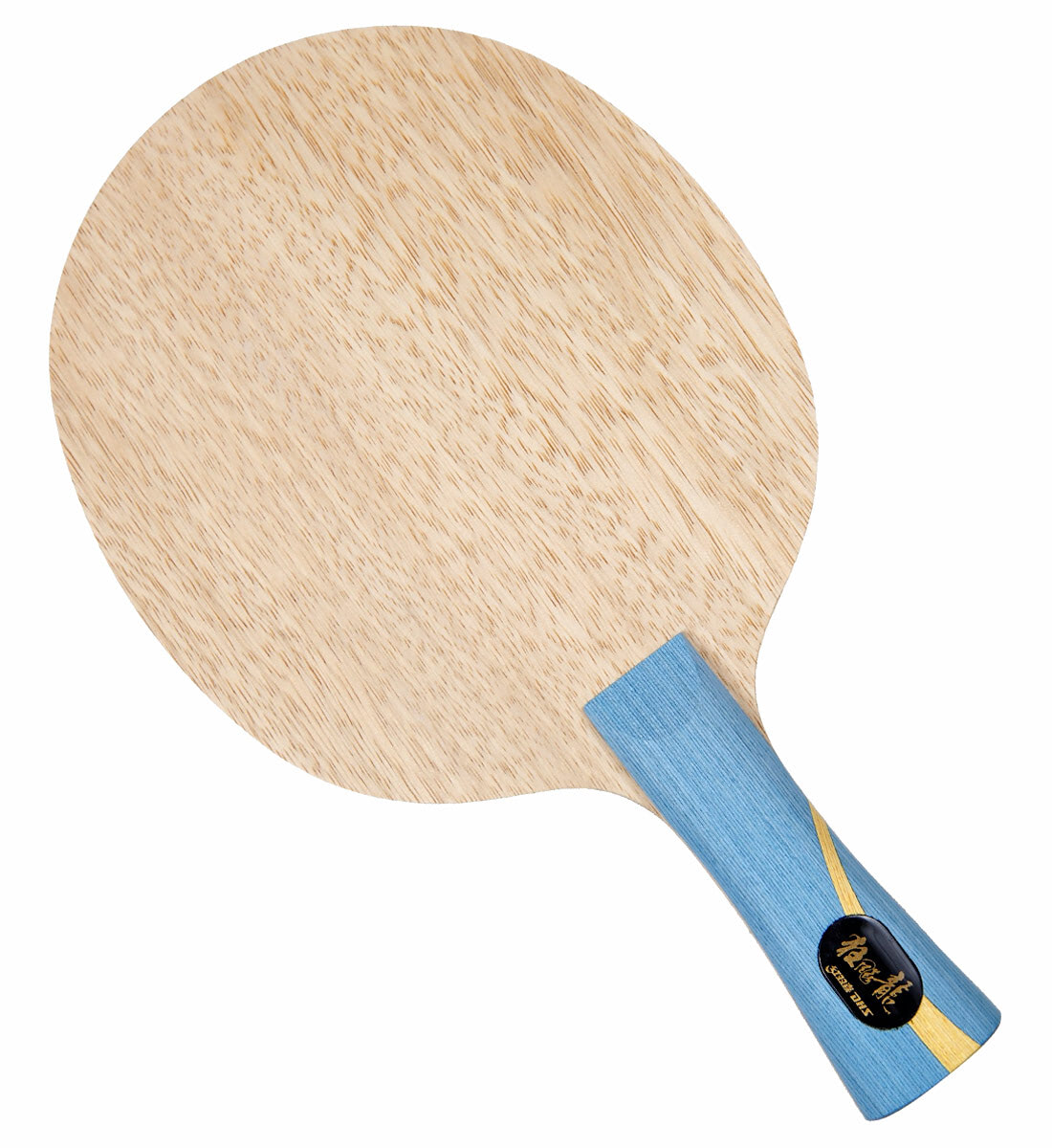
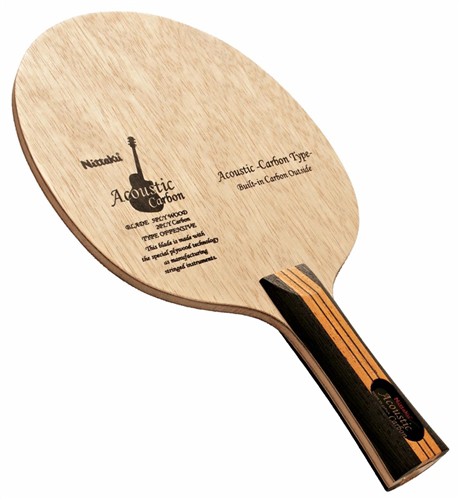
We may earn a commission from links on this page. Learn more.
The DHS Hurricane Long 5 (8.6) is an OFF+ inner-carbon blade maximizing dwell and high-arc looping with tacky rubber—ideal for forehand-dominant attackers who loop close-to-mid-table. The Nittaku Acoustic Carbon (8.8) is an OFF outer-carbon blade retaining wood-like feel and touch despite carbon construction—trusted by pros, especially for short-game precision and compatibility with sticky rubbers.
Both love tacky rubber. Long 5 emphasizes dwell and arc; Nittaku emphasizes speed and feel balance. Long 5 is slightly slower but deeper on impact; Nittaku is faster but less forgiving. Long 5 suits pure loopers; Nittaku suits mixed attackers and short-gamers. Both are heavy (89g vs 90g), but Long 5’s all-carbon internals feel harder; Nittaku’s outer carbon feels woody. Pick Long 5 if you loop aggressively; pick Nittaku if you want speed without losing wood-like touch.
FAQ
Which is faster—OFF vs OFF+?
Nittaku (OFF) is faster in absolute terms due to outer carbon. Long 5 (OFF+) is rated higher for controllability, not raw speed.
Do both work with sticky Japanese rubbers?
Yes, both excel with sticky rubbers. Long 5 comes alive with Chinese tacky; Nittaku is slightly more neutral across rubber types.
Which has better short-game feel?
Nittaku—its wood-like dwell and precision make soft touches safer. Long 5 is harder and more direct.
How much learning curve for each?
Long 5 is gentler. Nittaku’s medium throw angle and head-heavy balance require adjustment from all-wood players.