DHS Hurricane 301 vs Sanwei T5000: Which Should You Buy?
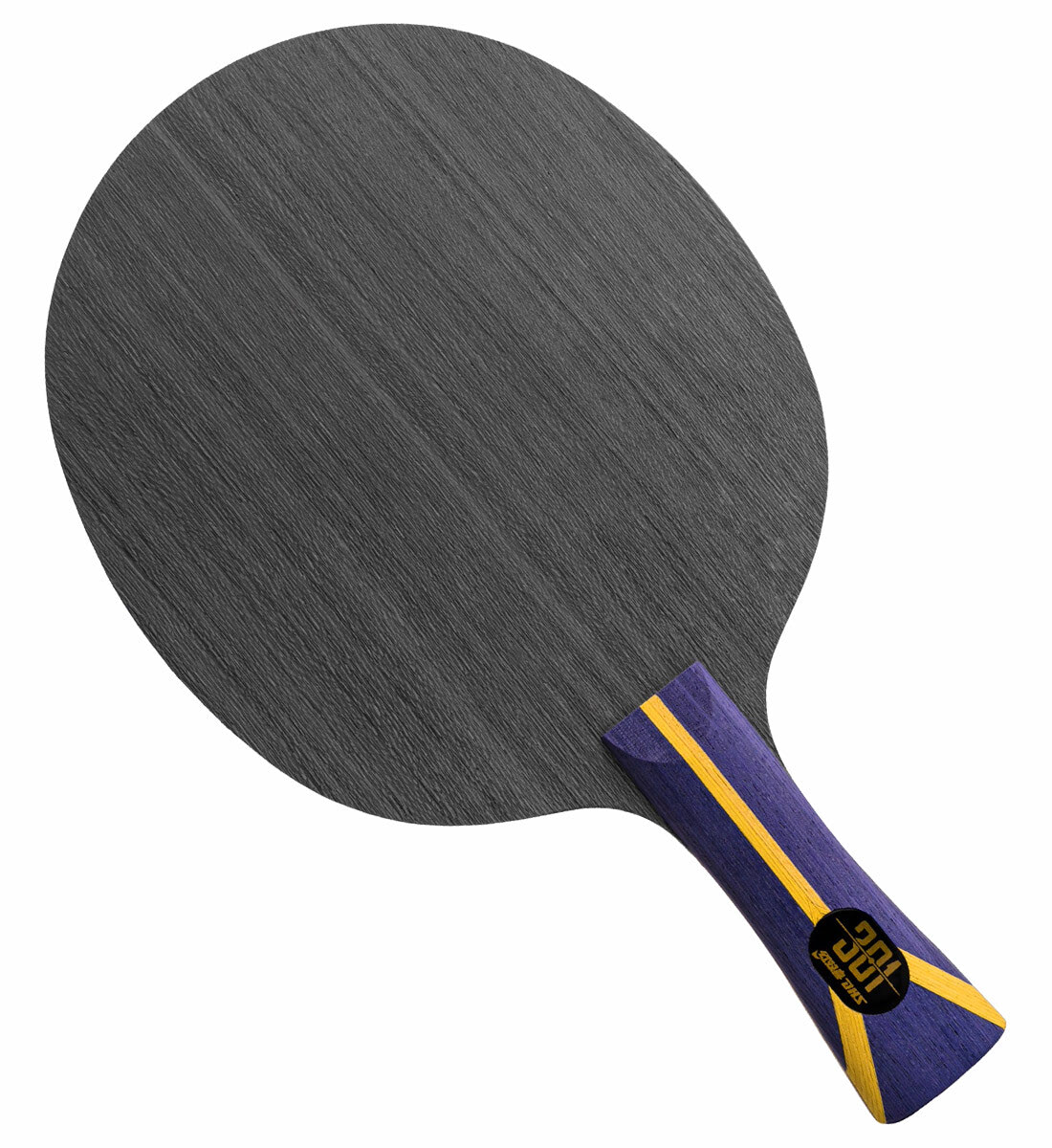
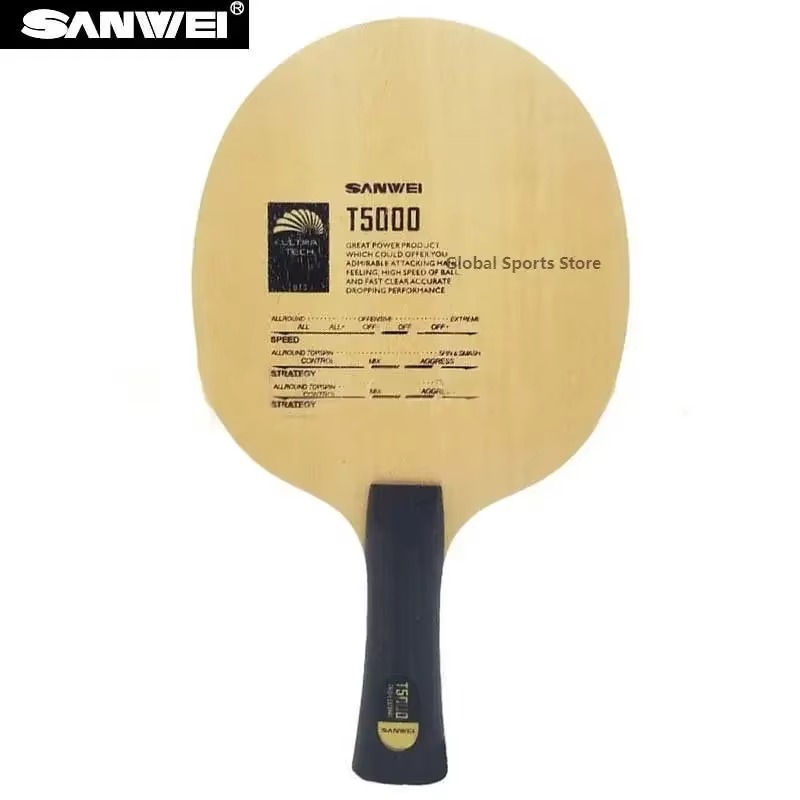
| DHS Hurricane 301 | Sanwei T5000 | |
|---|---|---|
| Our rating | 8.6/10 | 8.1/10 |
| feel | medium-hard, crisp, direct inner arylate-carbon with deep dwell on power shots | Stiff with crisp carbon feedback; solid rebound and good sweet spot consistency |
| handle | FL | Flared (FL) |
| plies | 5W+2 Aramid-Carbon (Koto outer, Ayous middle and core, inner Arylate-Carbon) | 5 wood + 2 carbon (7 total) |
| speed | OFF | OFF |
| thickness_mm | 5.8 | 6.5 |
| weight_g | 90 | 86 |
We may earn a commission from links on this page. Learn more.
The DHS Hurricane 301 (8.6) is the intermediate choice—wider control range, deeper dwell, proven durability, and strong backspin handling justify the modest price premium over ultra-budget blades. The Sanwei T5000 (8.1) is the impulse buy: at under 15 USD, it gives you legitimate carbon-blade speed and looping ability, though build quality and consistency lag behind established brands.
Choose DHS if you’re serious about looping and want a blade that won’t betray you during rallies or need reliable backspin defense. Pick Sanwei if you’re curious about carbon blades on a shoestring or need a throw-away backup for club play. The T5000’s ambiguity around inner vs. outer carbon variants is a real pain; DHS removes that guesswork.
FAQ
Is the Sanwei T5000 as fast as the DHS?
The T5000 has a catapult effect, but looping at mid distance is noticeably slower than Hurricane 301. DHS has better sustained speed across rally distances.
Will the Sanwei hold up to regular play?
It’s durable but not in DHS’s class. Build quality and finish feel budget-grade; edge durability and sweet-spot consistency are modest.
Which rubber should I use with the T5000?
Works with everything from cheap to premium, including Tenergy 05. But its stiff feel demands confident technique—it amplifies control mistakes.
When should I upgrade from Sanwei to DHS?
Once you’re looping consistently at mid distance and backspin defense matters. DHS’s deeper dwell and proven long-term value justify the jump.