Butterfly Timo Boll W7 vs Donic Persson Powerplay: Which Should You Buy?
| Butterfly Timo Boll W7 | Donic Persson Powerplay | |
|---|---|---|
| Our rating | 7.8/10 | 8.2/10 |
| feel | Hard, stiff, direct | Hard outer koto plies with internal foil damping layers; crisp feel with excellent feedback |
| handle | FL, ST | FL |
| plies | 7-ply all wood (Limba / Ayous / Kiri) | 7-ply all wood |
| speed | OFF | OFF |
| thickness_mm | 6.7 | 5.9 |
| weight_g | 94 | 90 |
We may earn a commission from links on this page. Learn more.
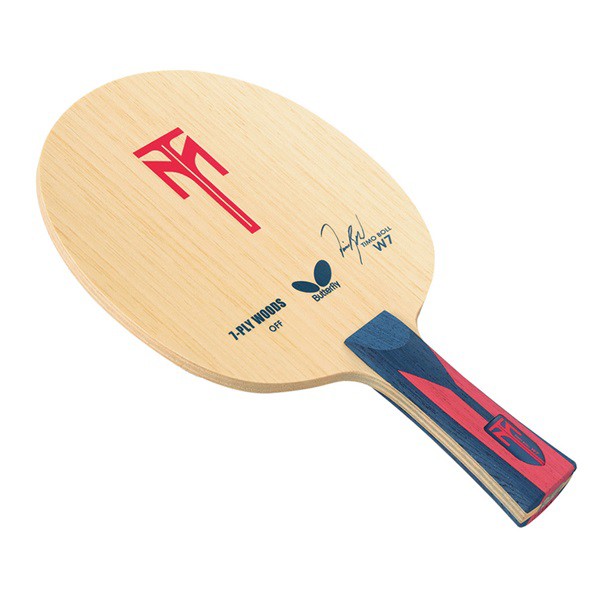
The Butterfly Timo Boll W7 is a seven-ply all-wood blade with a large sweet spot and exceptional stability, delivering near-carbon OFF pace without composite layers. It suits advanced offensive players who favor flat drives, smashes, and flicks over looping, and who want pure wood feel with high speed.
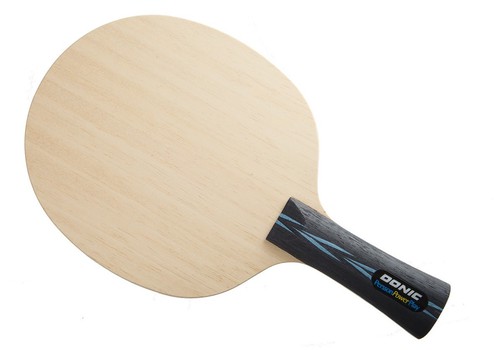
The Donic Persson Powerplay is a seven-ply all-wood blade with internal foil damping layers and hard koto outer plies, prioritizing tactile feedback and control even under pressure. It works well for both shakehand and penhold players who want crisp response without vibration.
Choose W7 if you hit hard, favor flat drives, and want pure all-wood speed. Choose Persson Powerplay if you value feedback, vibration damping, and exceptional control in a flexible blade.
FAQ
Which is stiffer?
W7 is very stiff and direct; Persson Powerplay is more flexible with internal damping.
Who should avoid W7?
Beginners and intermediate players—its stiffness and vibration demand experienced technique.
Vibration handling?
Persson Powerplay explicitly tames vibration with foil damping; W7 can cause hand fatigue over long sessions.
Loop performance?
W7 is weak at loop-against-backspin; Persson Powerplay loops reasonably well with committed swings.
Availability?
Both are discontinued; used market availability varies by region.