Butterfly Maze Advance vs Nittaku Acoustic Carbon: Which Should You Buy?
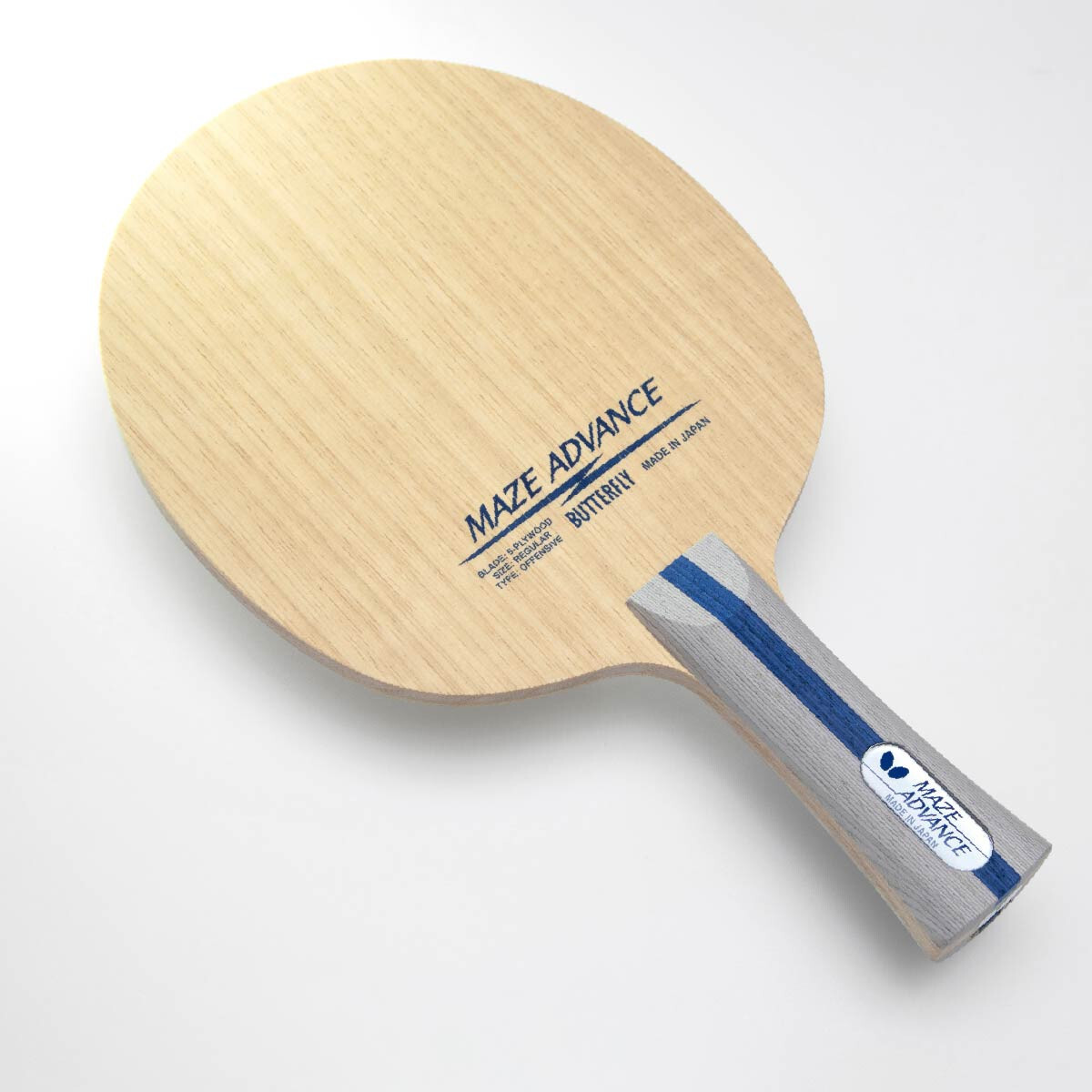
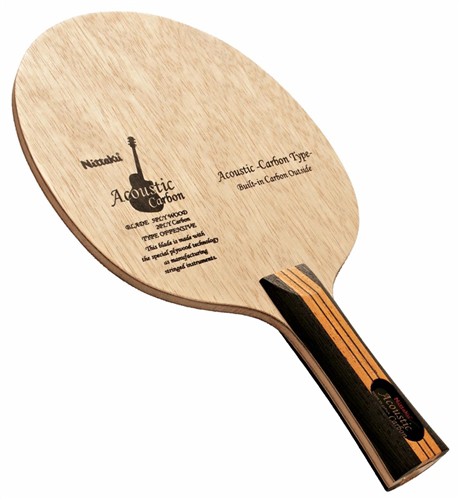
| Butterfly Maze Advance | Nittaku Acoustic Carbon | |
|---|---|---|
| Our rating | 8.2/10 | 8.8/10 |
| feel | soft, controlled, slightly stiff for an all-wood blade | Medium-hard outer carbon with surprising wood-like dwell and ball retention; crisp sound on contact |
| handle | FL | FL, ST (also Large Handle and Chinese Penhold variants available) |
| plies | 5W (all wood) | 7 plies — 5 wood + 2 FE carbon (Limba - FE Carbon - Limba - Tung - Limba - FE Carbon - Limba) |
| speed | ALL+ | OFF |
| thickness_mm | 6.7 | 5.5mm |
| weight_g | 85 | approx 90g |
We may earn a commission from links on this page. Learn more.
Maze Advance is the affordable all-wood foundation for developing control and consistency. Nittaku Acoustic Carbon is a premium investment offering wood-like dwell within a carbon frame, dramatically higher speed, and elite precision—but heavier and less forgiving for intermediate players.
Choose Maze Advance if you’re learning, on a budget, or want a pure all-wood feel. Go Acoustic Carbon if you’re intermediate-plus with a developed stroke, want to step up to serious carbon without losing wood-like touch, and can handle its learning curve.
FAQ
Why is Acoustic Carbon so much heavier?
At 90g typical, it reflects heavier wood cores and denser carbon materials; Advance is 85g. Weight affects mobile forehand-to-backhand transitions.
Can intermediate players use Acoustic Carbon?
Possible but steep learning curve. Its stiff feel, head-heavy balance, and bounce reward advanced technique; Advance is far friendlier at early stages.
Which generates more spin?
Acoustic Carbon by far, thanks to wood-like dwell plus carbon’s inherent spin assistance.
How do they compare in short-game precision?
Acoustic Carbon is exceptional, rivaling pure all-wood; Maze Advance is solid but lacks the premium touch.