Butterfly Lin Gaoyuan ALC vs Nittaku Acoustic Carbon: Which Should You Buy?
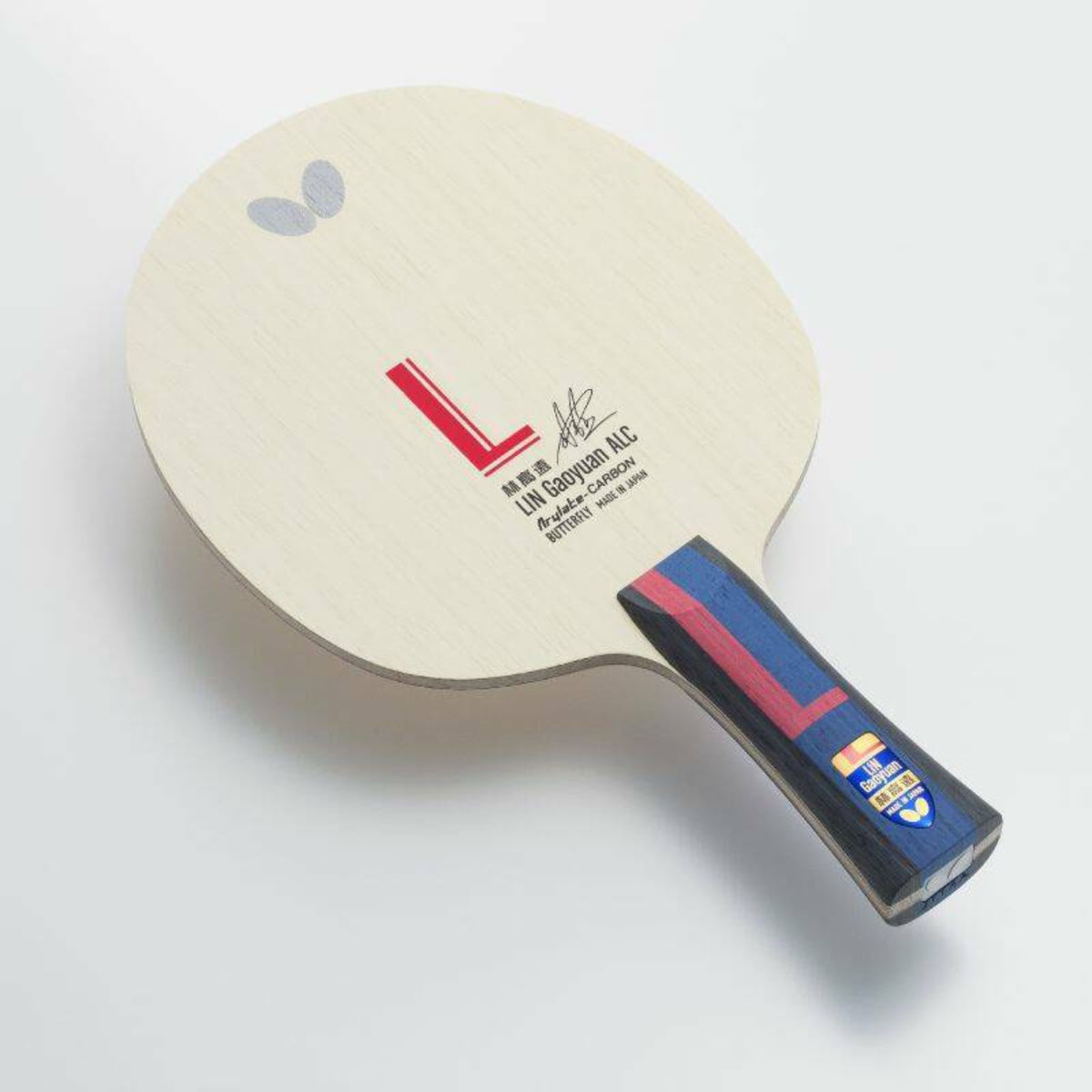
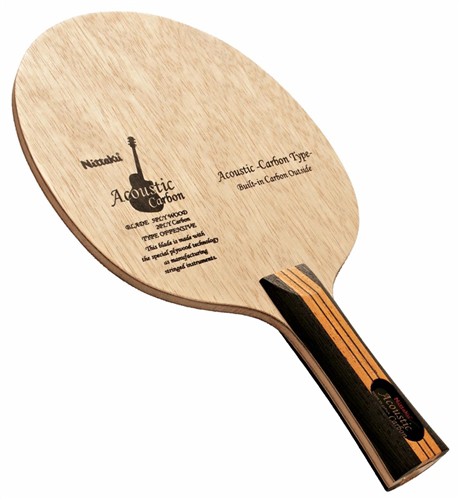
| Butterfly Lin Gaoyuan ALC | Nittaku Acoustic Carbon | |
|---|---|---|
| Our rating | 8.7/10 | 8.8/10 |
| feel | Soft — flexible ALC gives a more wood-like feel than other carbon blades; high dwell time | Medium-hard outer carbon with surprising wood-like dwell and ball retention; crisp sound on contact |
| handle | Shakehand (FL, AN, ST options); shorter anatomic handle than Viscaria | FL, ST (also Large Handle and Chinese Penhold variants available) |
| plies | 5 wood + 2 arylate-carbon (ALC) — 7-ply construction with koto outer layers and inner arylate-carbon fiber | 7 plies — 5 wood + 2 FE carbon (Limba - FE Carbon - Limba - Tung - Limba - FE Carbon - Limba) |
| speed | OFF (Butterfly rates Reaction 118, mid-fast; equivalent to OFF/OFF+ class) | OFF |
| thickness_mm | 5.7mm | 5.5mm |
| weight_g | 84-87g typical (Butterfly spec approx 87g) | approx 90g |
We may earn a commission from links on this page. Learn more.
The Lin Gaoyuan (8.7) is a soft, flexible ALC blade optimized for dwell and spin. The Acoustic Carbon (8.8) is Nittaku’s answer: higher-speed outer carbon that miraculously retains wood-like feel and exceptional short-game precision.
Choose Lin Gaoyuan for maximum dwell, a larger sweet spot, and close-to-mid-distance topspin finesse. Choose Acoustic Carbon if you want comparable speed (8.8 rating) with superior short-game touch, less dwell, and a head-heavy balance that naturally accelerates your drives—though it demands careful rubber selection to avoid weight issues.
FAQ
Why is Acoustic Carbon rated higher?
It combines wood-like short-game precision with speed comparable to TBALC class blades, praised by professional players including Ayane Morita.
Which is heavier?
Acoustic Carbon is around 90g versus Lin Gaoyuan’s 84-87g. The extra weight creates a head-heavy balance that powers drives but demands matching rubber.
Which is better for looping far from the table?
Lin Gaoyuan with its longer dwell. Acoustic Carbon’s stiffer feel limits dwell at distance, better for mid-table loops and counter-attacks.
Are both good for beginners?
Neither. Both suit intermediate to advanced players. Acoustic Carbon’s steep learning curve and head-heavy balance make it more demanding than Lin Gaoyuan.