Butterfly Innerforce ZLC vs Nittaku Acoustic Carbon: Which Should You Buy?
| Butterfly Innerforce ZLC | Nittaku Acoustic Carbon | |
|---|---|---|
| Our rating | 8.5/10 | 8.8/10 |
| feel | Soft-medium; woody feel with ZLC carbon layers near the core | Medium-hard outer carbon with surprising wood-like dwell and ball retention; crisp sound on contact |
| handle | AN / FL / ST | FL, ST (also Large Handle and Chinese Penhold variants available) |
| plies | 5 wood + 2 ZLC carbon (inner ZLC construction) | 7 plies — 5 wood + 2 FE carbon (Limba - FE Carbon - Limba - Tung - Limba - FE Carbon - Limba) |
| speed | OFF | OFF |
| thickness_mm | 5.7 | 5.5mm |
| weight_g | 84 | approx 90g |
We may earn a commission from links on this page. Learn more.
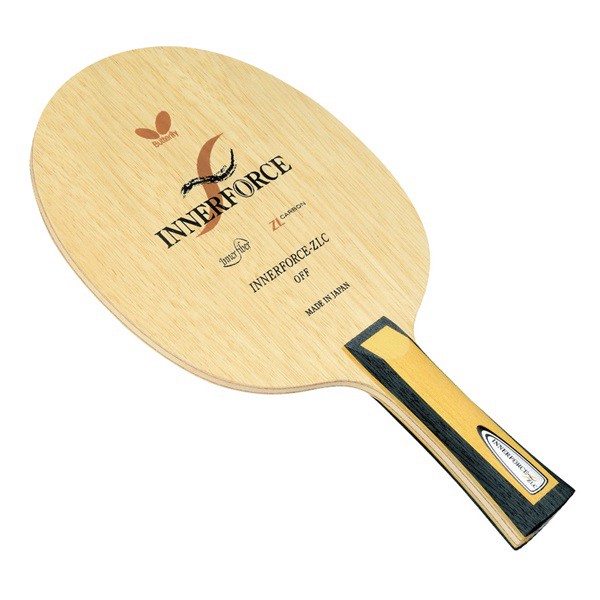
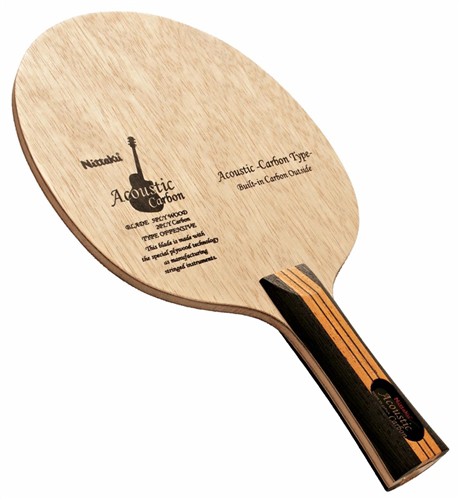
The Butterfly Innerforce ZLC and Nittaku Acoustic Carbon are both advanced carbon blades from the top tier, but take different approaches. The ZLC, with its mature inner-carbon design, prioritizes balance between speed, spin, and control across all distances. The Acoustic Carbon, a newer Nittaku offering, successfully marries outer-carbon speed with wood-like dwell and short-game precision, especially with sticky rubbers.
The ZLC is lighter at 84g and more adaptable to all rubber types. The Acoustic Carbon is heavier at 90g and demands careful rubber selection, but rewards sticky-rubber players with exceptional control and blocking. The Acoustic Carbon’s high speed compares to TBALC; the ZLC is consistently reliable. The Acoustic Carbon’s learning curve is steeper due to its bounce feel and head-heavy balance. If you want a proven, versatile inner-carbon blade, the ZLC. If you want premium wood-feel with carbon speed and play with sticky rubbers, the Acoustic Carbon.
FAQ
Which blade is heavier?
The Nittaku Acoustic Carbon at approximately 90g versus the ZLC at 84g. Significant difference in swing weight.
Does the Acoustic Carbon have real wood feel?
Yes, remarkably. Despite outer-carbon construction, it retains unmistakable wood-like dwell and ball retention.
Which blade is faster?
The Acoustic Carbon is fast, comparable to TBALC. The ZLC is slightly slower but more consistent at all distances.
Which pairs better with sticky rubber?
The Acoustic Carbon is optimized for sticky and tacky rubbers. The ZLC adapts to all types equally.