Butterfly Innerforce Layer ALC vs Nittaku Violin: Which Should You Buy?
| Butterfly Innerforce Layer ALC | Nittaku Violin | |
|---|---|---|
| Our rating | 8.8/10 | 8.4/10 |
| feel | medium, high feel/dwell | Soft, warm and flexible with long dwell, premium hand-crafted Japanese all-wood feedback |
| handle | FL/ST/AN | FL |
| plies | 5W+2 Inner Arylate-Carbon | 5-ply all wood (Kiri core with White Ash outer plies) |
| speed | OFF | ALL+ |
| thickness_mm | 5.9 | 5.3 |
| type | — | ALL+ |
| weight_g | 86 | 86 |
We may earn a commission from links on this page. Learn more.
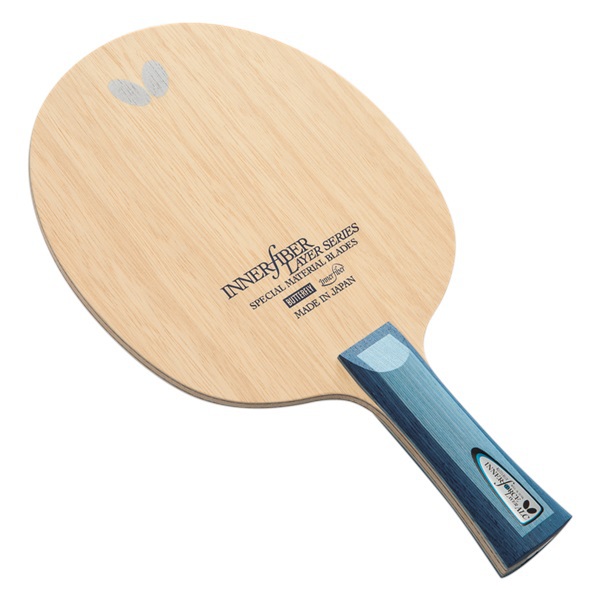
The Innerforce Layer ALC uses inner arylate-carbon to deliver all-wood feel and dwell up close, then a carbon kick and acceleration on hard swings, with excellent control across the short, mid and far game and a large sweet spot.
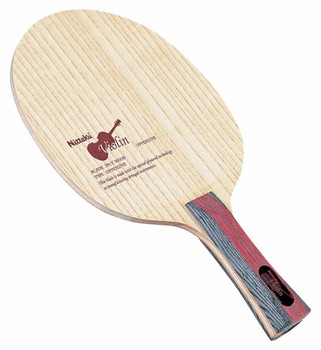
The Nittaku Violin is a 5-ply all-wood blade with exceptional control, a warm, soft feel and long dwell for looping and close-to-mid play, plus premium Made in Japan craftsmanship. It is slower than its billing suggests and weak at long-distance pace.
Choose the Innerforce Layer ALC for on-demand carbon acceleration, the Violin for pure all-wood control and feel.
FAQ
Which has more power?
The Innerforce Layer ALC adds a carbon kick on hard swings for more on-demand power, while the Violin tops out lower and prioritizes control.
Does the Innerforce use carbon?
Yes, it uses an inner arylate-carbon layer for an all-wood feel with a carbon kick; the Violin is fully all wood.