Let's Talk Chinese-Made Table Tennis Equipment
1
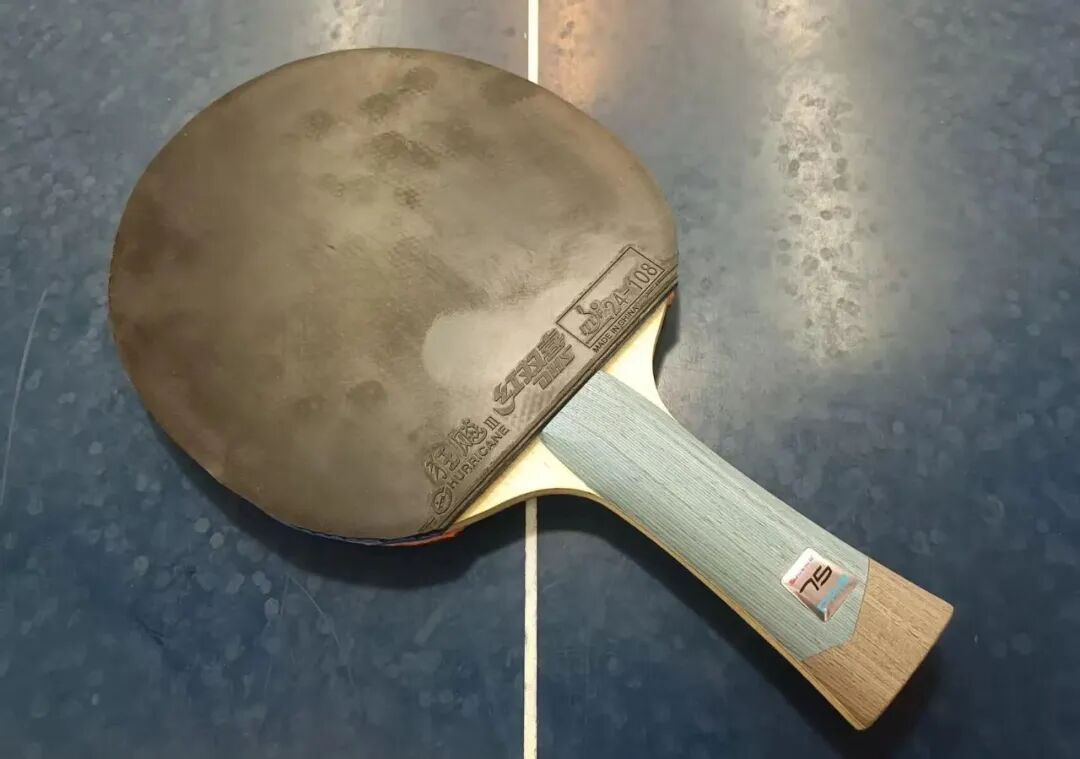
This summer, my kid started learning table tennis. I put together a setup: a Sanwei Nordic 5 blade with Hyper Power rubber on both sides. The Nordic 5 is a five-ply all-wood blade with a fairly transparent feel. I went with Hyper Power for its “built-in energy” — it works fine without boosting, which keeps things simple. The power reserve isn’t anything special, but a beginner doesn’t need that.
Opinions differ on what blade a beginner should use. Some argue that all-wood blades help develop touch and spin sensitivity. Others say thin-carbon blades are lighter and more responsive, compensating for weaker stroke power. Personally, I think either all-wood or thin-carbon is fine. Clear feedback and good control are what matter.
Reaching straight for a Stiga CL, a mid-range Butterfly (like the Maze Advance or Korbel), or similar imports as a beginner setup feels a bit excessive to me. Kids bash their gear around. And frankly, some import blades aren’t even that impressive — take the Butterfly Fextra. Apart from better build quality, the ball quality genuinely falls short of many domestic blades in the hundred-yuan range.
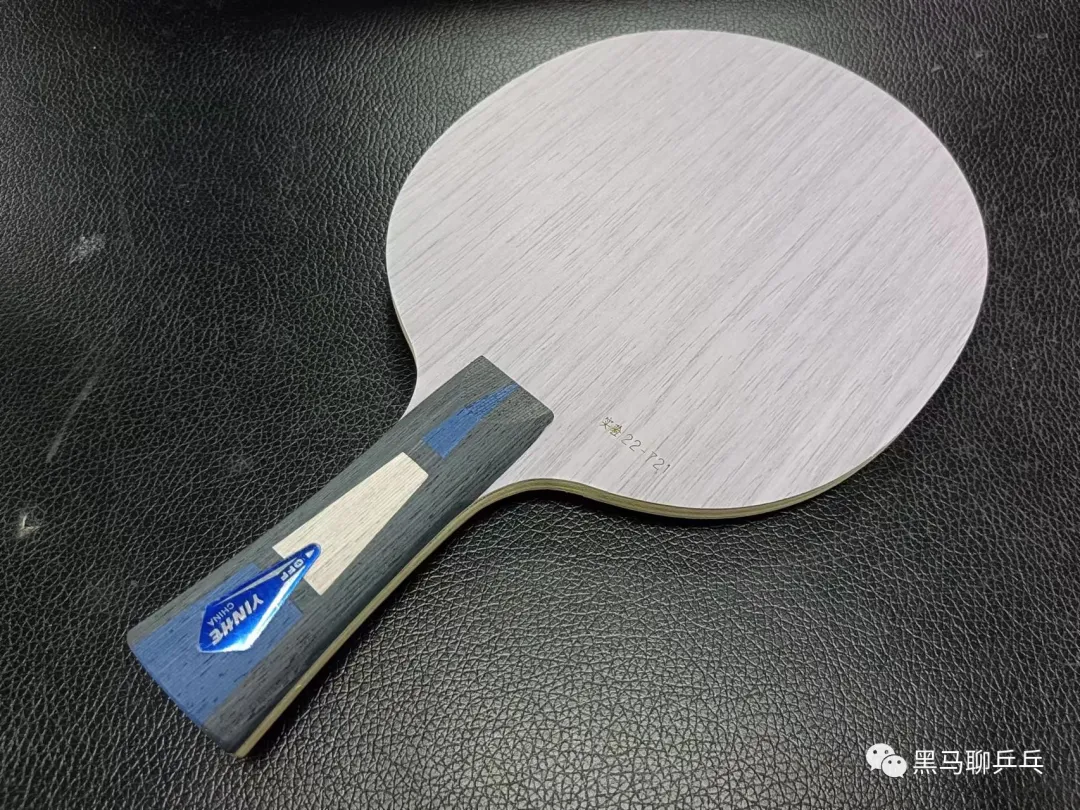
The Sanwei Nordic 5, Yinhe U2s, and DHS Jin Ji 7 are all solid choices for building fundamentals. There are also imported brands with domestically-produced blades worth considering — Ni Xia Lian’s old seven-ply all-wood Swat, or the Zhongshan-made Banda Offensive, both of which have a clear, comfortable feel with honest feedback.
2
I won’t deny that Butterfly’s high-end blades are genuinely excellent. But in the mid-to-low range, their value has steadily declined. The Fextra can’t hurt anyone. The Metz pure wood is just made thicker to patch up ball quality. The Attack Courage and Coupal, sitting in the 400-500 yuan range, carry the carbon label in name only — they play a bit thin in practice, lacking the ball quality and pressure of domestic blades at the same price. They don’t stack up against Sanwei’s 75 Par (which has something of the Vis’s resilient flex) or Sword’s Visea. The author’s own Moyu and Yaonie blades also have plenty of amateur-level fans.
Not to mention the even cheaper end. Yinhe’s Pro-01 and U2, Sword’s Vsea — some love them, some don’t, but their in-game threat is no worse than Butterfly’s 300-500 yuan tier. Sometimes we buy Butterfly simply out of habit, chasing the brand name.
3
In an earlier article, I touched on a trend:
Blades in the 200-500 yuan range are increasingly converging in quality.
That’s genuinely true. A huge number of foreign brands are now manufacturing blades in China. OEM production shows that domestic factories have reached the level needed to meet those standards. Stiga’s domestically-made Banda series, and this year’s new Power Carbon, have earned solid reputations. Victas, Joola, and Gewo all have multiple domestic-made blades. So do Xiom and Tibhar, some of them being flagship high-end models.
When I visited the Aist factory in early March last year, I wrote about it. All kinds of fiber materials and nine-ply paulownia wood are now available off the shelf. Blades in the 100-200 yuan range can already be genuinely competitive.
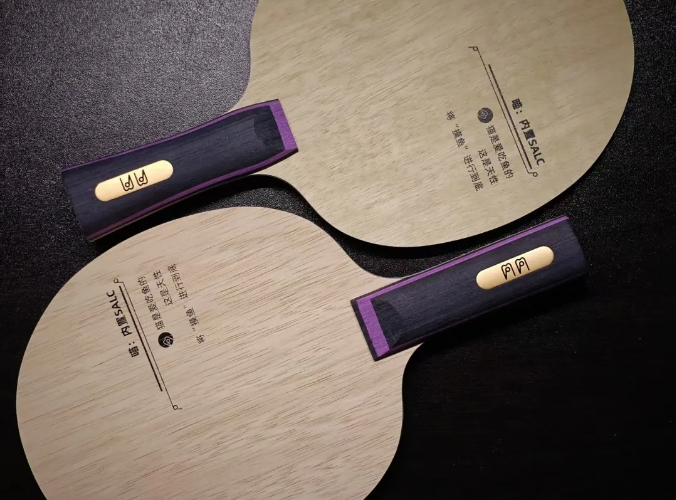
For example, the “Miao” blade I later chose, built around a Harimoto SALC structure, has been praised by many players as at least as good as the earlier Moyu blade. That says a lot about where mid-range domestic manufacturing stands today.
4
At the high end, DHS’s 968 series occupies the number one spot in many players’ minds. That’s not just among Chinese national team players or domestic amateurs — many Japanese and Korean players, and some from Europe and the Americas, have moved to 968 specials.
In recent years, the Yinhe blades used by national team players have been shining brighter and brighter. From Yu Ziyang, Xu Yingbin, and Liu Dingshuo’s outer carbon Yinhe setups, to the 520X used by the North Korean team and Chen Yi’s Pro-05x Max — these blades genuinely hold their own against the world’s top-tier production.
I’ll admit that the special Butterfly blades I’ve personally tried do have something unique in how the fiber is processed — whether and to what degree it’s cured, and the bonding. But looking at the retail market versions, I can’t see what puts the Butterfly flagship blade head and shoulders above the rest. Plenty of players also say the author’s custom ALC delivers a loading sensation and baseline power that surpasses the Lin Gaoyuan ALC and Fan Zhendong ALC, making it their top choice.
In terms of build details, Butterfly still edges ahead slightly. But judging by performance and ball quality — setting aside the specials — the retail-market blades from DHS inner carbon and Yinhe outer carbon are not behind anymore.
On the fiber side, DHS’s ultra-dense fiber (as seen in the Hurricane Long 5H special) and Yinhe’s new PLC (which the author has been testing with sample pieces) — backed by the material selection and bonding craftsmanship from the DHS Research Institute and Yinhe Blue Gold Workshop — produce results that are not a step below Butterfly’s ZLC blades.
5
On the rubber side, I regard boosted Hurricane 3 as the most complete rubber out there. Despite its quality-control variability and weight issues, there is no need to question its performance. When people call Platinum V a poor man’s D09c substitute, my take is different: a thin coat of oil on a Hurricane 8 gets you similar power threat. The real question is what kind of forehand output you want — faster, or spinnier?
Of course, rubber quality consistency and build quality still lag behind European rubbers and Butterfly by a meaningful margin. Sometimes we don’t lack imagination — we just lack the persistence to keep refining a product until it’s truly right. Take Palio: back in 2003, they already made rubber with 2.6 mm sponge. Now Butterfly has launched the Z03 with 2.5 and 2.7 mm sponge options and registered it as a patent.