Key Equipment Insights from the London World Table Tennis Championships (Part 2)
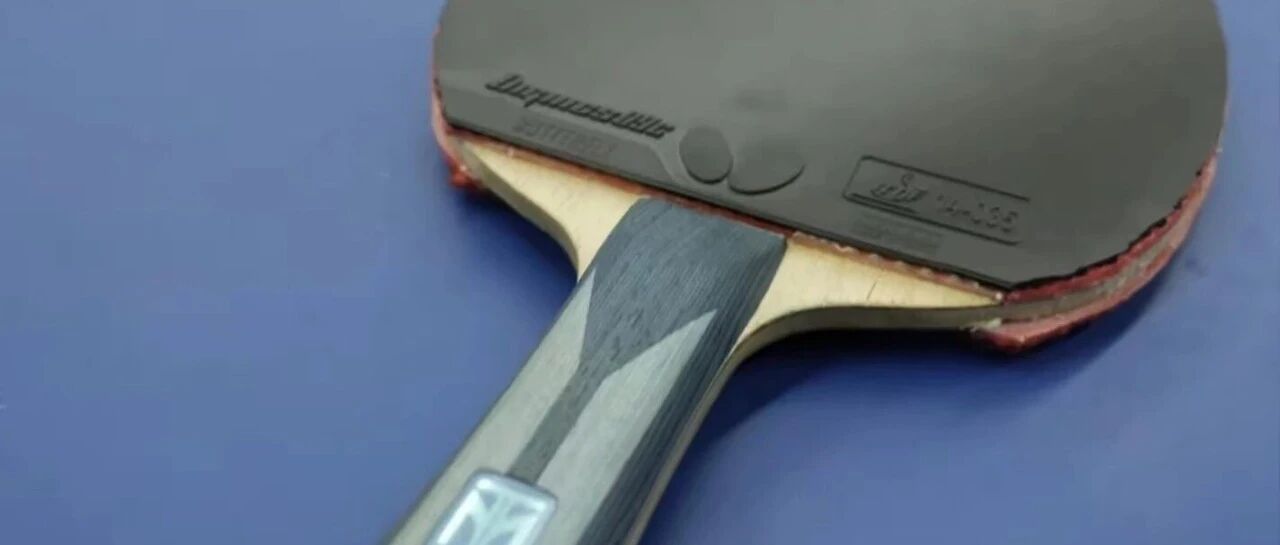
3. Players’ views on equipment keep shifting.
Take Kanak Jha, who not long ago was saying the Boll ALC felt more forgiving than Super Vis. At the time he had switched from Super Vis to Boll ALC. At this World Championships, he switched back to Super Vis — probably because he felt the ball quality was heavier with it.
Sometimes you want more control. Other times you want more power. Nothing is perfect, so you oscillate. Franziska is much the same — her forehand and backhand rubbers have cycled through D05, D09c, and Z03 repeatedly. There just isn’t a single right answer. It depends on how you’re solving the puzzle for yourself.
But within that, there are two types of players. One type, like Qiu Dang, believes the blade and rubber should stay as constant as possible so the feel keeps improving. The other type — Niwa Koki, Falck — feel that different venues call for different setups. Even the typically steady Fan Zhendong now occasionally switches to D09c on both sides depending on the table brand and match ball.
You can’t really say one approach is correct. Professional players’ opinions are just that — opinions. They reflect the thinking of a particular moment. Once that moment passes, their views may change. In the end, you have to ask yourself.
4. What does “consistency” actually mean?
After losing to Liang Jingkun, Harimoto Tomokazu said that while he had the speed advantage, Liang had better consistency and depth. “Depth” here essentially means not making errors.
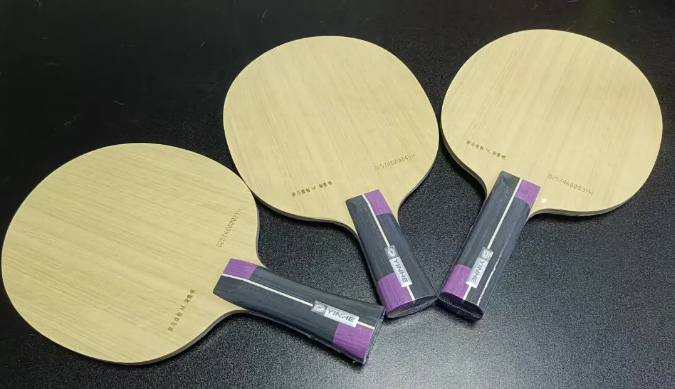
Of course, consistency refers mostly to technique. But if we fold equipment into the discussion, the answer is what I’ve always said, and what players often ask me: why are all the blades I design on the softer side? Because following current trends, the ideal blade for most players is still “soft but with power.” Softness enables last-second adjustments, reduces unforced errors — and that itself is a form of consistency. Competitions aren’t like casual practice: you need to land the ball first, you need more maneuverability.
Blade design is always trying to achieve “fewer errors” and “more threat” at the same time. It’s extremely difficult, but everything is aimed at finding that balance.
5. Adaptability to equipment.
I’ve watched several friends who used to play T05 on the forehand switch to D09c and report that the ball feels slower. But in practice, the threat to opponents may be roughly the same. T05 is springy and explosive, but the second bounce tends to be upright, so opponents backing up can defend it better. D09c is a bit slower, but the arc is better — you can hit the second bounce deeper into the table.
This echoed what players like Ovtcharov and Cheng I-Ching reported when they switched from T05 or D05 to D09c: yes, the ball speed dropped, but they could take more initiative with spin and quality.
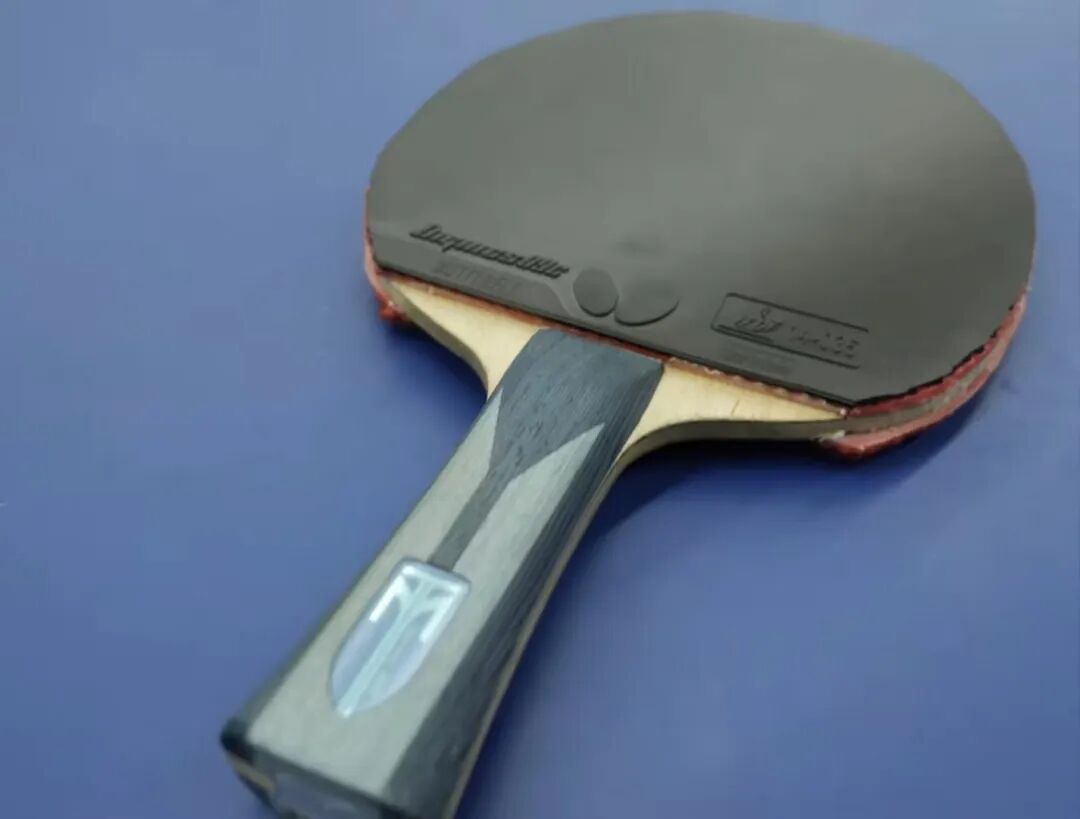
I think the key insight is this: most people have real adaptability to equipment. If something is genuinely good, you will eventually adapt — it’s only a matter of time and patience. Look at Wang Chuqin, Liang Jingkun, Chen Xingtong — they came from Viscaria-style blades and moved to 968. After adapting, there were no real problems.
We’re often just prisoners of habit, or we follow our gut feelings and stick with a certain type of blade or rubber. That’s fine — play what you enjoy. But know that equipment’s actual impact is less dramatic than you’d think, especially for the blade. Rubber has a bigger effect.
For a blade today, what you really need is decent dwell time (flex and tension), stability, and good support — that’s about it. Look at Szocs with a seven-ply pure wood, or Coton with the Nery Wen — these aren’t technically exceptional blades, but paired with the right rubber they play brilliantly.
Rubber is clearly more important. Dwell, spin, explosive speed, bite, and support all live in the rubber. The main thing now is that European rubbers, especially German brands, are mostly ESN products. The newer ones all end up feeling pretty similar.