Can You Keep Using Worn Table Tennis Rubbers?
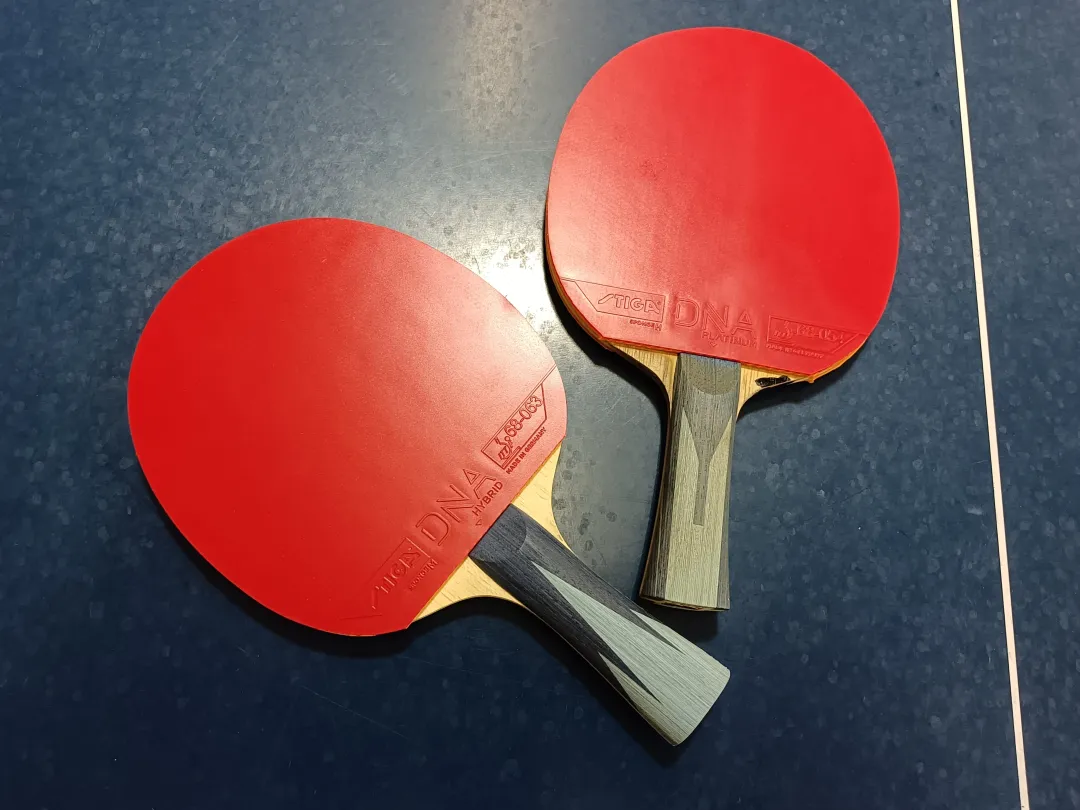
A rubber’s surface can develop a scaly, worn appearance while its sponge still has plenty of life. The reverse can also happen: the topsheet still grips, but the sponge has lost the lively response it had when new.
Can you keep using it? That depends on your technique, playing frequency, blade and expectations. The two parts of the rubber deserve separate attention.
How I judge an aging Tenergy sheet
Players with a constant supply of fresh rubber rarely need to worry about this. A friend I know who plays at provincial-team level replaces four sheets a month because the equipment is supplied to him. Most club players have to make a different calculation.
With Butterfly Tenergy, I often see substantial surface wear after about a month, while the sponge retains its response for considerably longer. A worn-looking sheet can therefore remain usable if you are willing to accept some loss of performance.
Among the stronger amateur players in my city, roughly in the local 1850-1900 rating range and above, a common way to describe Tenergy 05 is three months at its best, followed by another three months of making do. That is a local experience-based estimate, not a fixed service life.
A player who stops entering tournaments might keep the same sheet for a year or longer. Once competition resumes, the missing grip, control or power can become much more noticeable. The rubber has to produce a reliable ball under pressure, rather than merely feel acceptable during familiar practice rallies.
Technique changes the calculation too. A player who puts less force and friction into a loop may place fewer demands on the rubber. Someone around the local 1600 level might find a year of use acceptable, depending on how often they play.
Your opponents also affect your perception. Against weaker players, an old sheet may still seem perfectly adequate. Against someone who pushes you harder, the limitations can become much easier to feel.
ESN rubbers: watch the sponge as well as the surface
Many German-made ESN rubbers behave differently from Tenergy in my experience. Even when the topsheet shows considerable wear, the surface can still grip reasonably well.
I used Tibhar 1Q for several years. Individual sheets could become heavily worn after six months to a year and still bite the ball. Their appearance alone did not tell the whole story.
The sponge can be the limiting factor. With some Tibhar Evolution sheets I have used, particularly the version commonly called National Evolution in Chinese equipment discussions, the lively response faded after a little over a month. The topsheet still had something to give, but the rubber felt less energetic underneath.
That change must also be judged together with the blade. A hard, springy blade can partly mask a rubber’s declining response. A softer blade with less underlying support may make the same rubber feel tired sooner.
This is why I find it difficult to discuss rubber lifespan without discussing the complete racket.
What changes with Dignics?
Dignics can also show surface wear quite readily. In my experience, however, a worn Dignics topsheet can retain useful friction for longer than a similarly worn Tenergy sheet. Overall, I tend to get a longer useful life from it.
Some players still find that Dignics stops gripping well once the surface wears. Two factors help explain why the experience varies.
First, the harder sponge means that a player who relies heavily on a thin brush of the topsheet may be particularly sensitive to changes in surface grip.
Second, players who combine forward impact with brushing more effectively can often continue using a worn sheet. They are asking the sponge and the whole contact to do more of the work.
If a worn rubber starts letting the ball slip but you want to keep using it, adding a little more forward impact to your loop can sometimes make it more manageable. That is an adjustment in technique; it does not restore the rubber to its original condition.
The useful question at the table
I pay attention to what has actually deteriorated: surface grip, sponge response, or both. Then I ask whether the change is affecting the shots I need in matches.
A worn surface by itself does not tell me everything. The same sheet can remain useful for one player and become frustrating for another, especially when their blades, contact styles and playing schedules are different.
For more on that interaction, see how different blades affect the usable life of a rubber.