Stiga Dynasty Carbon vs Stiga Offensive Classic: Which Should You Buy?
| Stiga Dynasty Carbon | Stiga Offensive Classic | |
|---|---|---|
| Our rating | 8.5/10 | 8.4/10 |
| feel | woody, medium-stiff, large sweet spot | thin, flexible, soft-medium springy all-wood with strong vibration and feedback |
| handle | FL / CS / Penhold | FL/ST/AN (WRB hollow-handle version also sold) |
| plies | 5 wood + 2 carbon (TeXtreme+) | 5W (all wood) — outer veneers commonly described as koto or limba over spruce and ayous |
| speed | OFF | OFF- (offensive minus; community-rated, occasionally felt as ALL+ to OFF) |
| thickness_mm | 5.9 | 5.4 |
| weight_g | 90 | 83 |
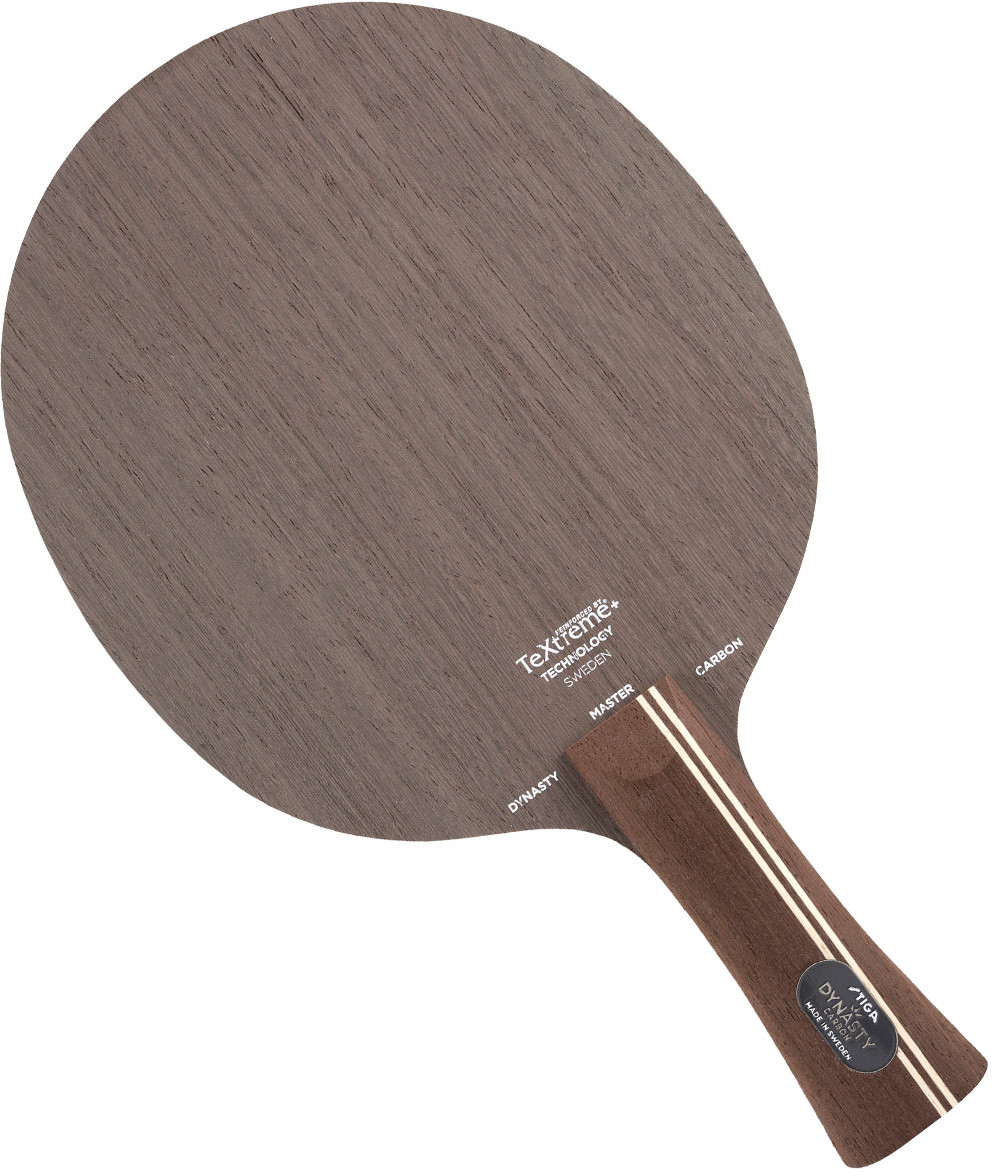
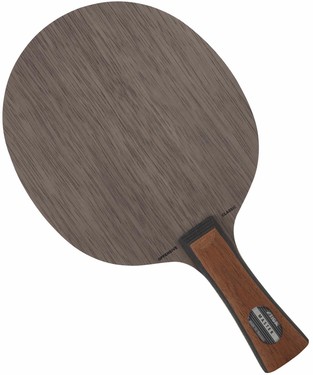
We may earn a commission from links on this page. Learn more.
The “carbon that feels like wood” pitch, checked against the numbers
The Dynasty Carbon’s core claim is unusual for an outer-carbon blade: reviewers on Revspin, Reddit, Megaspin, and TTGearLab’s lab test all converge on the same idea, that its TeXtreme+ carbon “produces a woody, dwell-rich feel uncommon in outer-carbon blades.” The axis data mostly backs that up, with one important asterisk. Control actually favors the Dynasty Carbon, 9.2 vs 8.3 for the Offensive Classic - a 0.9-point gap - so the carbon blade isn’t sacrificing feel for power here, at least not on the aggregated rating. But it is a genuinely stiffer, harder, faster blade: stiffness runs 6.1 vs 3.8 (a 2.3-point gap), hardness 6.6 vs 5.4 (1.2 points), and speed 9.0 vs 7.6 (1.4 points). “Feels like wood” is relative to other carbon blades, not a claim that it feels like an all-wood Offensive Classic.
The weight gap is real, not radar noise
Weight shows the largest delta here: 8.2 vs 5.7, a 2.5-point spread, and this one does track a genuine spec difference - 90 grams stock against 83 grams, plus the Dynasty Carbon’s own review notes warn that “full setups can exceed 200 g” once rubber is glued on both sides. If arm fatigue over long sessions matters to you, this is the axis to weight most heavily; the Dynasty Carbon’s own con list flags exactly this concern, calling out “average weight around 88 to 92 g.”
Consistency also tilts toward the carbon blade
9.0 vs 7.9, a 1.1-point gap - another case in this data set where the flexier, softer wood blade doesn’t out-consistency the stiffer carbon option. Combined with the control edge, this suggests the Dynasty Carbon’s claim of a “generously large sweet spot for its construction class” holds up: it’s not just fast, it’s also shot-to-shot reliable, which is a harder combination to engineer into an outer-carbon build.
What each blade is built for
The Dynasty Carbon targets “advanced players who loop on both wings and want an outer-carbon blade that retains the dwell and feel of all-wood construction” - specifically calling out penhold players and players stepping up from a DHS H301 who want added carbon stability. The Offensive Classic, by contrast, is aimed at “improving and intermediate attackers who play close to the table” who want a forgiving, high-control, all-wood blade to build a looping game while spending less money - the Dynasty Carbon’s own con list puts its price around USD 200, which its reviewers themselves call “hard to justify for recreational players.”
Should you switch?
Moving from an Offensive Classic to a Dynasty Carbon is a meaningful step up in every measured dimension - speed, control, consistency, hardness, and stiffness all favor the carbon blade - but it comes with two real costs beyond money: roughly 7 extra grams of stock weight, more once you factor rubber, and a rougher out-of-box experience, since reviewers note the factory surface on the handle wings needs sanding to prevent blisters, and the koto top veneer is prone to splintering after repeated rubber changes. This is a blade for players who have outgrown the Offensive Classic’s forgiveness and are ready to trade some of that ease for more raw tools - not a lateral upgrade you make casually.
Bottom line
If price and weight aren’t limiting factors and you already loop on both wings at an advanced level, the Dynasty Carbon rates better across nearly every axis that matters, control included. If you’re still building your looping game, want to keep the weight down, or don’t want to spend close to 200 dollars on a blade, the Offensive Classic remains the more sensible choice, and giving up 0.9 points of control on paper is a fair trade for a blade that costs a fraction as much and needs no break-in work.
Frequently asked questions
Does the Dynasty Carbon actually feel like an all-wood blade?
Relative to other outer-carbon blades, reviewers say yes - its TeXtreme+ carbon gives an unusually woody, dwell-rich feel - but it is still meaningfully stiffer and harder than the all-wood Offensive Classic.
Is the Dynasty Carbon worth the price over the Offensive Classic?
It rates higher on every measured axis, including control, but its own reviewers call its roughly 200 dollar price hard to justify for recreational players.
How much heavier is a full Dynasty Carbon setup?
The blade itself runs 88 to 92 grams stock, and its own review notes say a full setup with rubber can exceed 200 grams.
Is the Dynasty Carbon suitable for penhold players?
Yes, it is specifically called out as a good fit for penhold players and two-wing loopers stepping up from a DHS H301.