Nittaku Septear vs Yinhe T-11+: Which Should You Buy?
| Nittaku Septear | Yinhe T-11+ | |
|---|---|---|
| Our rating | 8.2/10 | 7.8/10 |
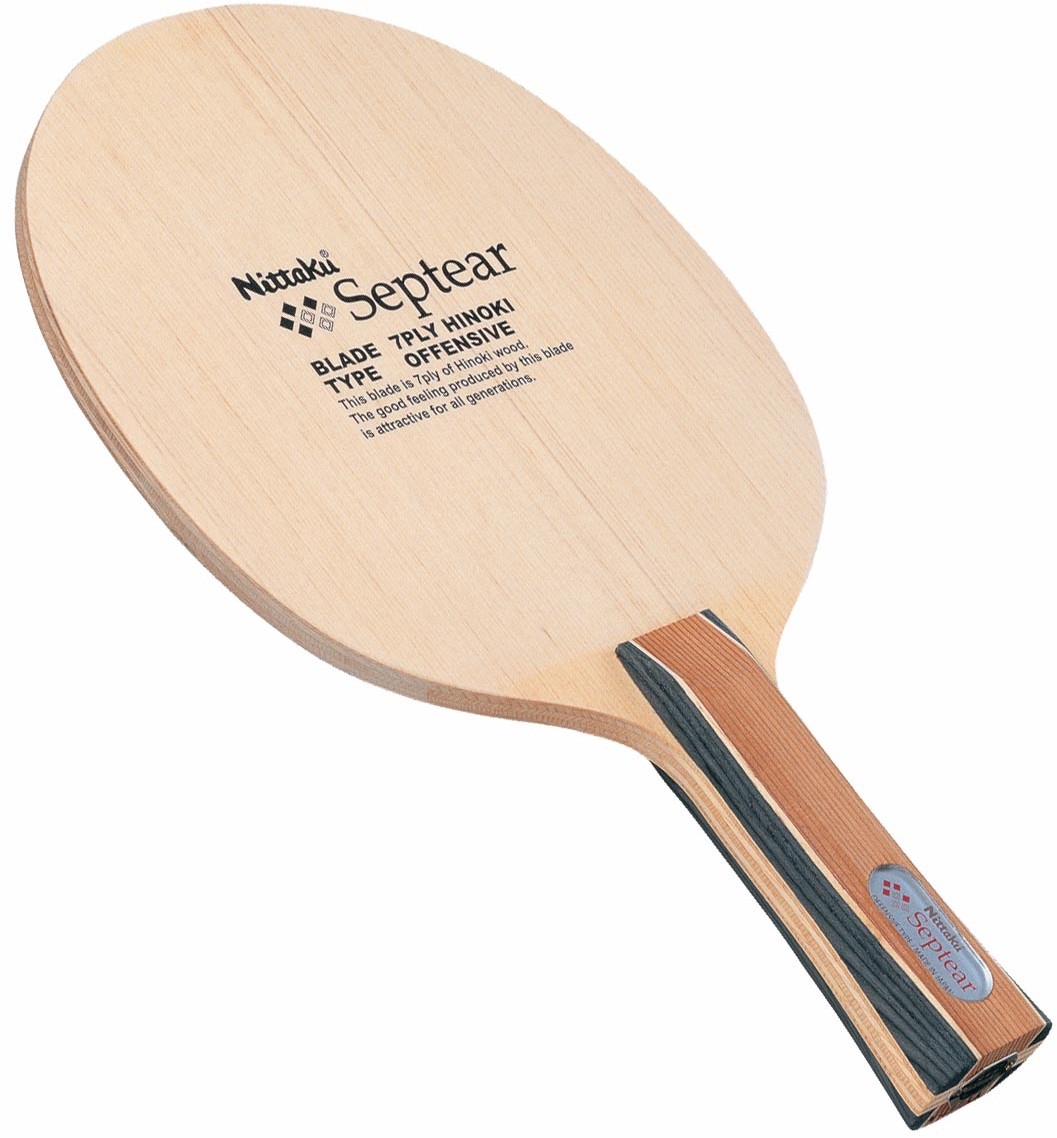
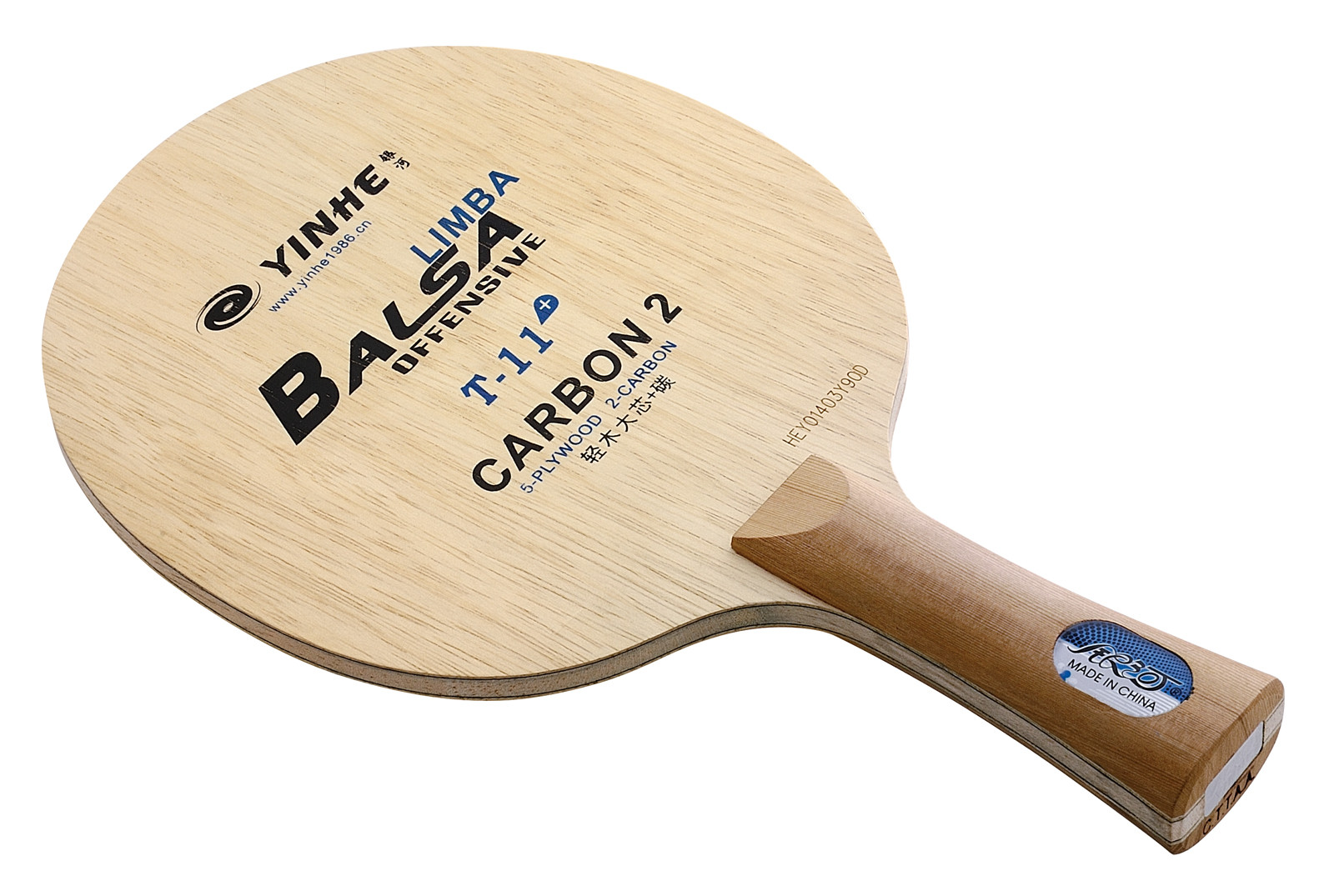
| feel | Soft with high dwell time | very light, stiff but soft balsa core with a carbon ping |
| handle | Straight or Concave (flared) | FL |
| plies | 7-ply all wood (Kiso Hinoki) | 5W+2 Carbon with balsa core (two thin wood outers, one carbon layer per side, around a thick balsa middle ply) |
| speed | ALL+ | OFF- |
| thickness_mm | 6.7 | 6.5 |
| weight_g | 85 | 78 |
We may earn a commission from links on this page. Learn more.
The Septear is a soft, dwell-rich 7-ply all-wood blade for developing players prioritizing control and touch. The T-11 Plus is an exceptionally light balsa-carbon blade delivering fast speed with more control than typical carbon, optimized for flat hitters, blockers and power loop drivers.
The Septear suits developing all-round players and topspin loopers. The T-11 Plus suits flat hitters, pips-out combination players and blockers who want serious speed in a featherlight package, not heavy topspin loopers.
FAQ
Which blade is for topspin looping?
The Septear excels at controlled topspin loops with long arcs. The T-11 Plus’s heavy topspin looping is its clear weakness.
How light is the T-11 Plus?
The T-11 Plus is exceptionally light at around 78 grams. The Septear is more standard at 85 grams.
Which suits flat hitting and smashing?
The T-11 Plus’s stiffness makes hitting through spin and flat smashing easy. The Septear lacks explosive finishing power.
Blocking performance?
The T-11 Plus excels at blocking. Passive blocks lack rebound but active punching is excellent. The Septear is good at soft blocks.
Maintenance and durability?
The T-11 Plus has a fragile surface that must be sealed before use. The Septear’s soft hinoki can dent but is more robust.