Nittaku Septear vs Xiom Stradivarius: Which Should You Buy?
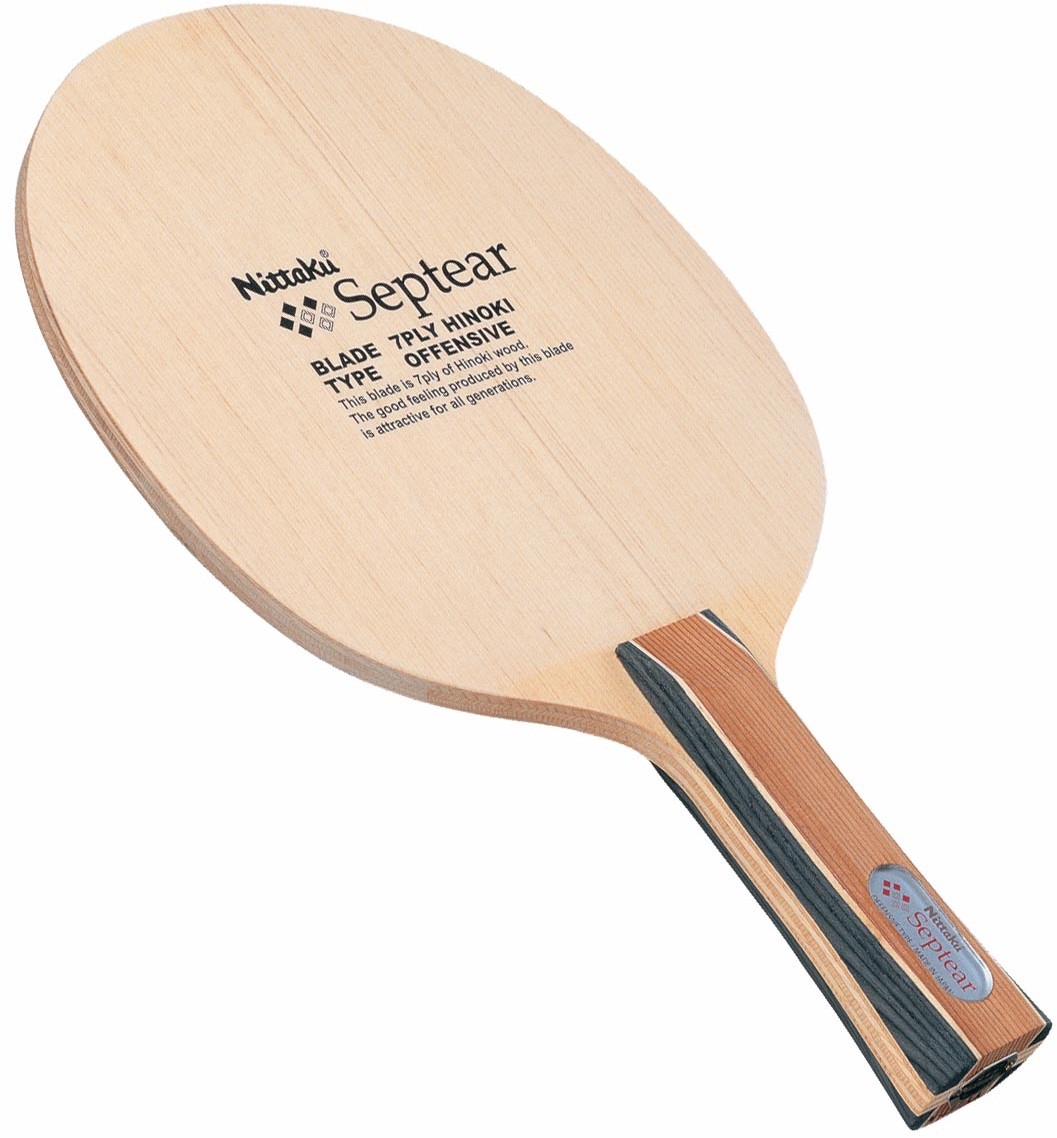
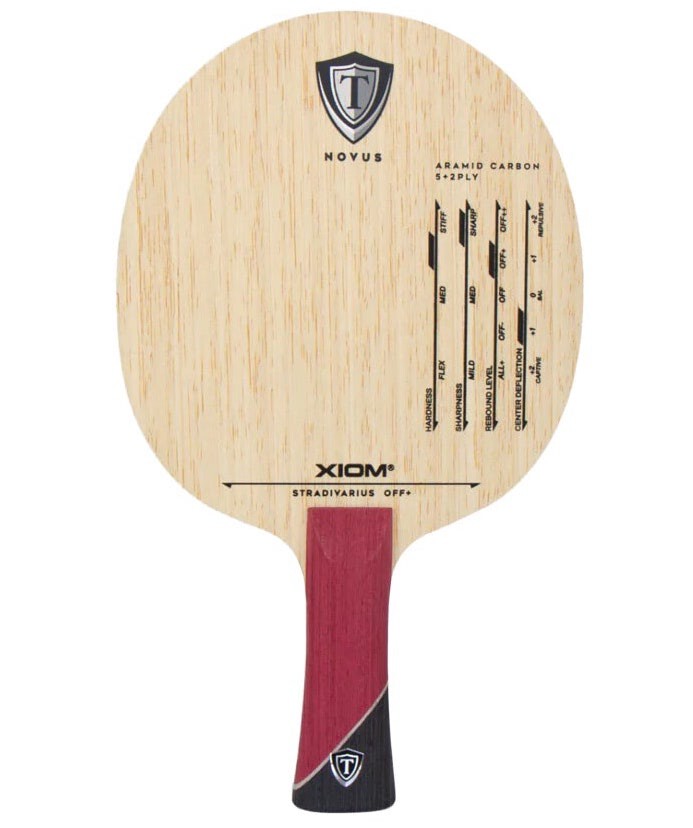
| Nittaku Septear | Xiom Stradivarius | |
|---|---|---|
| Our rating | 8.2/10 | 8.4/10 |
| feel | Soft with high dwell time | Crisp and solid with low residual vibration; direct ball contact feel with a large sweet spot |
| handle | Straight or Concave (flared) | Flared (FL), Straight (ST) |
| plies | 7-ply all wood (Kiso Hinoki) | 5 wood + 2 arylate carbon (Aramid Carbon) |
| speed | ALL+ | OFF |
| thickness_mm | 6.7 | 5.7 |
| weight_g | 85 | ~85-87 |
We may earn a commission from links on this page. Learn more.
The Septear is a soft, dwell-rich 7-ply all-wood blade optimized for control and ball placement. The Stradivarius is an arylate-carbon blade delivering crisp feel, low residual vibration and clean ball contact, competing with premium Butterfly ALC blades at a fraction of the price.
The Septear suits control-first players who pair it with harder rubbers and value forgiving dwell. The Stradivarius suits intermediate to advanced offensive topspin players who want carbon speed and stability without the premium Butterfly price point.
FAQ
Which blade has better speed at distance?
The Stradivarius delivers noticeably more speed at mid and far distances thanks to arylate-carbon. The Septear lacks explosive finishing power at distance.
How do they feel different?
The Septear is soft and dwell-heavy with natural wood feedback. The Stradivarius is crisp and solid with low residual vibration and direct ball feel.
Which suits softer rubbers?
The Stradivarius pairs well with a wide range of rubber stiffnesses. The Septear performs poorly with soft rubbers and needs medium-hard to hard sponges.
Price and value?
The Stradivarius competes with Butterfly ALC at a fraction of the price, offering excellent value. The Septear is premium-priced for craftsmanship.
Which for pure topspin looping?
Both excel at topspin. The Septear’s dwell time makes spin easy. The Stradivarius’s carbon stability makes speed-spin combination easier.