Donic Persson Powerplay vs Xiom Stradivarius: Which Should You Buy?
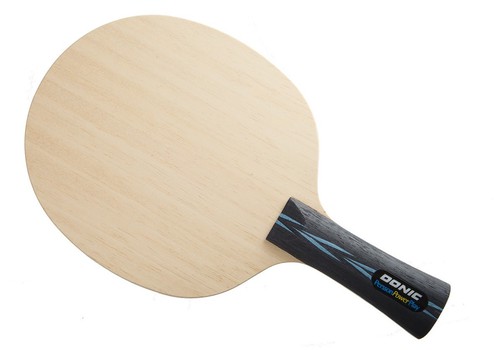
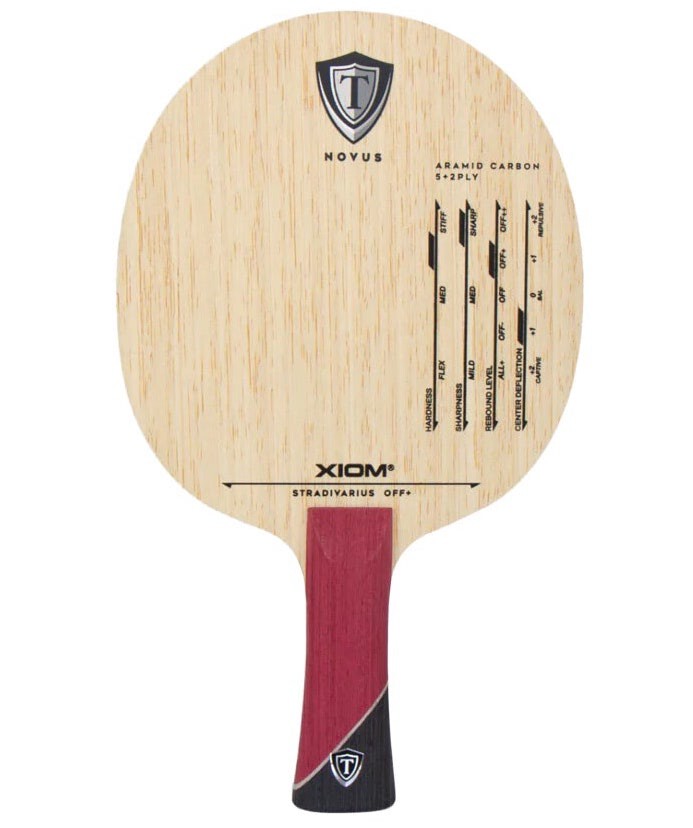
| Donic Persson Powerplay | Xiom Stradivarius | |
|---|---|---|
| Our rating | 8.2/10 | 8.4/10 |
| feel | Hard outer koto plies with internal foil damping layers; crisp feel with excellent feedback | Crisp and solid with low residual vibration; direct ball contact feel with a large sweet spot |
| handle | FL | Flared (FL), Straight (ST) |
| plies | 7-ply all wood | 5 wood + 2 arylate carbon (Aramid Carbon) |
| speed | OFF | OFF |
| thickness_mm | 5.9 | 5.7 |
| weight_g | 90 | ~85-87 |
We may earn a commission from links on this page. Learn more.
Stradivarius and Persson Powerplay occupy opposite material philosophies. Stradivarius (8.4 rating) is an arylate-carbon blade with low residual vibration, generous sweet spot, and direct ball contact competing with Butterfly ALC blades at lower prices—it excels for offensive play with consistent looping and blocking. Persson Powerplay (8.2 rating) is pure 7-ply all-wood with damped feedback and versatile all-round character.
Stradivarius suits intermediate-to-advanced attackers craving carbon stiffness and consistency at reasonable pricing. Persson Powerplay is the simpler, all-wood choice for penholder players and those preferring dwell-heavy feel.
FAQ
What does low residual vibration mean?
Aramid Carbon construction dampens vibration quickly, giving clean, direct contact feel that many advanced players prefer over woodier alternatives.
Does Stradivarius match Butterfly ALC performance?
Yes—competitive OFF+ close to the table and solid OFF at mid distance. Price is 30-50 percent lower than ALC equivalents.
Who should pick Stradivarius over Persson?
Offensive players wanting carbon consistency and a larger sweet spot. Persson is better for penholders and dwell-preference players.
Does Stradivarius suit beginners?
No—stiff carbon feel demands technique. Persson Powerplay is far more forgiving for developing players.