Donic Persson Powerplay vs Tibhar Samsonov Force Pro Black Edition: Which Should You Buy?
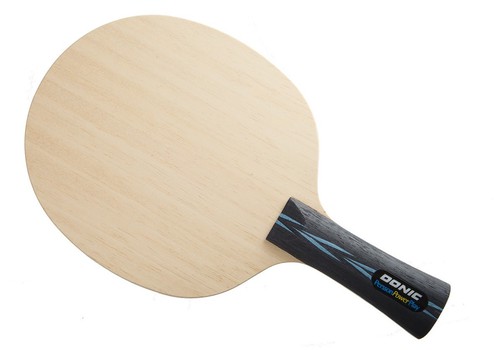
| Donic Persson Powerplay | Tibhar Samsonov Force Pro Black Edition | |
|---|---|---|
| Our rating | 8.2/10 | 8.2/10 |
| feel | Hard outer koto plies with internal foil damping layers; crisp feel with excellent feedback | mild hard, uniform vibration, linear rebound |
| handle | FL | FL / ST |
| plies | 7-ply all wood | 7-ply all wood (limba-ayous-ayous-ayous-ayous-ayous-limba) |
| speed | OFF | OFF- |
| thickness_mm | 5.9 | 6.6-6.7mm |
| weight_g | 90 | 83-90g (avg ~87g) |
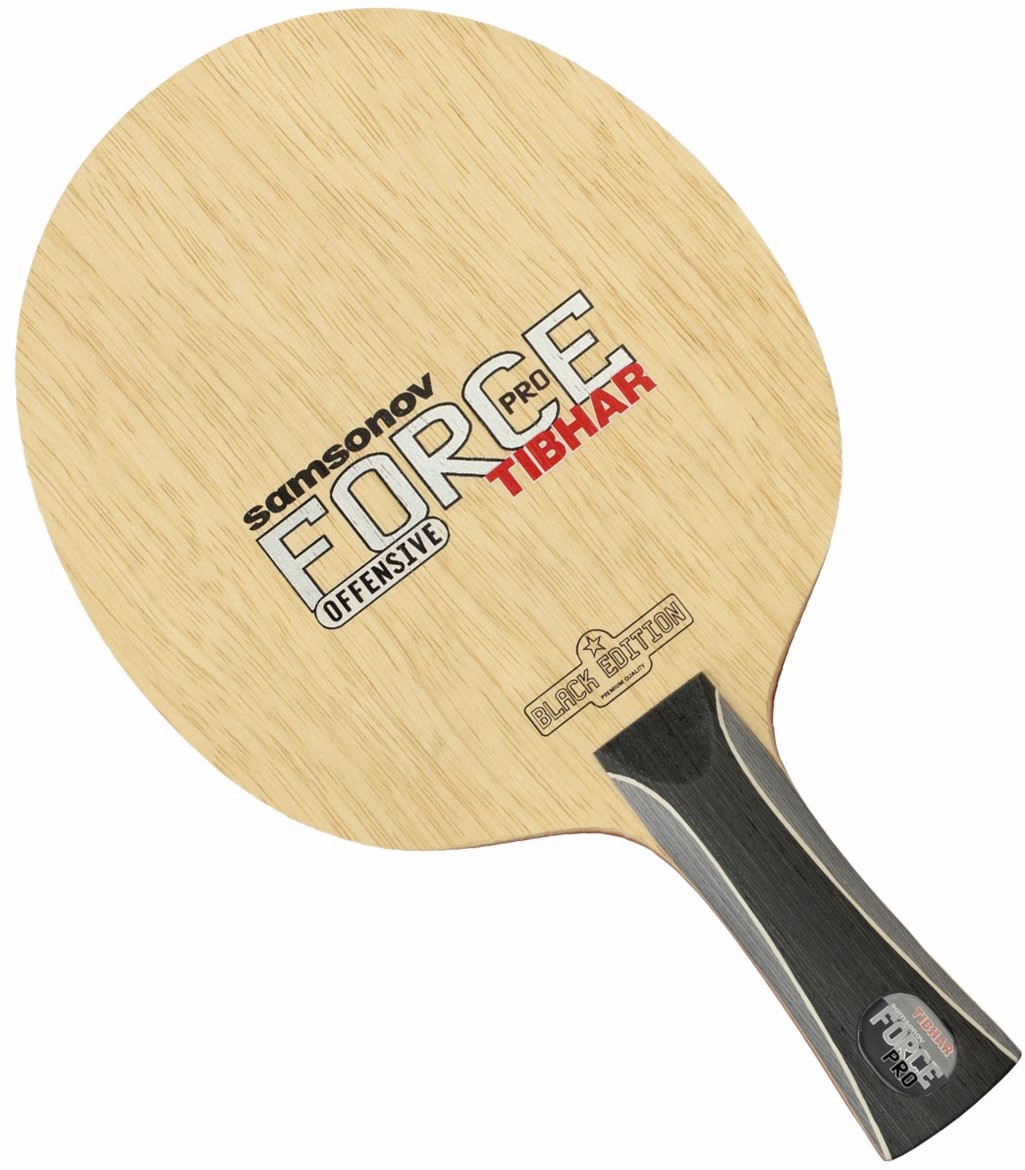
Tibhar Samsonov Force Pro Black Edition
Check price on AmazonRead the full Tibhar Samsonov Force Pro Black Edition review →
We may earn a commission from links on this page. Learn more.
Samsonov Force Pro Black Edition and Persson Powerplay are closely matched 7-ply all-wood blades competing at 8.2 ratings with subtle performance differences. Force Pro (8.2 rating) delivers linear, predictable rebound with uniform feel across the blade, excellent blocking control, and versatility across stroke types—it is head-heavy requiring arm conditioning. Persson Powerplay (8.2 rating) prioritizes crisp feedback, damped vibration, and penholder suitability.
Both blades are solid intermediate-to-advanced performers. Choose Force Pro for uniform, predictable feel and versatile looping and hitting. Pick Persson Powerplay for penholder emphasis and damped, tactile feedback.
FAQ
Why is Force Pro head-heavy?
Thicker construction (6.6-6.7mm) and slightly higher weight (83-90g) create a head-heavy balance adding natural acceleration.
Is linear rebound really an advantage?
For timing consistency, yes. Predictable rebound across the blade surface reduces learning curve and improves confidence.
Who should skip Force Pro Black Edition?
Beginners (head-heavy balance is fatiguing) and lightweight players (conditioning required). Persson Powerplay is more accessible.
How do both rate on spin generation?
Comparable—both suit medium-hard rubbers well. Force Pro edges slightly on looping due to thickness; Persson edges on feel.