Donic Persson Powerplay vs Stiga Offensive Classic: Which Should You Buy?
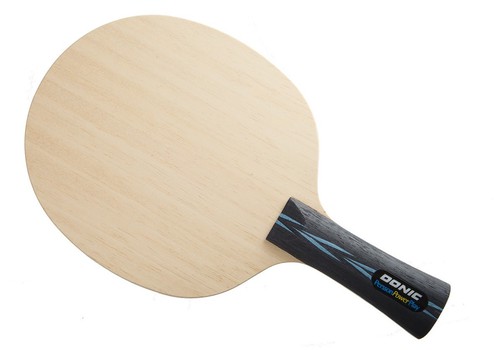
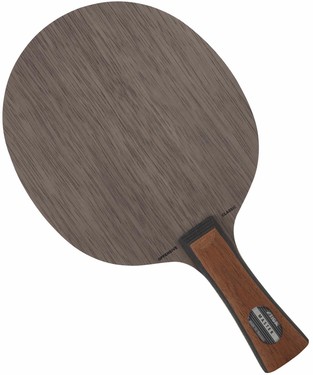
| Donic Persson Powerplay | Stiga Offensive Classic | |
|---|---|---|
| Our rating | 8.2/10 | 8.4/10 |
| feel | Hard outer koto plies with internal foil damping layers; crisp feel with excellent feedback | thin, flexible, soft-medium springy all-wood with strong vibration and feedback |
| handle | FL | FL/ST/AN (WRB hollow-handle version also sold) |
| plies | 7-ply all wood | 5W (all wood) — outer veneers commonly described as koto or limba over spruce and ayous |
| speed | OFF | OFF- (offensive minus; community-rated, occasionally felt as ALL+ to OFF) |
| thickness_mm | 5.9 | 5.4 |
| weight_g | 90 | 83 |
We may earn a commission from links on this page. Learn more.
Offensive Classic and Persson Powerplay are both all-wood OFF options favoring close-to-mid-table play but with markedly different feel and forgiving profiles. Offensive Classic (8.4 rating) is a thin, flexible 5-ply blade with high throw angle, excellent short-game touch, and linear speed that scales with swing effort—a classic choice for two decades. Persson Powerplay (8.2 rating) is 7-ply with hard koto plies and damping, delivering more crisp feedback and inherent pace.
Offensive Classic excels for intermediate attackers playing close to the table who want high-dwell looping and forgiving small sweet spot play. Persson Powerplay suits penholder players and two-wing attackers seeking harder feedback.
FAQ
Why does Offensive Classic have a small sweet spot?
Thin, flexible construction concentrates vibration. Plays well on-center but less forgiving off-center than Persson Powerplay.
Does thin construction make it fragile?
The thin top veneer can splinter at edges and may require sealing, adding maintenance versus Persson’s more robust koto construction.
Is Offensive Classic heavier than Persson?
No—83g versus 90g makes it 7g lighter and easier to accelerate for FH-BH transitions.
Who should pick Offensive Classic over Persson?
Close-to-table spin-focused players and intermediate attackers who value high-dwell looping and feedback over two-wing pace.