Donic Persson Powerplay vs Sanwei Nova Carbon: Which Should You Buy?
| Donic Persson Powerplay | Sanwei Nova Carbon | |
|---|---|---|
| Our rating | 8.2/10 | 7.8/10 |
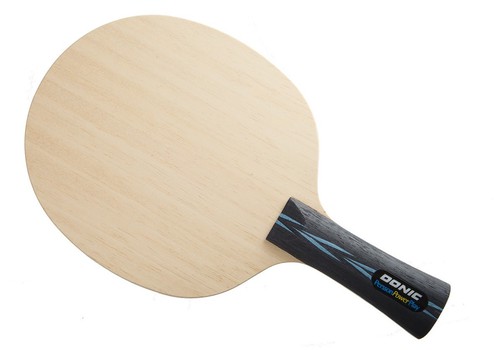
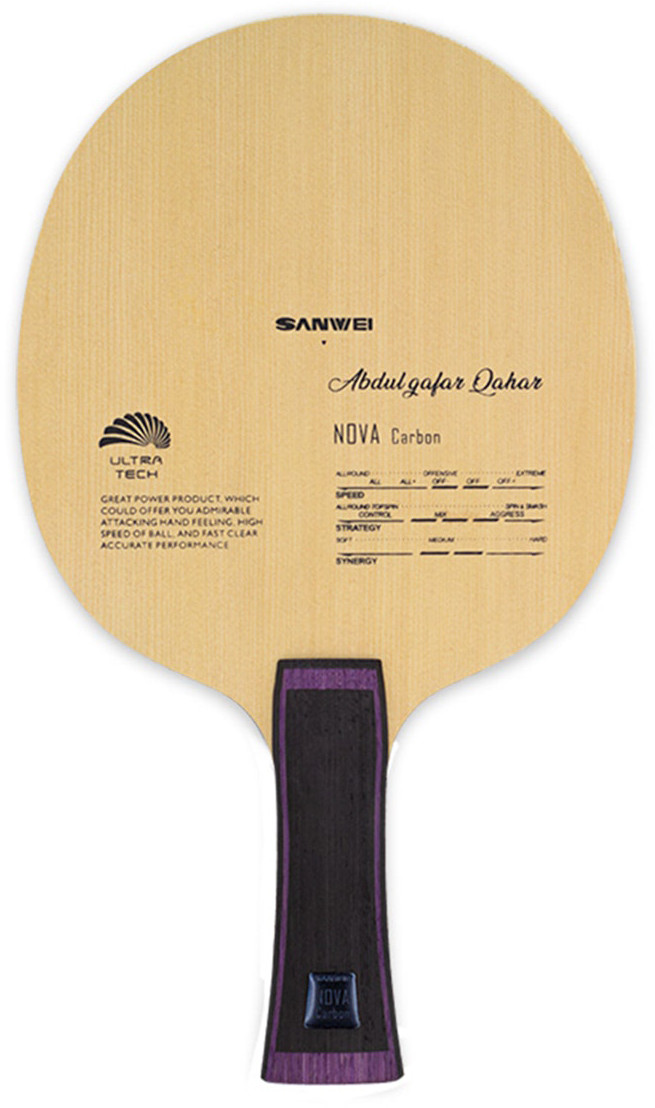
| feel | Hard outer koto plies with internal foil damping layers; crisp feel with excellent feedback | stiff, linear, direct |
| handle | FL | FL/ST/AN |
| plies | 7-ply all wood | 5-ply: Hinoki + carbon + Kiri core |
| speed | OFF | OFF |
| thickness_mm | 5.9 | 6.2 |
| weight_g | 90 | 90 (plus or minus 5g) |
We may earn a commission from links on this page. Learn more.
Nova Carbon and Persson Powerplay compete for the mid-range budget offensive slot but diverge on material philosophy. Nova Carbon (7.8 rating) pairs Hinoki outer plies with carbon fiber at discount pricing—it delivers linear, direct feel for decisive attacking but suffers from high stiffness that punishes spin technique and limits dwell time. Persson Powerplay (8.2 rating) sticks with pure 7-ply all-wood construction, trading carbon speed for flexible dwell and feedback that rewards both loops and blocks.
Nova Carbon suits players transitioning to carbon who attack decisively from mid-distance and value blocking control. Persson Powerplay is better for spin-dominant loopers and penholder players who want stability without sacrificing the classic all-wood feel.
FAQ
Is Nova Carbon noticeably faster?
No—both rate OFF. Nova Carbon stiffness gives it a sharper kick on blocks but loses dwell on loops, so real-world speed advantage is marginal.
Who should avoid Nova Carbon?
Beginners, brushy spin technicians, and players relying on heavy loop-dominant games. The stiff carbon construction punishes imprecise technique.
Why choose Persson Powerplay over Nova?
Better all-around versatility with both spin and blocking, plus superior feedback for learning. Nova shines only for mid-distance attacking.
Does weight matter between the two?
Both hover around 90g. Nova reports plus-or-minus 5g variance, so Persson consistency may appeal to players sensitive to balance shifts.