Donic Persson Powerplay vs Nittaku Acoustic: Which Should You Buy?
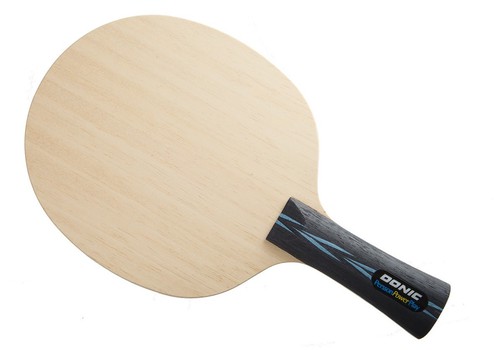
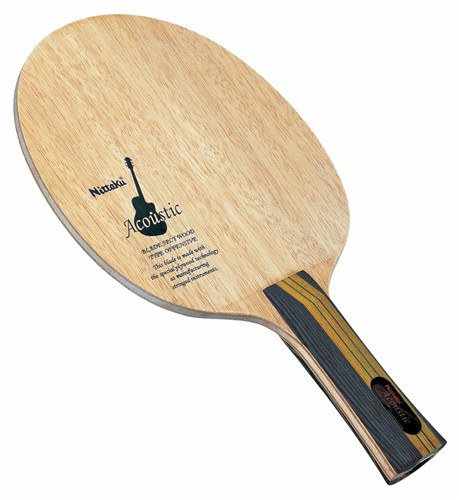
| Donic Persson Powerplay | Nittaku Acoustic | |
|---|---|---|
| Our rating | 8.2/10 | 8.7/10 |
| feel | Hard outer koto plies with internal foil damping layers; crisp feel with excellent feedback | Crisp all-wood feel with a large sweet spot, long dwell and a signature acoustic sound |
| handle | FL | FL/ST |
| plies | 7-ply all wood | 5-ply all wood (Limba outer veneers over a tung and ayous core) |
| speed | OFF | OFF- |
| thickness_mm | 5.9 | 5.7 |
| weight_g | 90 | 88 |
We may earn a commission from links on this page. Learn more.
Persson Powerplay and Nittaku Acoustic are both premium all-wood blades, but character differs. Powerplay is crisp, feedback-rich, and explicitly OFF-class offensive. Acoustic is control-dominant with class-leading feel and forgiving sweet spot.
Acoustic’s Limba outer veneers and long dwell excel at blocks, pushes, and flicks—unmatched short-game precision. Powerplay’s koto crispness and foil damping deliver tactile feedback under pressure. Acoustic’s speed (OFF-) is modest; Powerplay’s (OFF) is slightly faster. Acoustic is substantially heavier at 88g; Powerplay at 90g—minimal. For mid-distance loopers wanting tactile feedback, Powerplay wins. For short-game specialists and control-first players, Acoustic is superior—though its premium price reflects aspiration.
FAQ
Why is Acoustic so expensive?
Premium Japanese craftsmanship, Kiso Hinoki construction, and signature acoustic sound command a price premium.
Is Acoustic’s large sweet spot real?
Yes. It forgives off-center hits better than comparable blades, befitting its control emphasis.
Can Acoustic finish points offensively?
Yes, but OFF- pace limits aggressive play. Strong technique compensates at club level.
Does Acoustic’s handle run large?
FL variant is noted as small and thin. LG and G-Revision options better suit larger hands.
Which is better for beginners?
Acoustic, due to its forgiving feel and large sweet spot, though price is prohibitive for beginners.