Donic Epox Control vs Xiom Stradivarius: Which Should You Buy?
| Donic Epox Control | Xiom Stradivarius | |
|---|---|---|
| Our rating | 7.8/10 | 8.4/10 |
| feel | Low vibration, elastic, soft touch | Crisp and solid with low residual vibration; direct ball contact feel with a large sweet spot |
| handle | Flared / Anatomic / Straight | Flared (FL), Straight (ST) |
| plies | 5-ply all wood | 5 wood + 2 arylate carbon (Aramid Carbon) |
| speed | ALL+ | OFF |
| thickness_mm | 5.1 | 5.7 |
| weight_g | 80-90 | ~85-87 |
We may earn a commission from links on this page. Learn more.
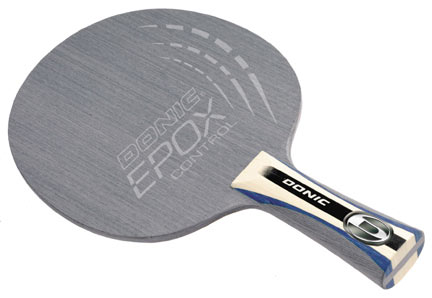
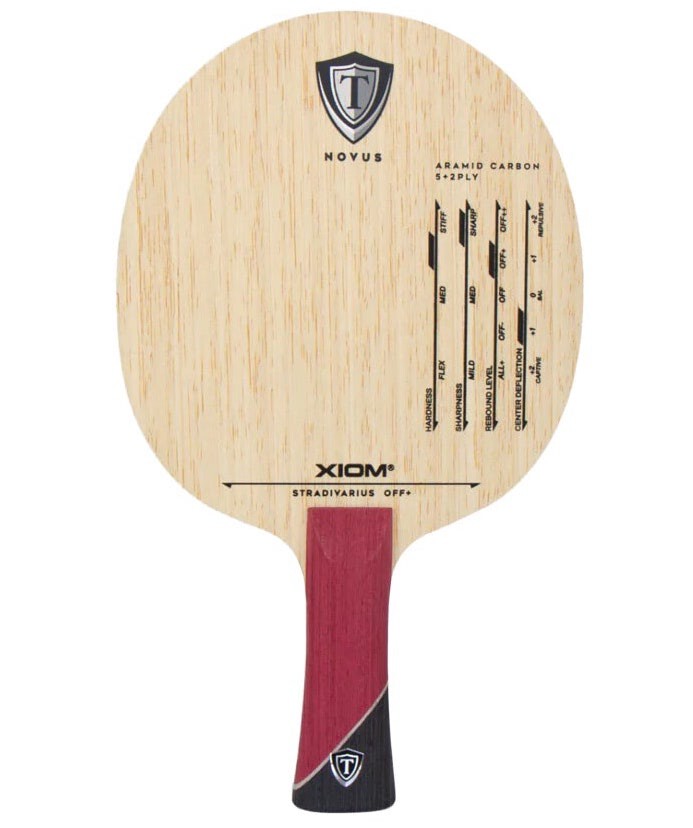
Donic Epox Control is the all-wood purist’s choice—low vibration, large sweet spot, and predictable placement make it ideal for beginners and choppers. Xiom Stradivarius adds carbon for OFF speed and topspin power at a fraction of Butterfly ALC flagship cost, with a clean low-vibration feel and generous sweet spot.
Stradivarius competes with premium carbon blades while remaining budget-friendly. Epox is softer and slower, better for touch play and long-distance durability.
For pure control and feel, choose Epox. For carbon speed on a budget, Stradivarius is the smart intermediate step.
FAQ
Which provides more topspin for aggressive looping?
Xiom Stradivarius with arylate-carbon construction; Epox Control is slower and more passive on loops.
Which is better for beginners?
Donic Epox Control; softer, more forgiving. Stradivarius is stiffer and suits intermediate offensive players.
How much cheaper is Stradivarius than flagship carbons?
Stradivarius undercuts Butterfly ALC significantly while delivering comparable speed and topspin consistency.
Do both work well at mid-distance play?
Stradivarius excels mid-distance with OFF+ performance; Epox is slower and prefers close-to-table touch play.
Which has less vibration on contact?
Both feature low residual vibration; Epox feels softer due to all-wood construction; Stradivarius feels crisp and direct.