Donic Bluefire M2 vs Gewo Nexxus EL Pro 48: Which Should You Buy?
| Donic Bluefire M2 | Gewo Nexxus EL Pro 48 | |
|---|---|---|
| Our rating | 8.4/10 | 8.7/10 |
| best_side | both | Forehand or backhand |
| control | medium-high | 96 |
| speed | high | 118 |
| spin | high | 128 |
| sponge_hardness | around 42.5 to 45 degrees (medium) | 48 degrees (medium-hard) |
| type | tensor inverted | Inverted tensor |
| weight_uncut_g | 68 | approx. 68-72 g |
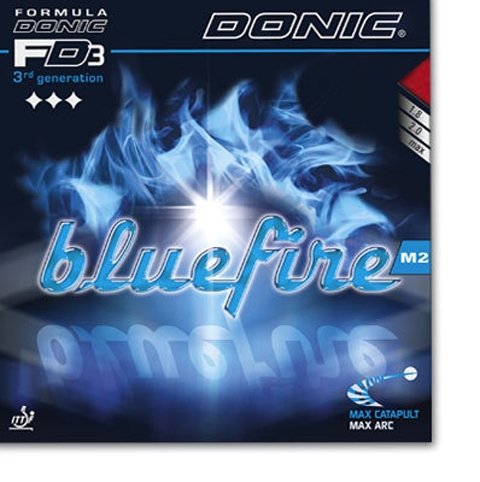
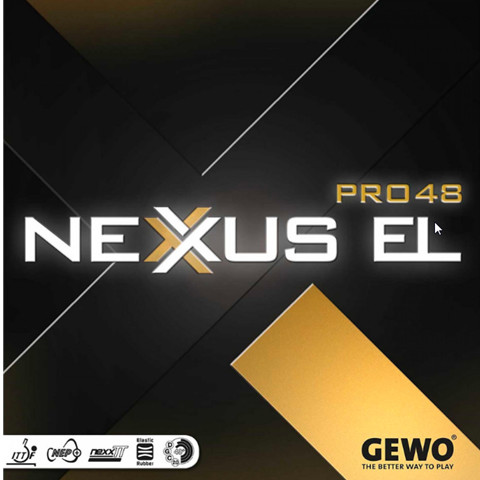
We may earn a commission from links on this page. Learn more.
The Throw Numbers Don’t Agree With the Marketing Copy, and That’s Worth Knowing
Before anything else, a flag for transparency: the aggregated per-axis throw rating in this comparison shows Bluefire M2 at 8.0 and Nexxus EL Pro 48 at 5.0, a 3.0-point gap, the single largest axis gap anywhere in this dataset, and it favors M2 having the higher measured throw. That is worth knowing on its own. But it sits oddly next to Nexxus’s own listed cons, which describe the rubber itself as having a “high throw angle” that “requires an adjustment period.” Both rubbers, in other words, get described qualitatively as high-throw in their own review text, yet the pooled numeric axis rating shows a large gap between them. Read that as a signal to actually test both in person on this specific dimension rather than trusting either the numeric axis or the marketing description alone; the two disagree here in a way the source data can’t fully resolve.
Where the Numbers Do Agree: Nexxus Wins Most Axes
Set the throw anomaly aside and the rest of the picture is consistent and one-sided. Nexxus EL Pro 48 out-scores Bluefire M2 on speed (9.2 versus 8.1, a 1.1-point gap), spin (9.0 versus 8.4, 0.6), control (8.8 versus 7.5, 1.3, one of the larger control gaps in this entire dataset) and durability (7.2 versus 5.5, 1.7, the largest durability gap here). Tackiness is a wash (1.5 versus 2.0, both essentially non-tacky). That is four axes won cleanly by Nexxus, one contested on throw, and one tie. The overall rating reflects it: 8.7 for Nexxus versus 8.4 for M2.
Why M2 Still Has a Case: Sponge Hardness and Accessibility
The reason this isn’t a simple “just buy the higher-rated one” story is sponge hardness. M2 sits around 42.5 to 45 degrees, described as medium; Nexxus is specified at a firmer 48 degrees, described as medium-hard. Nexxus’s own cons are blunt about the consequence: “48-degree sponge may be too demanding for players below intermediate level,” and it explicitly warns that its “high throw angle and fast pace require an adjustment period” and that “short game and touch play are unforgiving until technique adapts.” M2, by contrast, is described in its own pros as offering “surprisingly good control for a lively tensor, especially in 2.0mm,” meaning it’s tuned to be more forgiving for its speed class, even if the raw control number sits behind Nexxus.
Durability Depends Heavily on How You Treat It
The durability gap (7.2 versus 5.5) is real but conditional for both rubbers. M2’s own cons state its “sponge is fragile, porous and shrinks noticeably when reglued” and that durability “drops when boosted or used by sweaty players,” meaning M2’s lower durability score is partly a maintenance-sensitivity story, not pure wear. Nexxus’s own cons mirror this from the other direction: its topsheet “firms up and loses grip if neglected,” and “regular cleaning is essential” to hit its higher durability ceiling. Neither rubber tolerates being ignored; Nexxus simply has more durability headroom when you do maintain it properly, per Revspin and Megaspin’s aggregated product-review data.
Backhand Fit and Serve Game
Both rubbers position themselves partly around backhand use. M2’s own pros call out “excellent backhand performance for flicks, loops, blocks and sidespin” as a headline strength. Nexxus’s bestFor guidance goes further, specifically recommending 2.1mm on the backhand while noting it’s “strong on forehand too,” alongside “spinny serves with sharp rotation that troubles opponents” as a specific serve-game strength. If serve variation is a priority in your game, Nexxus’s serve-specific praise is more explicit in the source material.
Should You Switch?
If you’re on M2 and finding it forgiving and comfortable, Nexxus is a legitimate step up in raw capability on four of six measured axes, but the firmer 48-degree sponge means this is not a free upgrade — expect an adjustment period on touch shots and short game before the higher ceiling pays off. If you’re below intermediate level, or you specifically value M2’s softer, quicker-to-adapt-to sponge, this switch may cost you more in adjustment time than it gives back.
If you’re on Nexxus and considering M2, you’d be trading real speed, spin, control and durability headroom for a softer, quicker-to-adapt sponge and a lower price point relative to premium Japanese tensors, a reasonable move only if Nexxus’s firmness has been a genuine barrier for you.
Bottom Line
This is one of the more numerically decisive comparisons in this set: Nexxus EL Pro 48 wins four of six axes, ties one, and only loses clearly on a throw metric that contradicts its own review text closely enough to warrant hands-on testing. Choose M2 if you want a softer, more immediately accessible tensor at a friendlier skill floor; choose Nexxus if you can handle a firmer 48-degree sponge and want the higher performance ceiling the aggregated data consistently shows.
Frequently asked questions
Which rubber has better control, M2 or Nexxus EL Pro 48?
Nexxus, by a clear 1.3-point margin (8.8 versus 7.5) on the aggregated control axis, one of the larger control gaps in this whole rubber comparison set.
Is Nexxus EL Pro 48 harder to control than M2 for beginners?
Its 48-degree sponge is firmer than M2's roughly 42.5 to 45 degrees, and Nexxus's own cons state this hardness may be too demanding for players below intermediate level, so newer players may find M2 more immediately accessible.
Why do the throw ratings look inconsistent with the reviews?
The aggregated axis data shows M2 with a much higher throw score (8.0 versus 5.0), yet Nexxus's own cons describe its throw angle as high too. The two sources disagree on this specific axis, so it's worth testing both in person rather than trusting either figure alone.
Which rubber lasts longer?
Nexxus, with a durability rating of 7.2 versus M2's 5.5, though both rubbers' own cons note that neglecting cleaning or overusing boosters will shorten their lifespan faster than normal.
Is Nexxus EL Pro 48 good for the backhand?
Yes. Its own guidance specifically recommends the 2.1mm thickness for backhand use while noting it performs strongly on the forehand too, and its pros highlight spin-heavy serves as a specific strength.