DHS Hurricane 3 vs Yasaka Mark V: Which Should You Buy?
| DHS Hurricane 3 | Yasaka Mark V | |
|---|---|---|
| Our rating | 8.5/10 | 8.0/10 |
| best_side | forehand | both |
| control | medium | 9.5 |
| speed | offensive | 8.4 |
| spin | extreme | 8.5 |
| sponge_hardness | 39–41° (DHS scale) | medium (around 43 degrees ESN) |
| type | tacky inverted | inverted |
| weight_uncut_g | 70 | 47 |
We may earn a commission from links on this page. Learn more.
Tackiness Is the Whole Story
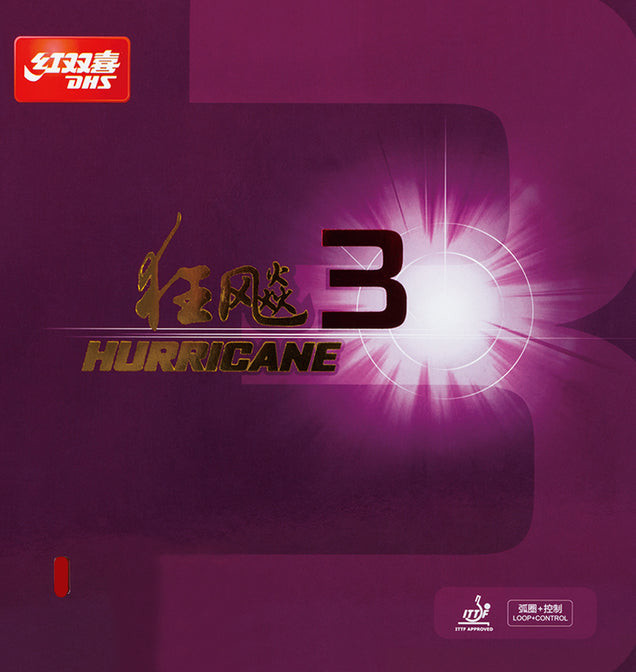
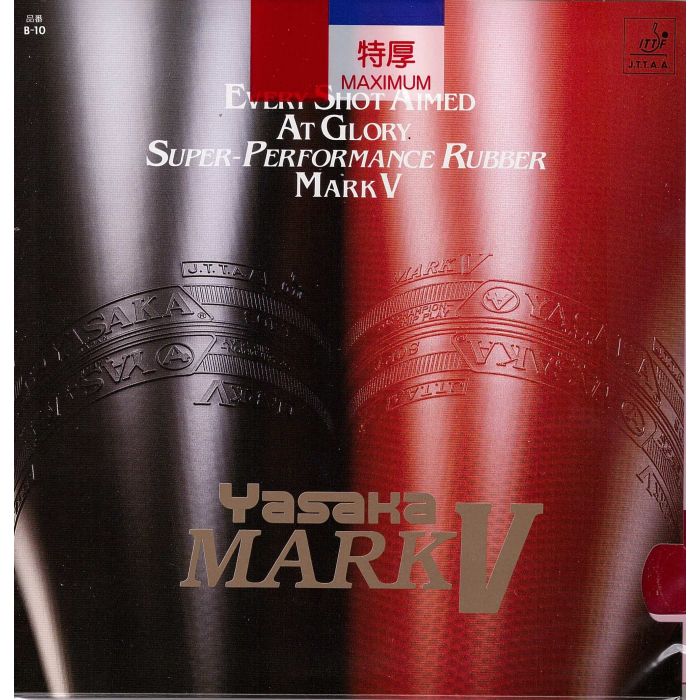
Look at the axis deltas and one number jumps out: tackiness, 8.2 versus 2.6, a 5.6-point gap that dwarfs every other axis in this comparison. That is not a rounding error, it is a different rubber category. DHS Hurricane 3 is a genuinely tacky Chinese-style topsheet that grabs the ball and holds it through a long dwell time. Yasaka Mark V is a smooth, non-tacky European-style sheet that lets the ball skid across the surface. Every other difference between these two rubbers is downstream of this one fact.
Tackiness changes how you serve, how you receive, and how much maintenance the rubber demands. A tacky sheet like Hurricane 3 picks up dust and fingerprints and needs wiping before nearly every session; Revspin’s user-aggregated ratings and forum reports from Megaspin and TableTennisDaily consistently flag this as routine upkeep for Hurricane 3, not an occasional annoyance. Mark V, by contrast, is close to maintenance-free — wipe it occasionally and it keeps performing the same way for months. If you are the kind of player who forgets rubber cleaner in a bag pocket, that difference alone should decide this comparison.
Spin: A Real Gap, Not a Rounding Error
Spin favors Hurricane 3 by 0.7 (8.9 versus 8.2), and unlike the tackiness gap this one is felt rather than seen — 0.7 on a 10-point aggregated scale is enough that intermediate and advanced loopers reliably notice it on topspin-heavy rallies, especially brushing up on low, short backspin balls where Hurricane 3’s low-throw, high-friction contact excels. This is consistent with why Hurricane 3 and its Neo and provincial variants remain a staple at the highest levels of Chinese table tennis, as writeups from Zhihu and Heima Liao Pingpang’s alternatives roundup describe.
Mark V’s spin (8.2) is still good by any everyday standard — it is not a flat-hitting rubber — but reviewers on Reddit r/tabletennis and RacketInsight’s review both describe it as forgiving on incoming spin rather than spin-generating on offense. That distinction matters: Mark V lets you neutralize spin easily; Hurricane 3 lets you produce more of it.
Control and Speed: Statistically the Same Rubber
Here is the useful negative finding. Control differs by only 0.1 (8.6 versus 8.7) and speed by only 0.1 (8.1 versus 8.0). On the published spec sheet, Yasaka rates Mark V’s control at 9.5 out of 10 while DHS only offers a qualitative “medium” label for Hurricane 3 — a marketing-label gap that looks large on paper but evaporates once you look at real aggregated user data. Do not let anyone tell you Mark V is the “control rubber” and Hurricane 3 is the “spin-only, no-control rubber.” The polled data says these two are functionally tied on both control and speed. Whatever you choose, choose it for tackiness and spin character, not for a control or speed advantage that does not actually exist in the numbers.
Durability and the Weight Gap
Durability tilts toward Mark V by 1.1 points (8.7 versus 7.6), and the spec sheet explains part of why: Hurricane 3 ships around 70 grams uncut, nearly 50 percent heavier than Mark V’s 47 grams. A heavier, tackier sheet wears differently, and most Hurricane 3 users report needing to reboost or replace sooner, per Megaspin’s product-review aggregation. That weight difference also matters for blade balance — a 70-gram sheet on each side of your blade adds real head weight that changes swing feel, something worth testing before you commit to a pair.
Should You Switch?
If you currently play Mark V and are considering Hurricane 3: only switch if you already have, or are ready to build, a full, committed forehand loop stroke. Hurricane 3 is famously “dead” on passive or half-hearted strokes — several reviewers note it rewards correct technique and punishes shortcuts, and most competitive players boost it to unlock the speed and arc that Mark V already gives you unboosted. If your game leans on blocking, flat hitting, or short game, this switch will actively hurt you.
If you currently play Hurricane 3 and are considering Mark V: you will lose roughly 0.7 points of spin ceiling and the tacky-serve advantage, but you gain a rubber that needs almost no maintenance and costs less than most modern tensors. Note the flip side, though — Mark V is specifically tuned for celluloid balls, and multiple reviewers report it performs noticeably worse with modern plastic poly balls, so if you play exclusively with plastic balls today, this downgrade is real and worth weighing against the maintenance savings.
Bottom Line
This is not a “better versus worse” comparison. Hurricane 3 is a spin-first, tacky, maintenance-heavy rubber for players building a full loop game. Mark V is a control-first, low-maintenance, non-tacky rubber for players who want plug-and-play consistency and don’t need maximum spin ceiling. Pick based on your stroke and your tolerance for cleaning routines, not based on the overall rating, which sits close enough (8.5 versus 8.0) that it should not be the deciding factor.
Frequently asked questions
Is DHS Hurricane 3 much tackier than Yasaka Mark V?
Yes. Aggregated ratings put Hurricane 3 at 8.2 for tackiness against Mark V's 2.6, a 5.6-point gap that is the single biggest difference between these two rubbers and affects serve grip, ball pickup, and cleaning frequency.
Do I need to boost Hurricane 3 to get good performance?
Most competitive players do. Reviewers consistently note it feels slow and dead on passive strokes and only shows its spin and speed ceiling with a full committed stroke or a boost treatment, which adds cost and maintenance.
Which rubber is better for a beginner?
Yasaka Mark V, based on the data. Its control (8.7) and durability (8.7) both edge out Hurricane 3, it needs no boosting or tacky-sheet cleaning routine, and reviewers describe it as forgiving out of the box.
Does Mark V work with modern plastic balls?
Reviewers flag this as a real weakness. Mark V was designed around celluloid balls, and multiple sources report it performs noticeably worse with today's plastic poly balls, so factor that in if you play exclusively with plastic.
Is Hurricane 3 actually better for control than Mark V?
No. Despite DHS's vague 'medium' control label, the aggregated axis data shows control is essentially tied at 8.6 versus 8.7. Don't choose based on a perceived control advantage that isn't there.