Butterfly Tenergy 05 FX vs Tibhar Quantum X Pro: Which Should You Buy?
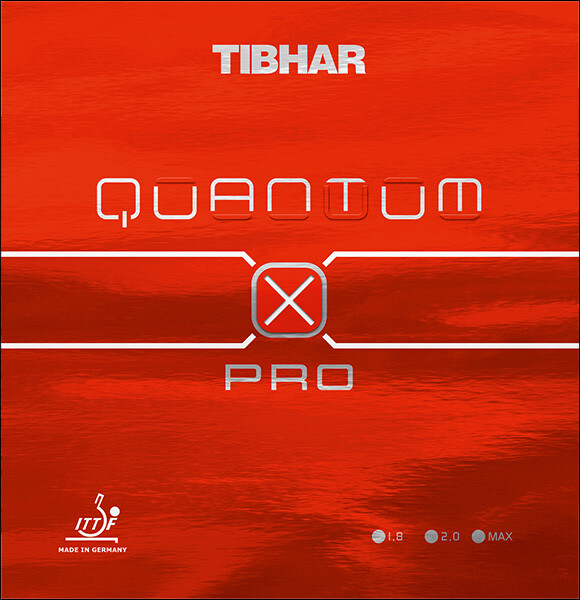
| Butterfly Tenergy 05 FX | Tibhar Quantum X Pro | |
|---|---|---|
| Our rating | 8.4/10 | 8.5/10 |
| best_side | backhand | both |
| control | 10 | medium |
| speed | 13 | very high |
| spin | 11.5 | very high |
| sponge_hardness | 36 degrees (soft) | 47.5 degrees |
| type | Inverted / High-Tension tensor (Spring Sponge) | tensor |
| weight_uncut_g | 64 | 70 |

We may earn a commission from links on this page. Learn more.
A close overall score hides one-sided axis data
Butterfly Tenergy 05 FX (8.4) and Tibhar Quantum X Pro (8.5) are separated by just 0.1 points overall, but that near-tie is misleading: Tenergy 05 FX actually leads on four of six axes, some by wide margins. Spin favors Tenergy 05 FX by 1.1 points (9.2 vs 8.1), throw by 1.2 points (6.0 vs 4.8), durability by 1.3 points (7.7 vs 6.4), and control by 0.4 points (8.9 vs 8.5). Quantum X Pro only wins outright on tackiness, and by a trivial 0.1 points (3.0 vs 2.9). Speed is essentially tied, with Tenergy 05 FX ahead by 0.2 (9.1 vs 8.9).
Why the close overall rating doesn’t match the axis gaps
If Tenergy 05 FX beats Quantum X Pro by that much on spin, throw, control and durability, why is the overall rating basically even? The answer is in the pros and cons: Quantum X Pro is not competing to be the better all-round rubber — its value case, per Revspin and reviews at TableTennisCoach and Bladerubber, is specifically backhand performance on carbon and composite blades, low sensitivity to incoming spin for reliable blocking and countering, and being genuinely forgiving for a hard-sponge tensor. It is optimized for a narrower job, and it is rated well for that job even though it trails Tenergy 05 FX on the broader radar.
The spec-sheet claim that doesn’t hold up
Quantum X Pro’s own spec listing describes its spin as “very high,” and on paper that reads as a match for or better than Tenergy 05 FX. The actual aggregated axis rating disagrees: Tenergy 05 FX comes in a full 1.1 points ahead on spin (9.2 vs 8.1). Spec-sheet adjectives and averaged real-world ratings do not always agree, and here the ratings, drawn from actual play across multiple reviewers, should carry more weight than the marketing label.
Hard sponge, near-table role
Sponge hardness explains most of the practical difference: Tenergy 05 FX sits at a soft 36 degrees, while Quantum X Pro is a firm 47.5 degrees. That hardness gap is exactly why Quantum X Pro’s own con list warns it “requires decent technique to reach its full potential” and can feel “uncomfortable for players transitioning from softer rubbers.” It also explains the throw gap — a harder sponge with less dwell produces a flatter trajectory, matching the 1.2-point throw deficit against Tenergy 05 FX. Quantum X Pro’s cons are also candid that it “struggles from mid-distance and far-from-table play” because it is “built for near-table aggression” — a real structural limitation, not a minor quibble.
Durability: a claim worth reading carefully
Quantum X Pro’s pro list claims “good durability compared to many high-energy European tensors,” and that claim can be true in its own lane while still trailing Tenergy 05 FX overall — the durability axis puts it at 6.4 versus Tenergy 05 FX’s 7.7, a 1.3-point gap. Read the comparison to other European tensors as the relevant baseline for that pro-list claim, not a claim that it out-lasts Tenergy.
Weight and the pro-player detail
Quantum X Pro’s pro list touts it as light for a MAX-thickness hard tensor, around 47.7 grams uncut in some cuts, and notes it is used by professional player Bernadette Szocs — a real, notable data point for anyone weighing brand credibility. Our spec table lists a 70-gram uncut weight against Tenergy 05 FX’s 64 grams, a reminder that uncut sheet weight varies by cut size, so treat the exact gram figures as approximate rather than a precise head-to-head number.
Who actually wants Quantum X Pro over Tenergy 05 FX
Given that Tenergy 05 FX leads on spin, throw, control and durability, Quantum X Pro only makes sense for a specific profile: players on carbon or composite blades who want a hard, low-throw, near-table backhand rubber for blocking and countering rather than looping from mid-distance, and who are willing to trade the broader capability Tenergy 05 FX offers for that narrower, more direct near-table game. If you loop from distance or want the safety margin of a higher-throw rubber, the axis data says Tenergy 05 FX is the stronger all-round choice here.
Bottom line
Despite a near-identical overall score, this is not a coin flip. Tenergy 05 FX wins decisively on spin, throw, control and durability; Quantum X Pro’s case rests entirely on its narrower near-table, hard-sponge, carbon-blade backhand role, not on the broad-based numbers.
Frequently asked questions
Why is Tibhar Quantum X Pro rated almost the same as Tenergy 05 FX if it loses on most axes?
Because its value case is narrower and role-specific — backhand blocking and countering on carbon and composite blades — not broad all-round performance, which is what the axis chart measures.
Does Quantum X Pro really have very high spin, as its own listing claims?
The aggregated axis rating does not support that claim. Tenergy 05 FX actually rates 1.1 points higher on spin (9.2 versus 8.1).
Is Quantum X Pro good for looping from mid-distance?
No — its own con list states it struggles from mid-distance and far-from-table play because it is built for near-table aggression.
Who should choose Quantum X Pro over Tenergy 05 FX?
Players on carbon or composite blades who specifically want a hard, low-throw rubber for near-table backhand blocking and countering, not players looking for the strongest all-round spin, throw or control numbers.