Butterfly Sriver FX vs Yasaka Mark V: Which Should You Buy?
| Butterfly Sriver FX | Yasaka Mark V | |
|---|---|---|
| Our rating | 7.8/10 | 8.0/10 |
| best_side | both | both |
| control | high | 9.5 |
| speed | medium | 8.4 |
| spin | medium-high | 8.5 |
| sponge_hardness | soft | medium (around 43 degrees ESN) |
| type | high-tension inverted (soft) | inverted |
| weight_uncut_g | 62 | 47 |
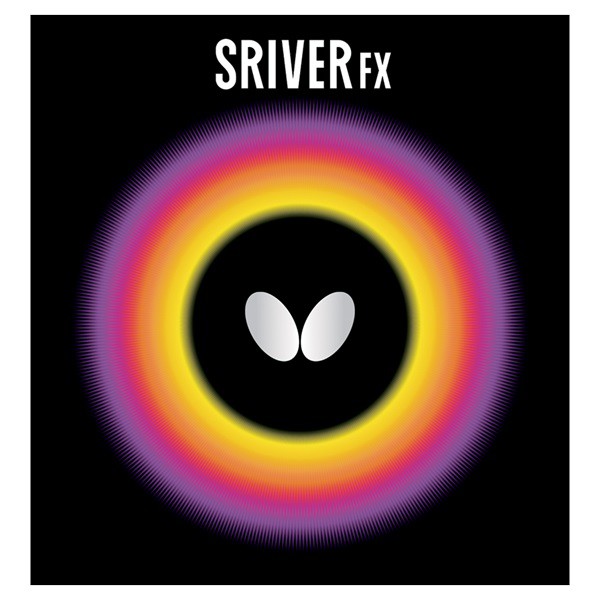
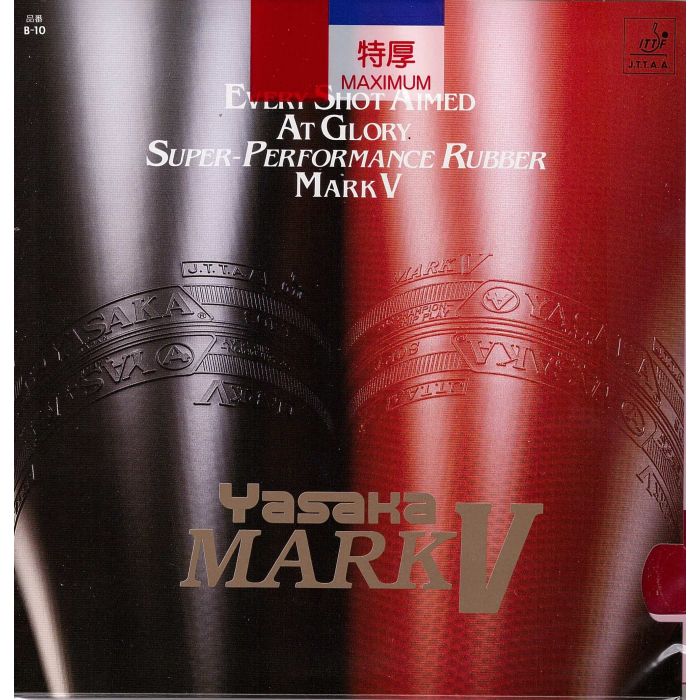
We may earn a commission from links on this page. Learn more.
Nearly identical, except for one number
Butterfly Sriver FX and Yasaka Mark V are two of the most similar rubbers in this entire set. Five of six axes differ by 0.1 points or less: speed (7.9 vs 8.0), spin (8.1 vs 8.2), control (8.6 vs 8.7), tackiness (2.7 vs 2.6), all separated by a tenth of a point or less — differences small enough to be noise rather than signal. Throw is a bit more distinct at 0.4 points (4.8 vs 4.4, Sriver FX ahead), but still modest.
The one gap that matters: durability
Durability is where these two genuinely diverge: 7.1 for Sriver FX versus 8.7 for Mark V, a 1.6-point gap — the largest in this comparison. Mark V’s own pro list backs this up directly, citing “excellent consistency and sheet-to-sheet uniformity over a very long lifespan,” and per RevSpin and Racket Insight it is regularly praised as one of the longest-lasting classic rubbers on the market. If everything else about these two rubbers ties, durability is the tiebreaker, and it tips clearly toward Mark V.
Weight is the hidden difference the ratings don’t show
The axis chart does not capture it, but the spec sheet does: Sriver FX is a 62-gram uncut sheet, while Mark V comes in at just 47 grams uncut — a 15-gram difference that will noticeably change the overall weight and swing feel of a racket, independent of anything in the pros and cons lists. Players sensitive to racket weight should treat this as a real, practical factor that the rating numbers alone would never surface.
Both are classic control rubbers, not modern tensors
Neither of these is a tensor, and both carry the same fundamental caveat: they are built around the celluloid-ball era. Mark V’s own con list states plainly that it “performs noticeably worse with modern plastic balls,” and Sriver FX’s cons note it “was designed for speed glue” and feels “slow and tame unglued,” with “a decades-old design not optimized for the modern plastic ball.” If you are shopping for a rubber to compete with the current plastic ball at a modern club or league, both of these come with the same asterisk — this comparison is really about which flavor of classic control rubber suits you, not about picking a rubber that will out-perform current tensors.
Who picks Sriver FX, who picks Mark V
Sriver FX’s bestFor profile targets beginners, intermediates, and control-or-defensive players who want a soft, forgiving rubber for blocking and chopping at a lower price (roughly 30-40 USD) than Tenergy or Bryce. Mark V’s bestFor profile is broader and includes a group Sriver FX’s does not: returning players — people coming back to the sport after time away — who “prize feel, consistency and a long-lasting, forgiving rubber over raw tensor speed.” Mark V’s pros also mention it works “for advanced players on a max sheet and OFF blade,” giving it a slightly wider ceiling on paper, even though the two rate almost identically on every performance axis.
Should you switch?
Given how close these two are on speed, spin, control and tackiness, switching between them for performance reasons alone is unlikely to change your game. The real decision points are durability (a clear win for Mark V), weight (Mark V is dramatically lighter, which changes racket balance), and price (Sriver FX undercuts most Tenergy-tier rubbers, and Mark V is described as pocket-friendly relative to modern tensors too). If your Sriver FX is wearing out faster than you would like and you do not need extra weight in your racket, Mark V is a reasonable lateral move with a genuine durability upgrade.
Bottom line
This is the closest matchup in this batch. Sriver FX and Mark V are near-twins on speed, spin, control and tackiness, and the entire comparison rests on two facts the radar chart makes visible and the con lists confirm: Mark V lasts substantially longer, and it does so in a rubber that weighs a third less. Pick based on those two numbers, not on any illusion of a performance gap that the data does not show.
Frequently asked questions
Are Butterfly Sriver FX and Yasaka Mark V basically the same rubber?
On performance axes, almost. Speed, spin, control and tackiness all differ by 0.1 points or less between them.
What is the real difference between Sriver FX and Mark V?
Durability, by a wide 1.6-point margin favoring Mark V (8.7 versus 7.1), and weight — Mark V is 47 grams uncut versus Sriver FX's 62 grams, a 15-gram difference that changes racket balance.
Do either of these work well with the modern plastic ball?
Both carry the same caveat. Mark V's own con list says it performs noticeably worse with modern plastic balls, and Sriver FX's cons note it was designed for speed glue and feels slow and tame unglued.
Who is Yasaka Mark V best for?
Beginners and developing players building technique, plus value-focused all-rounders and returning players who prize feel, consistency and longevity over raw tensor speed.